Brescia, Italy – 2006-2025
Completion 2025
Madonna della Rosa Sanctuary: A Journey through History, Landscape, and Restoration
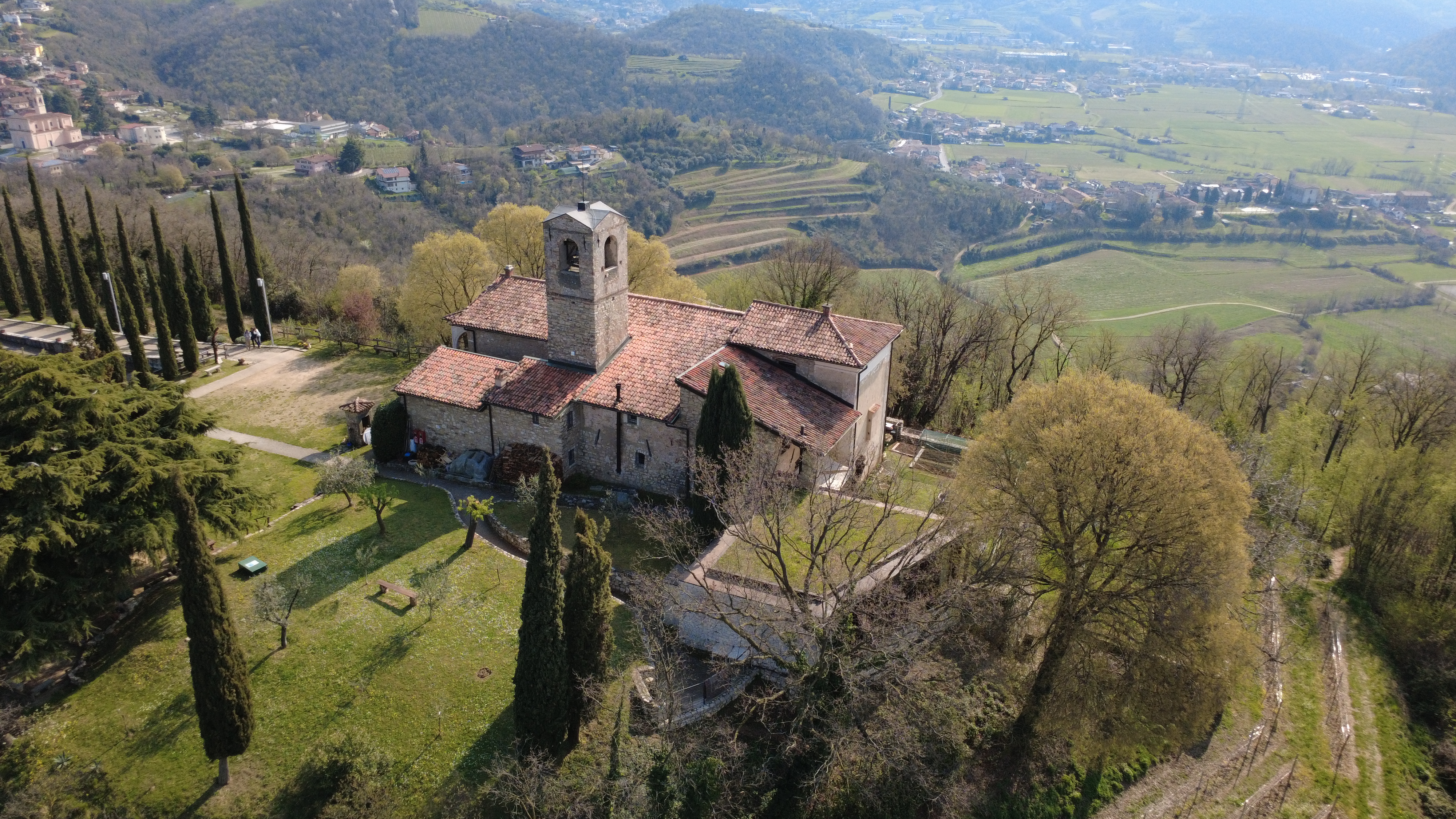
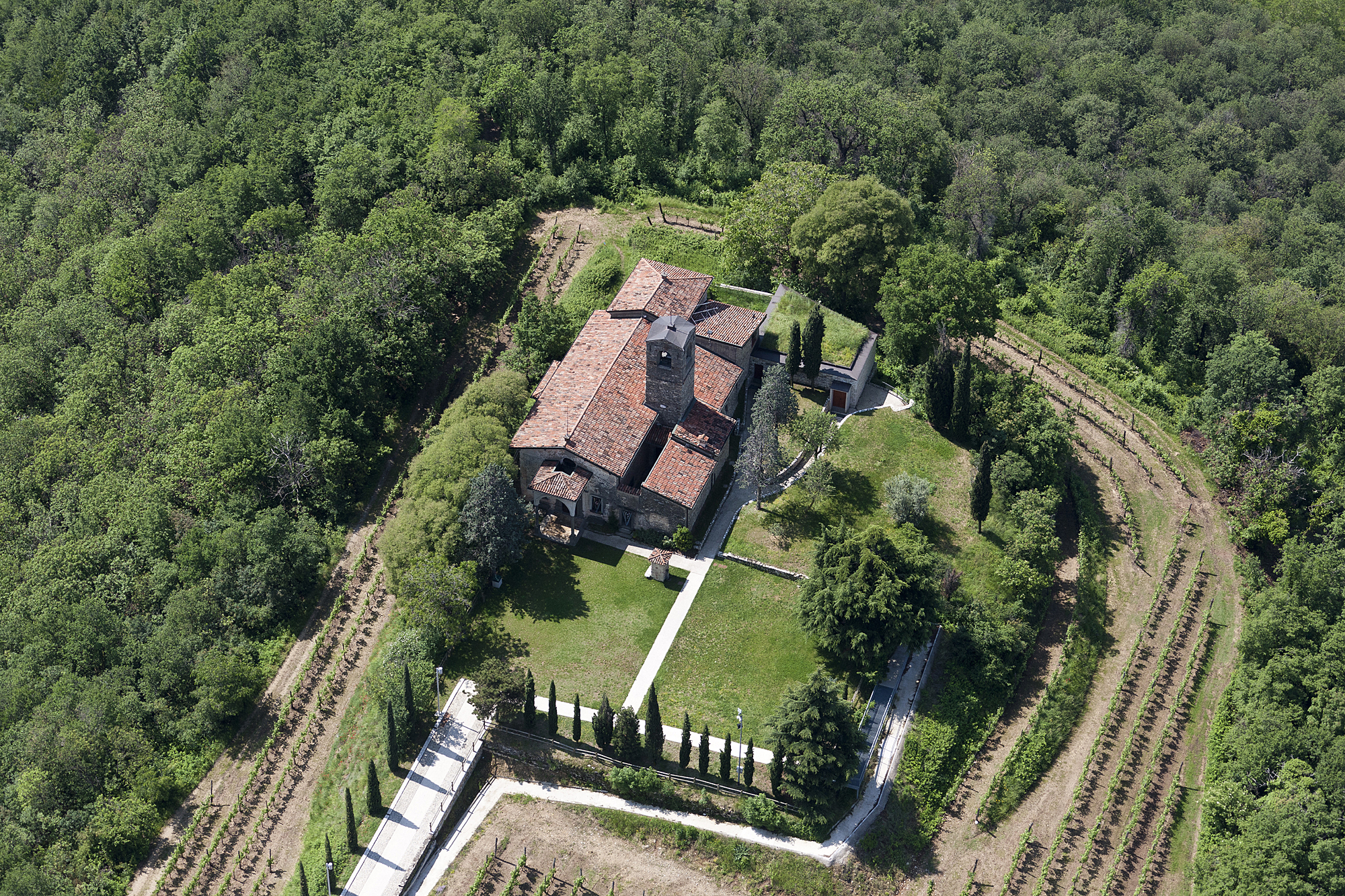
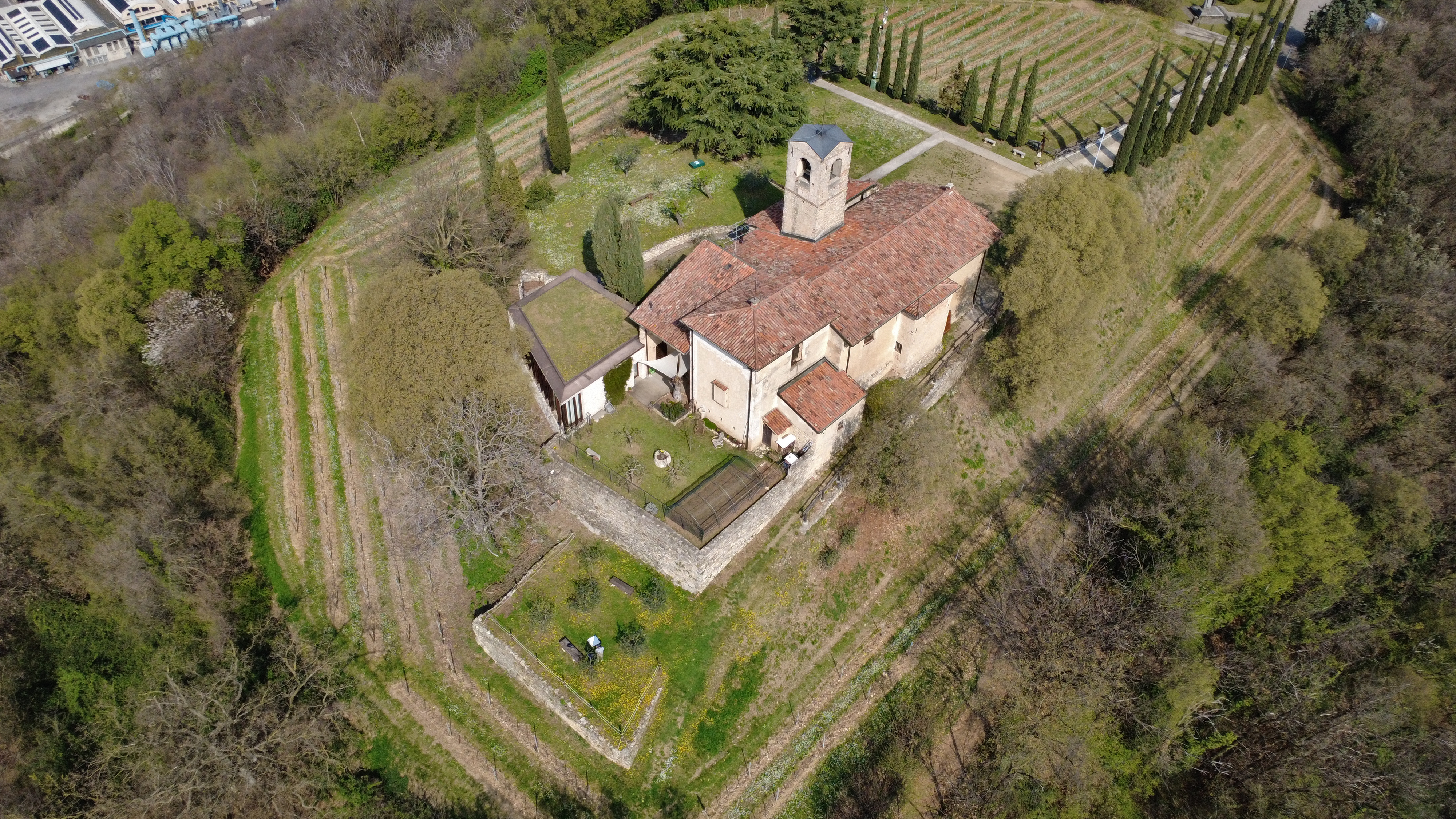
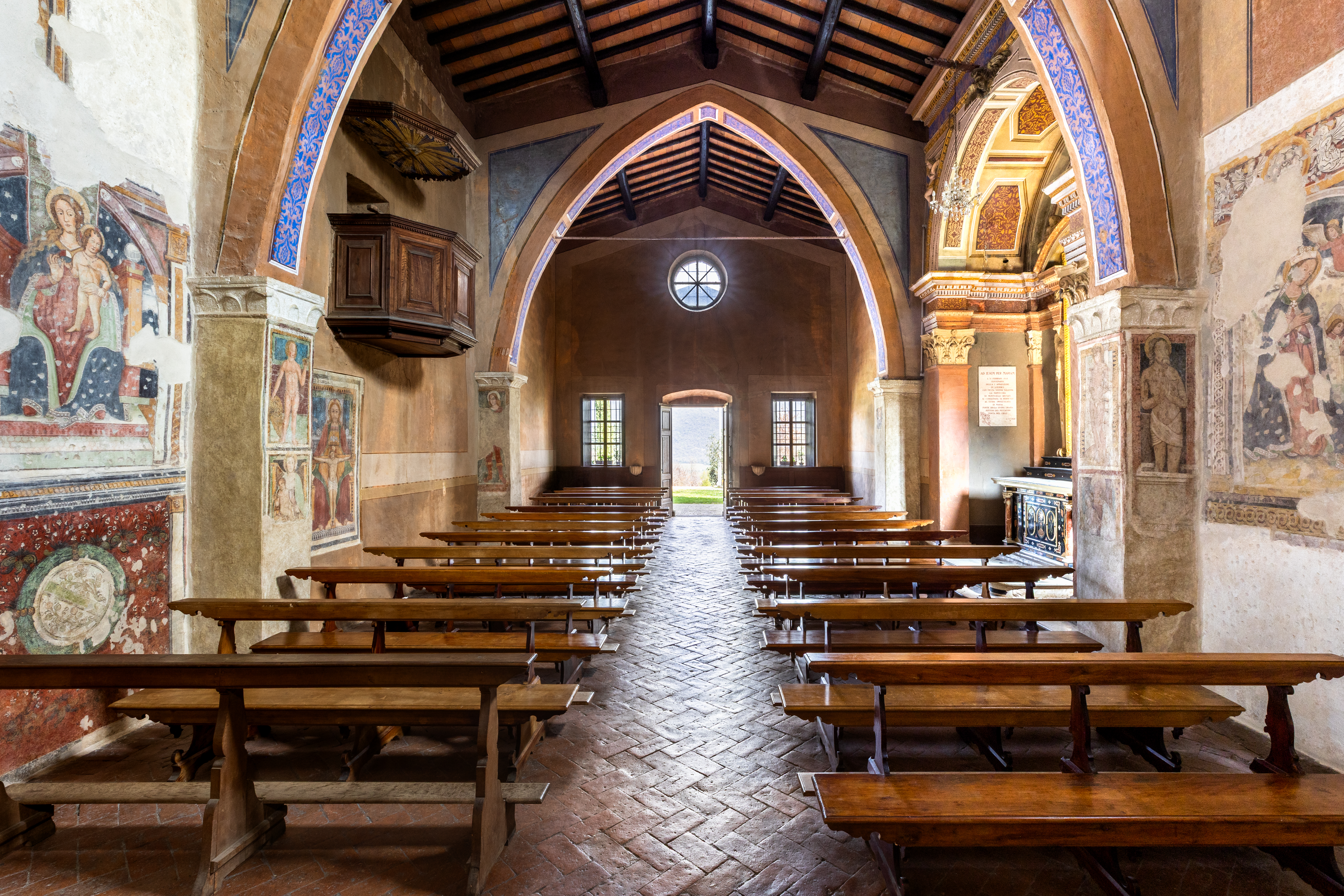
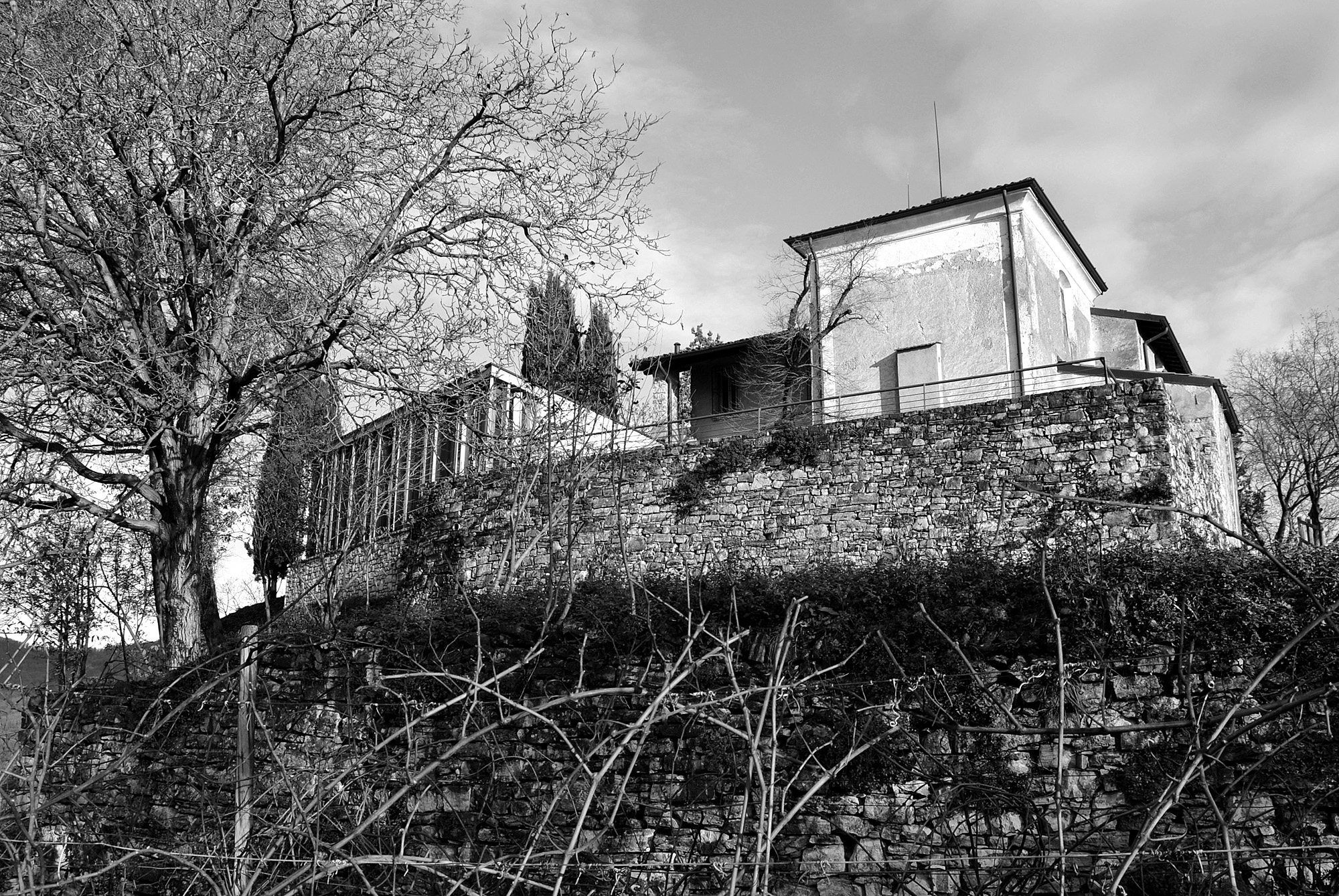
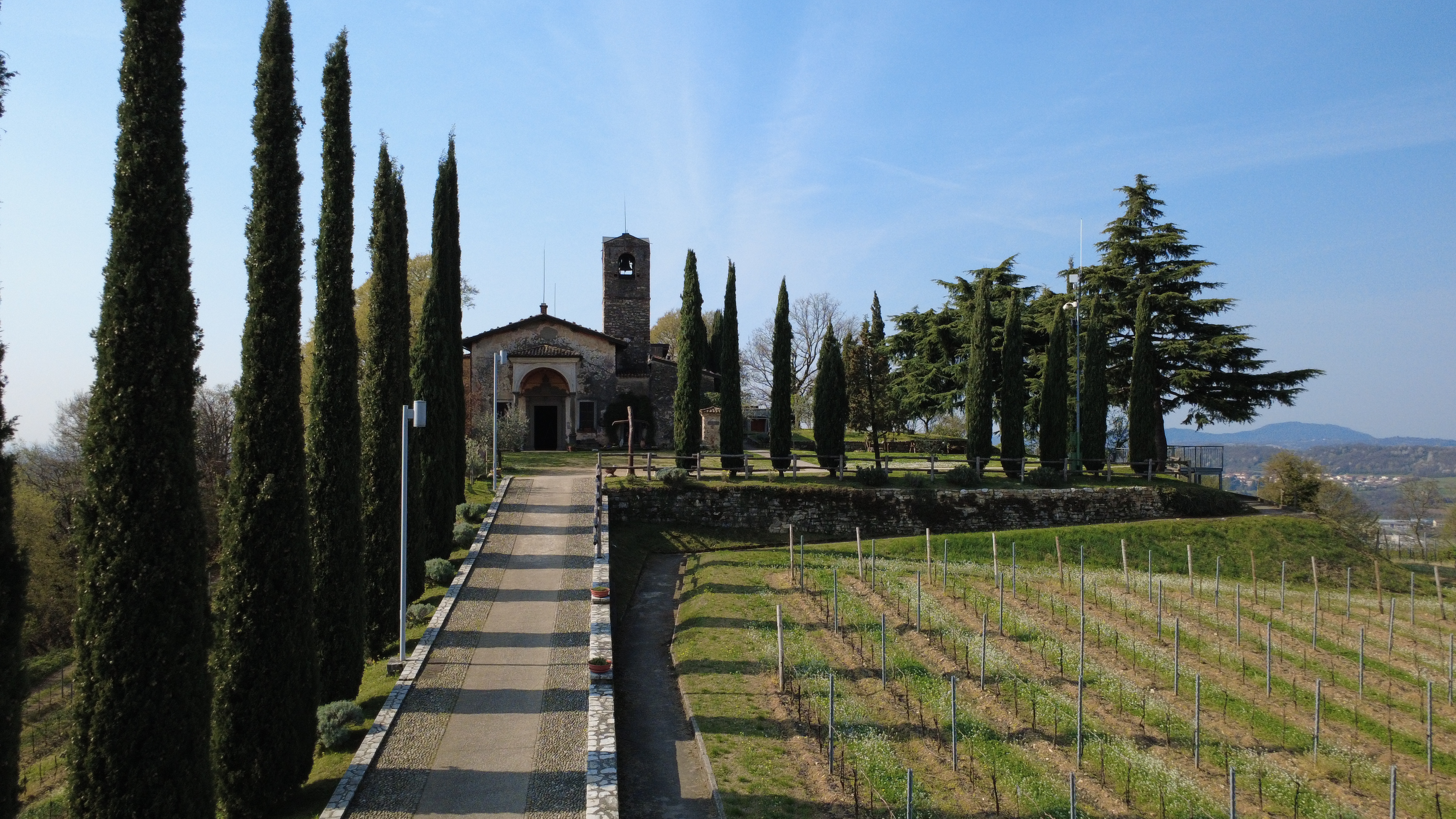
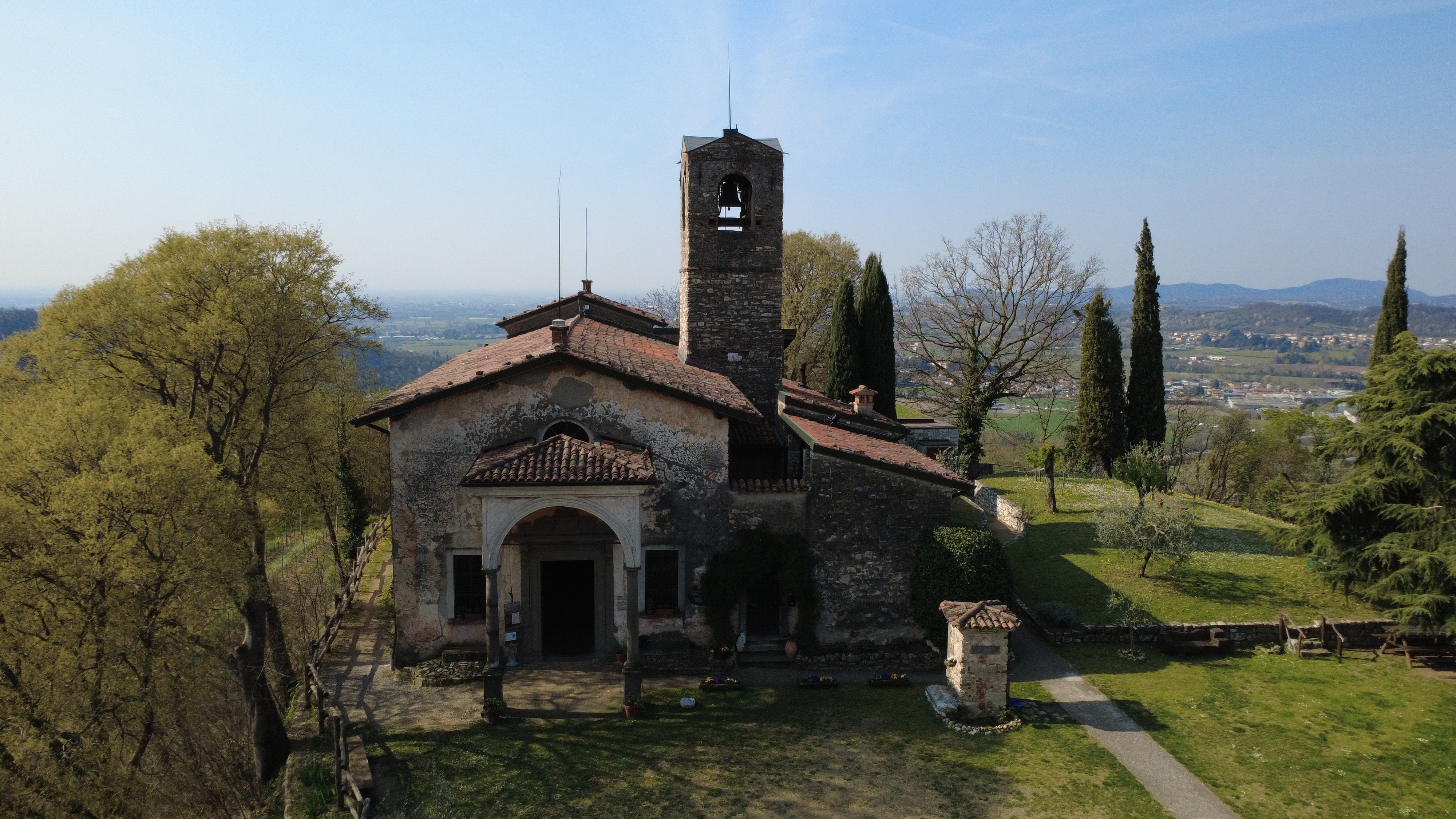
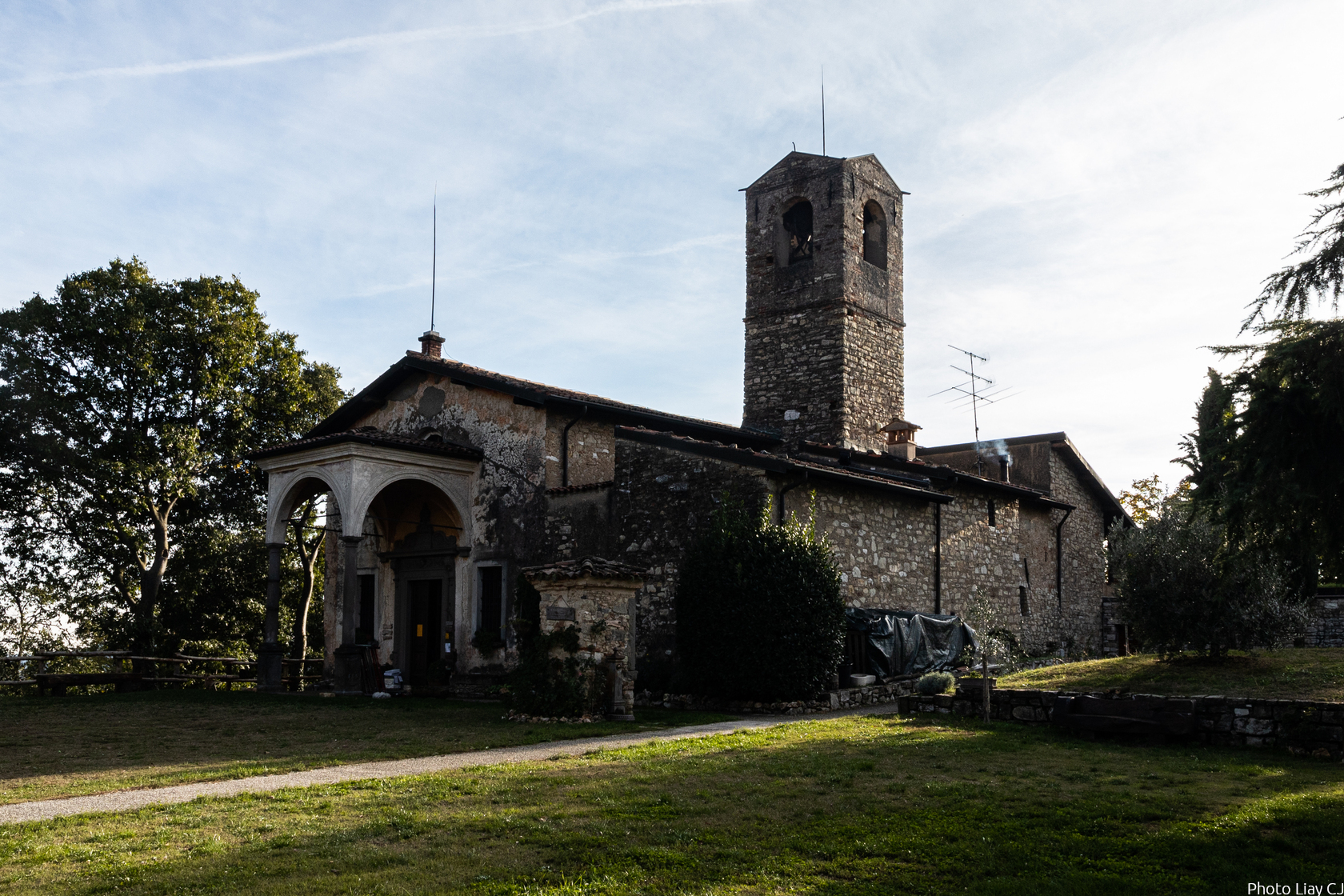
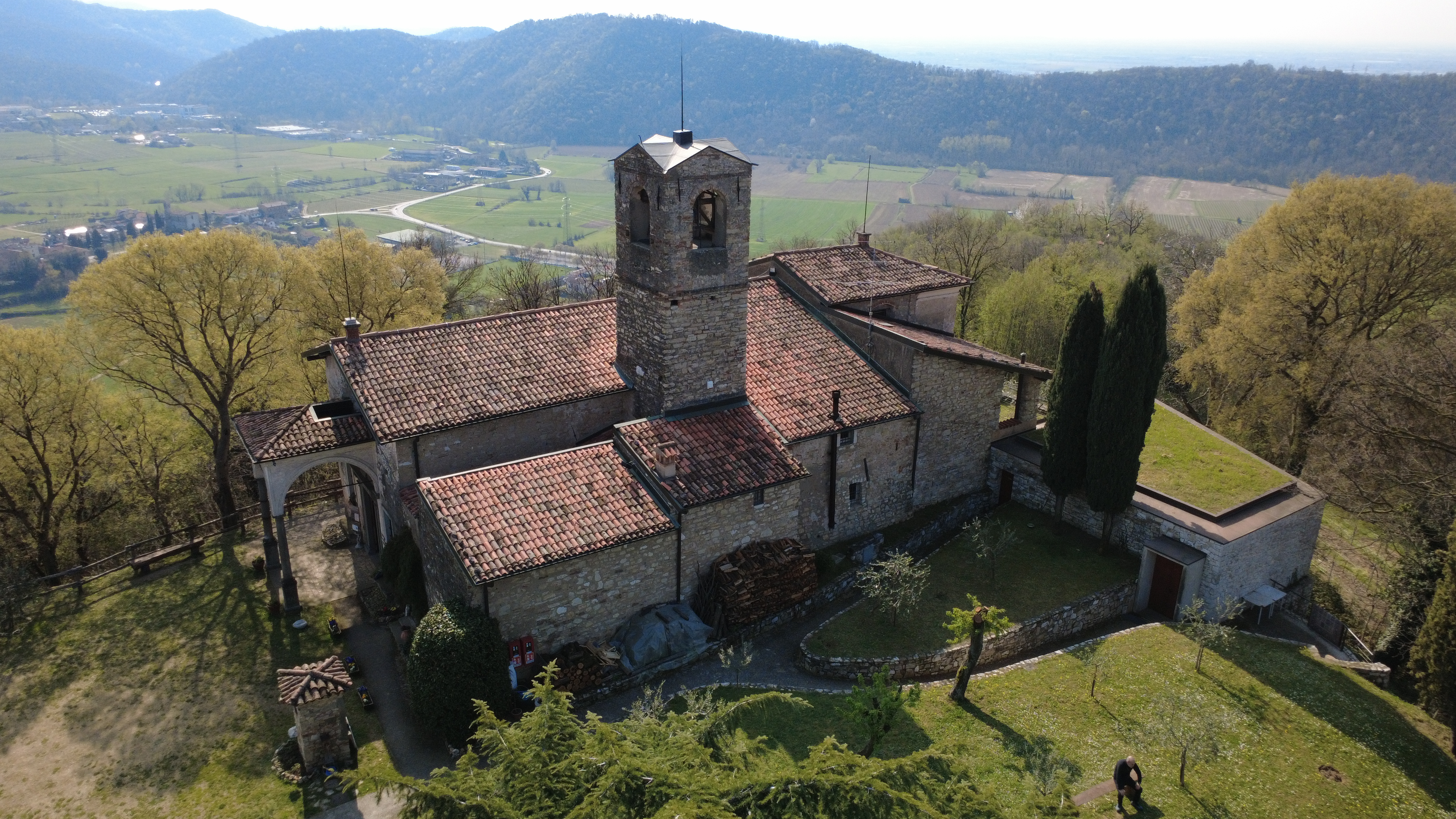
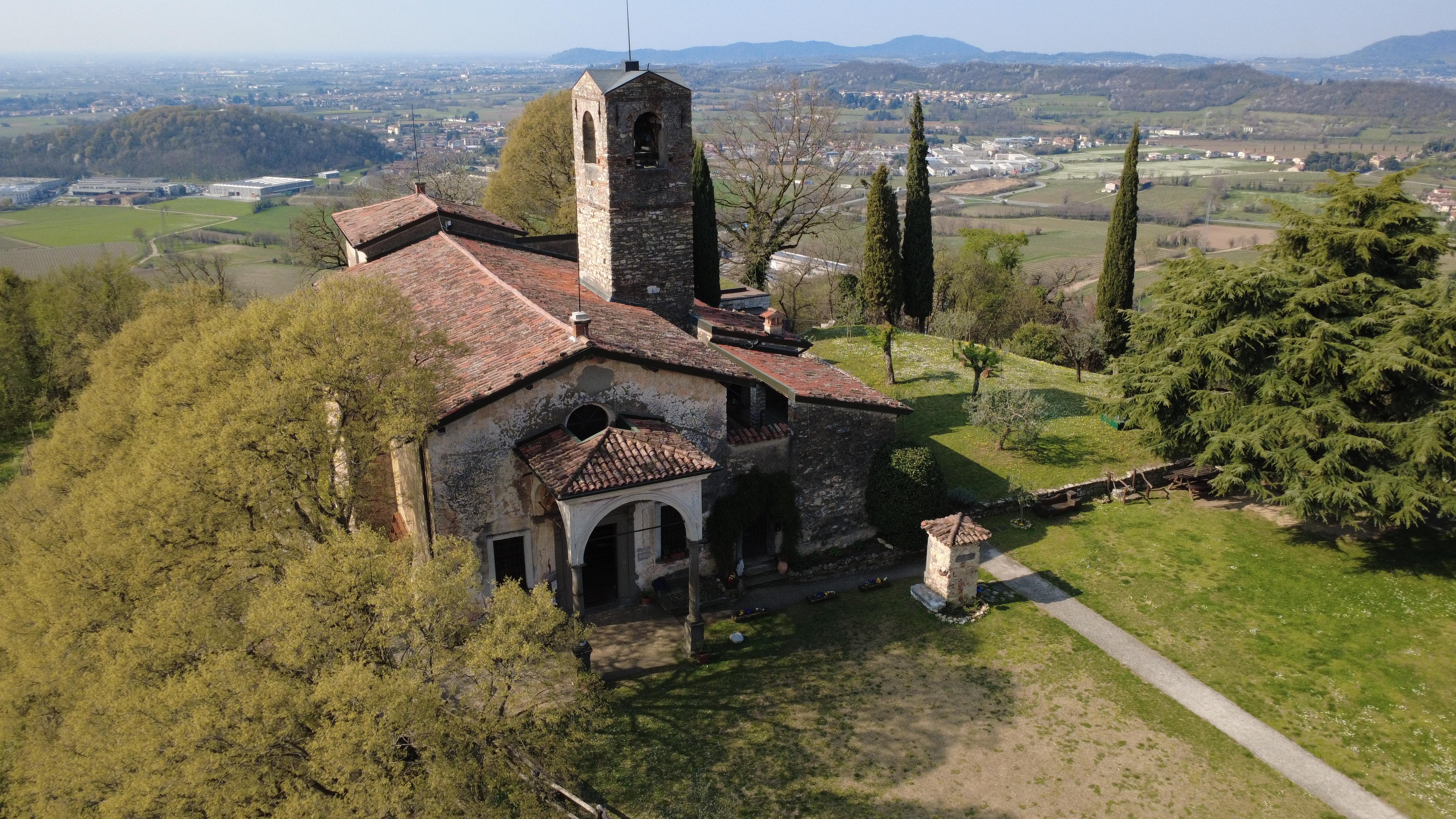
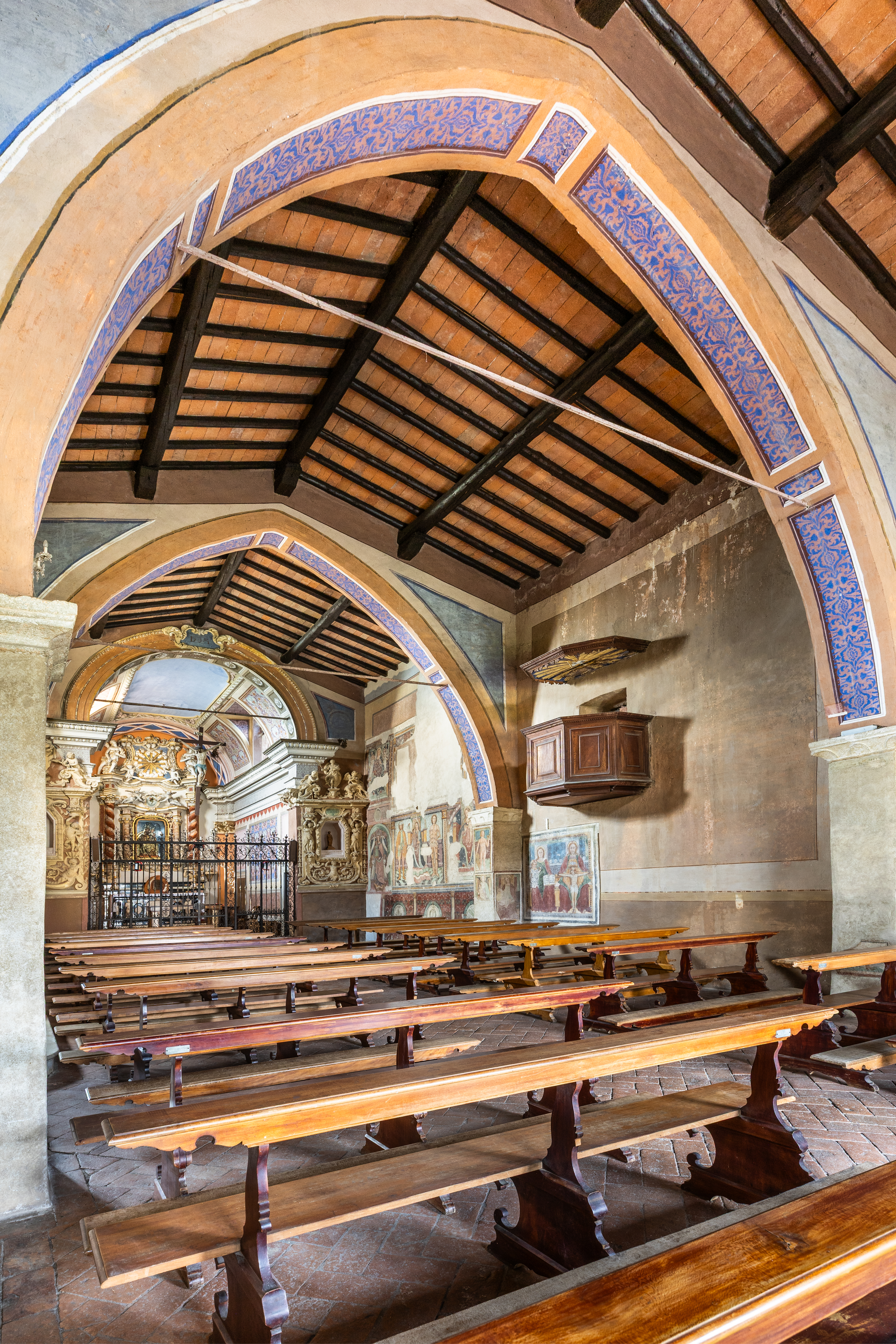
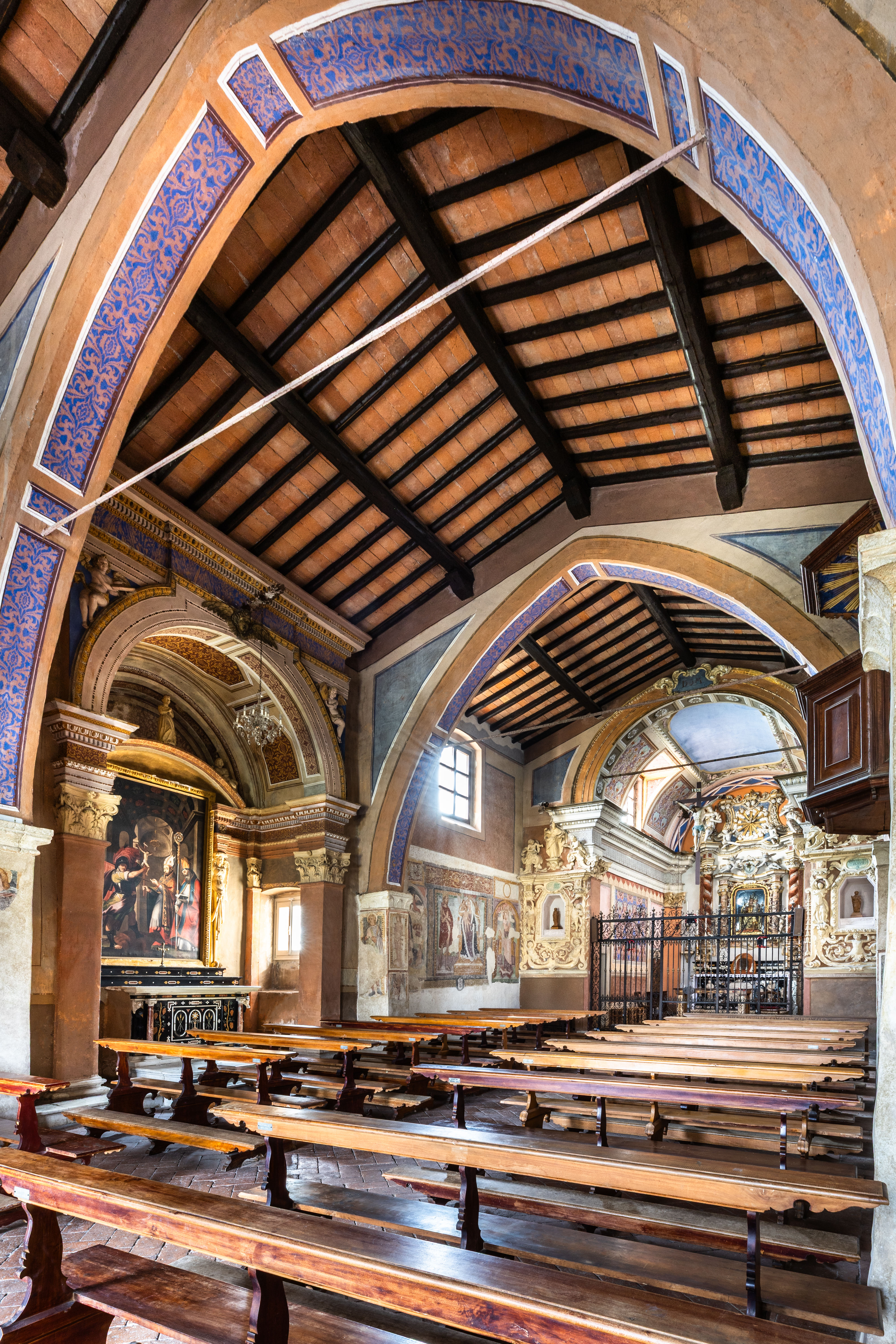
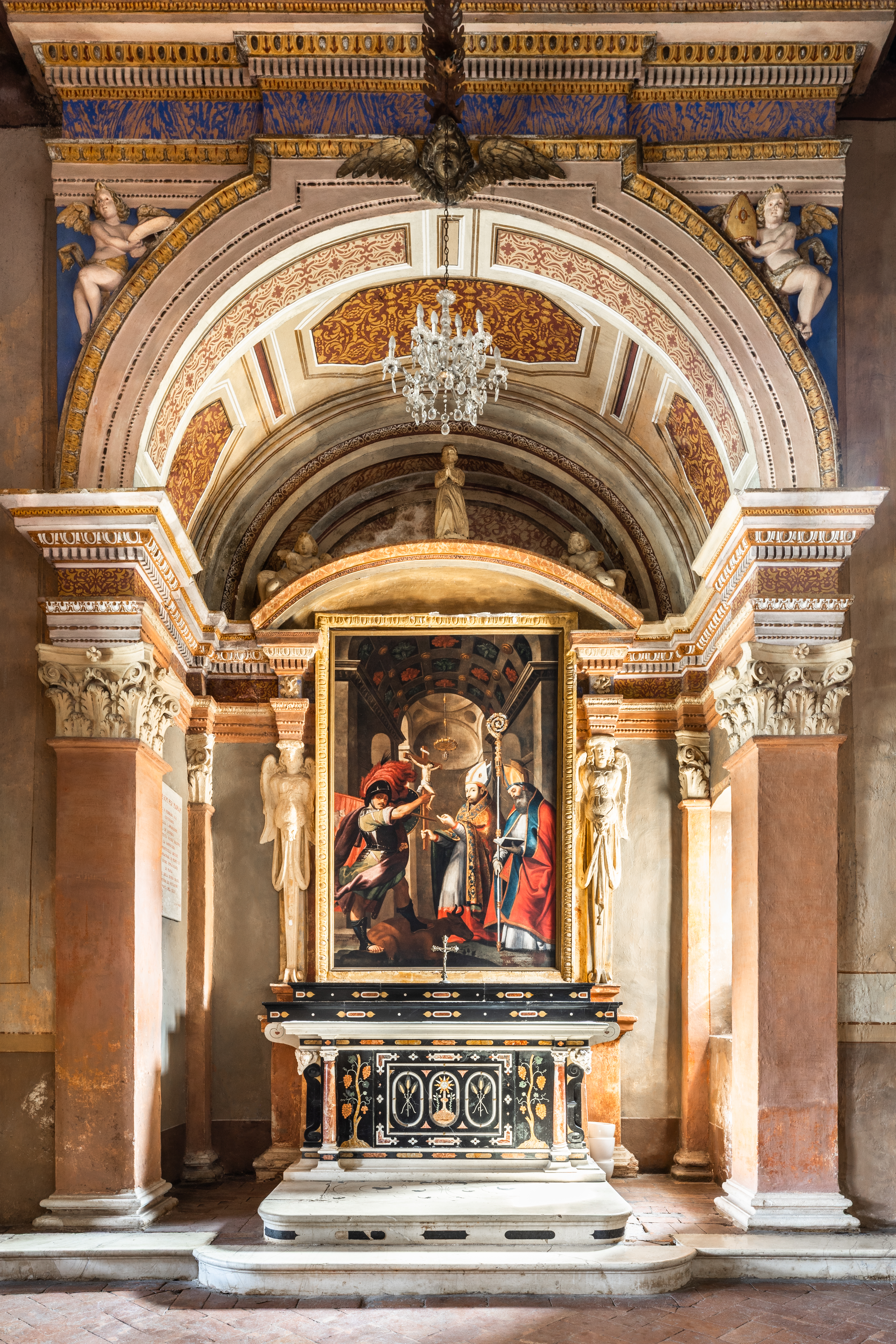
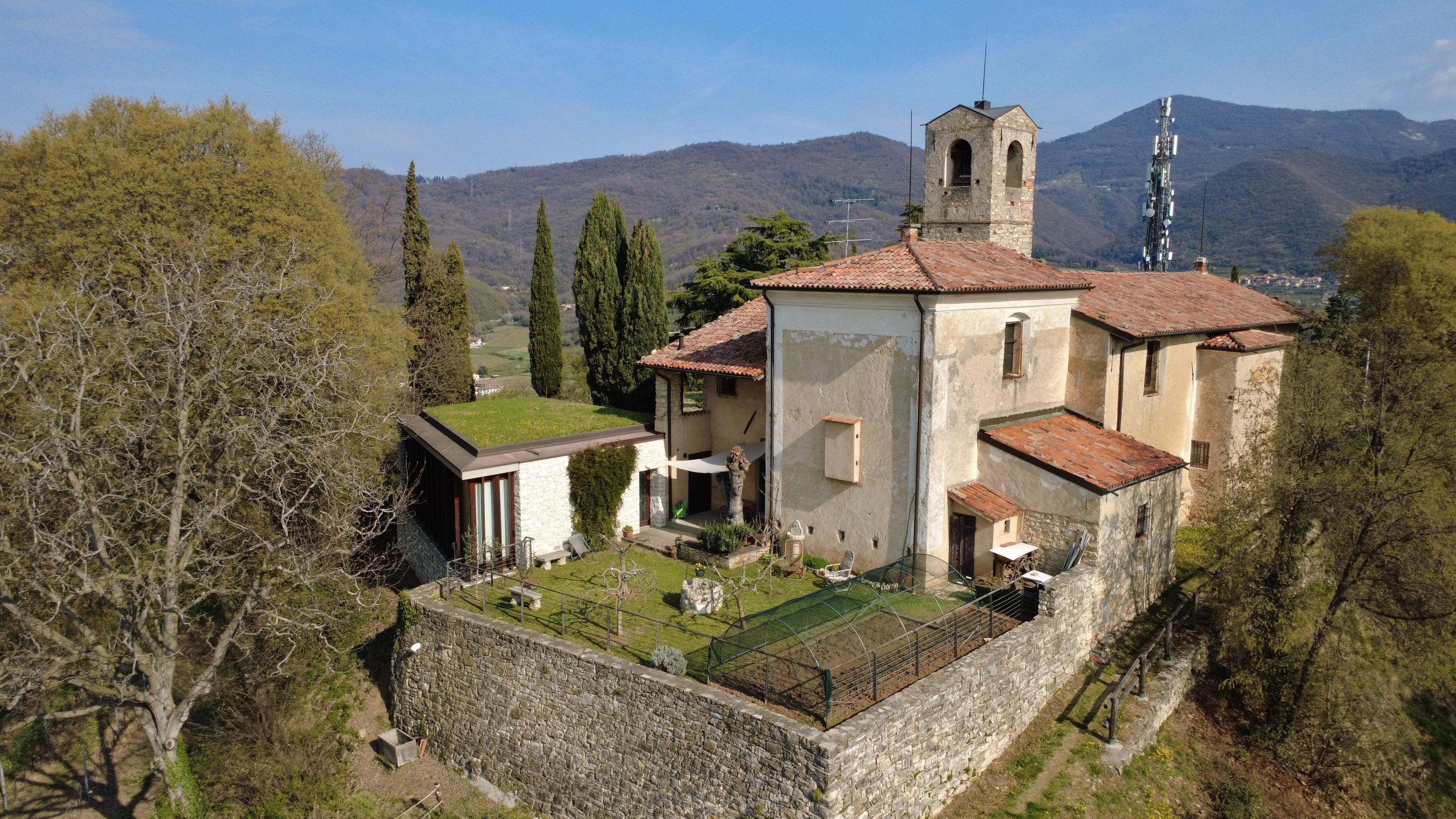
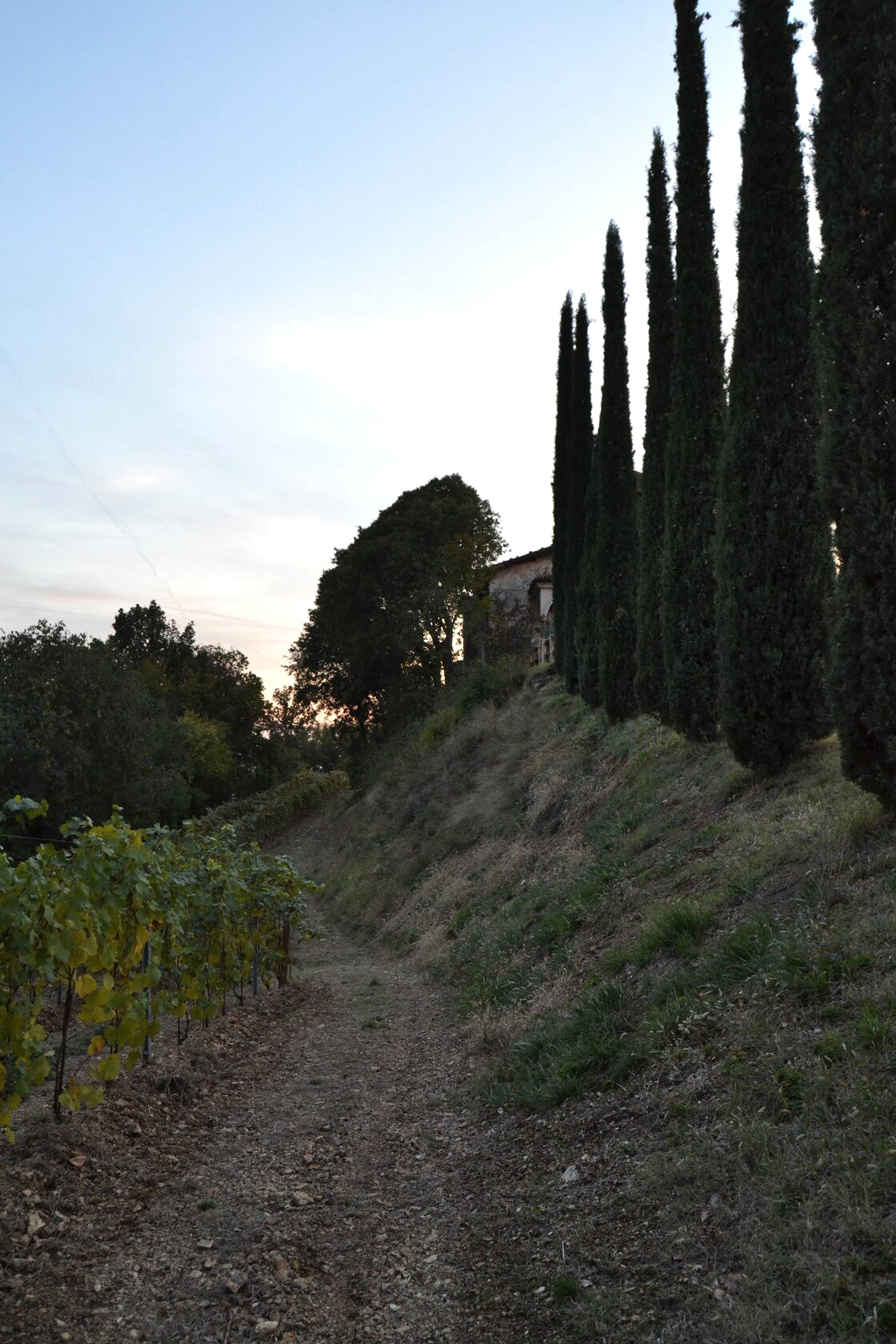
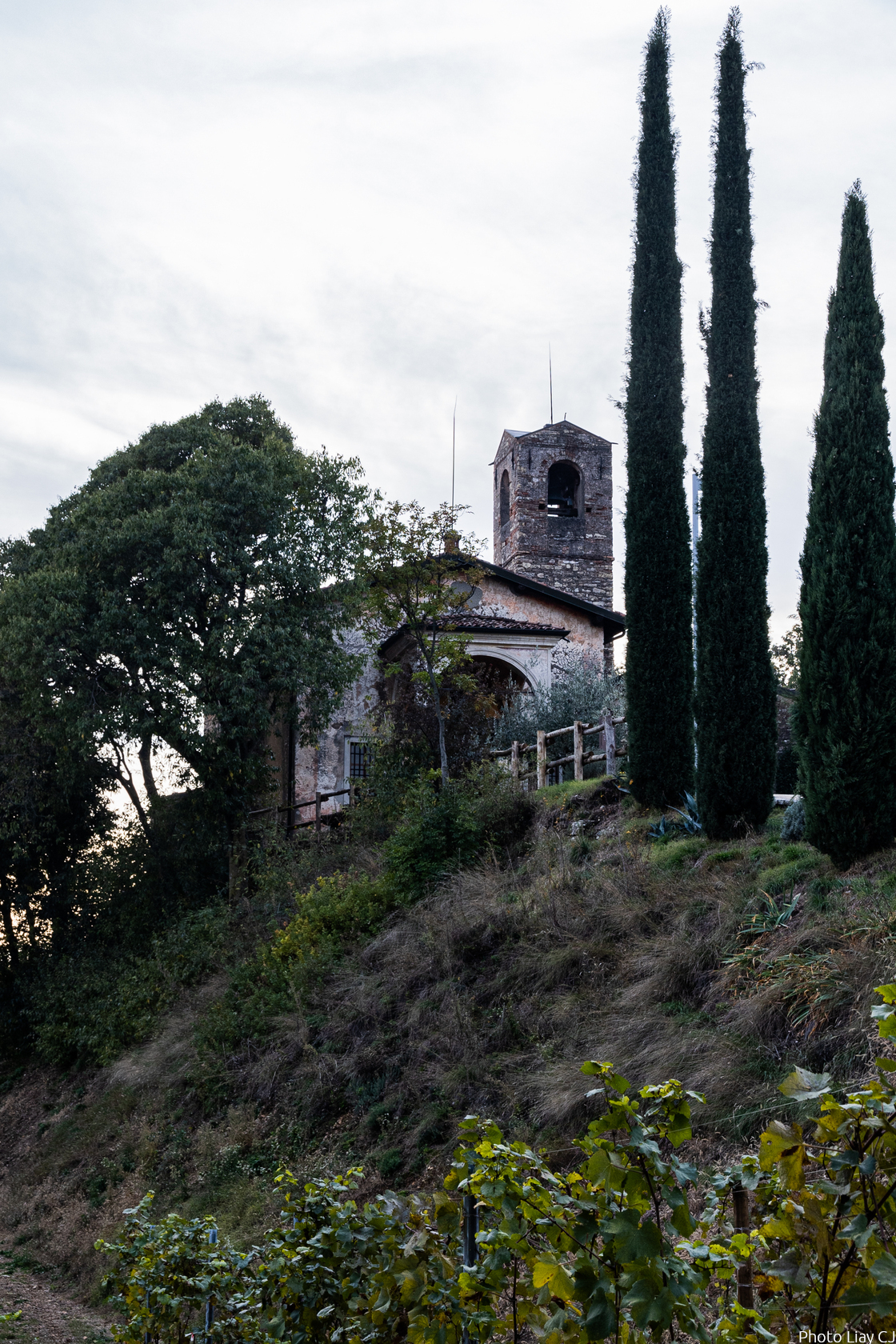
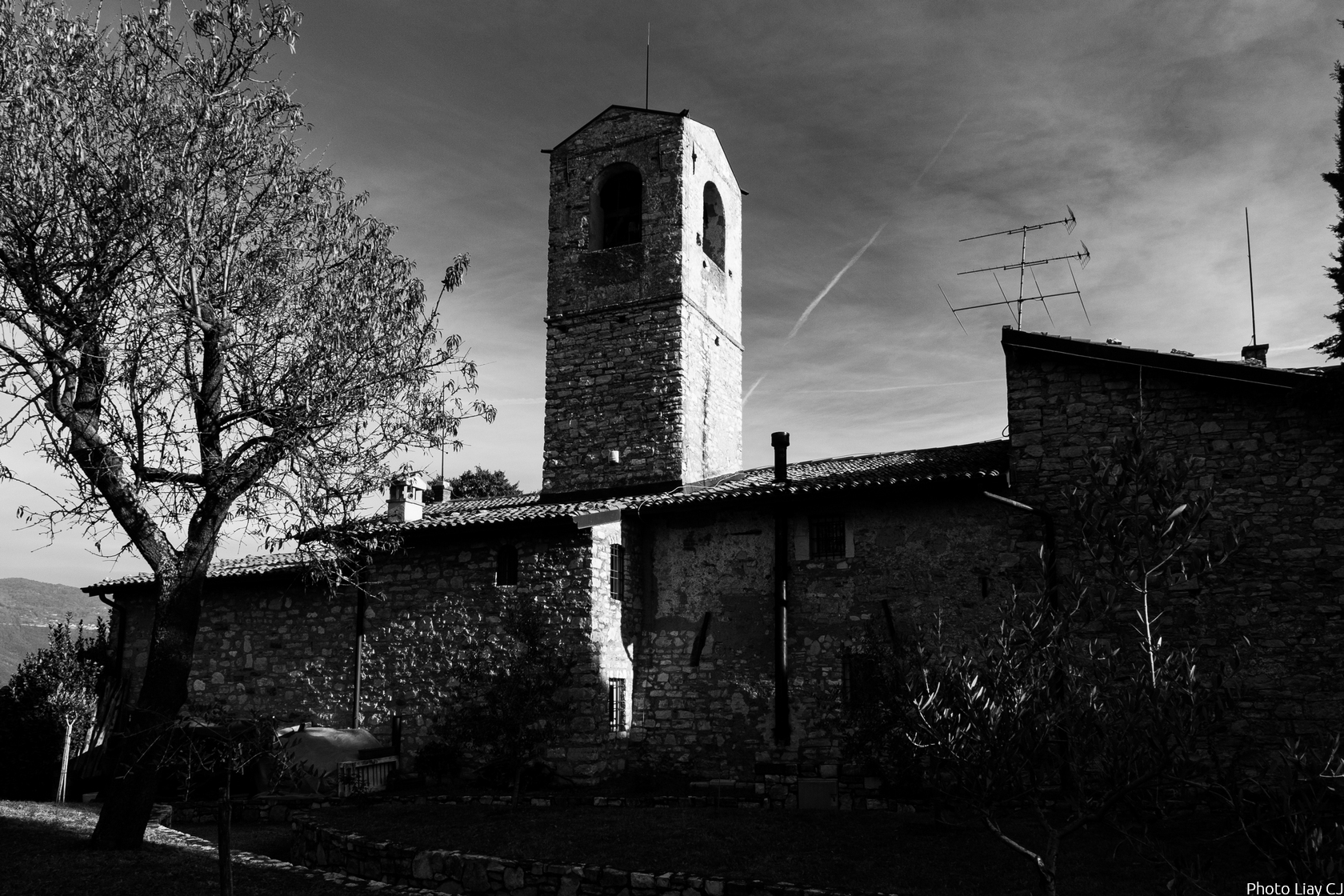
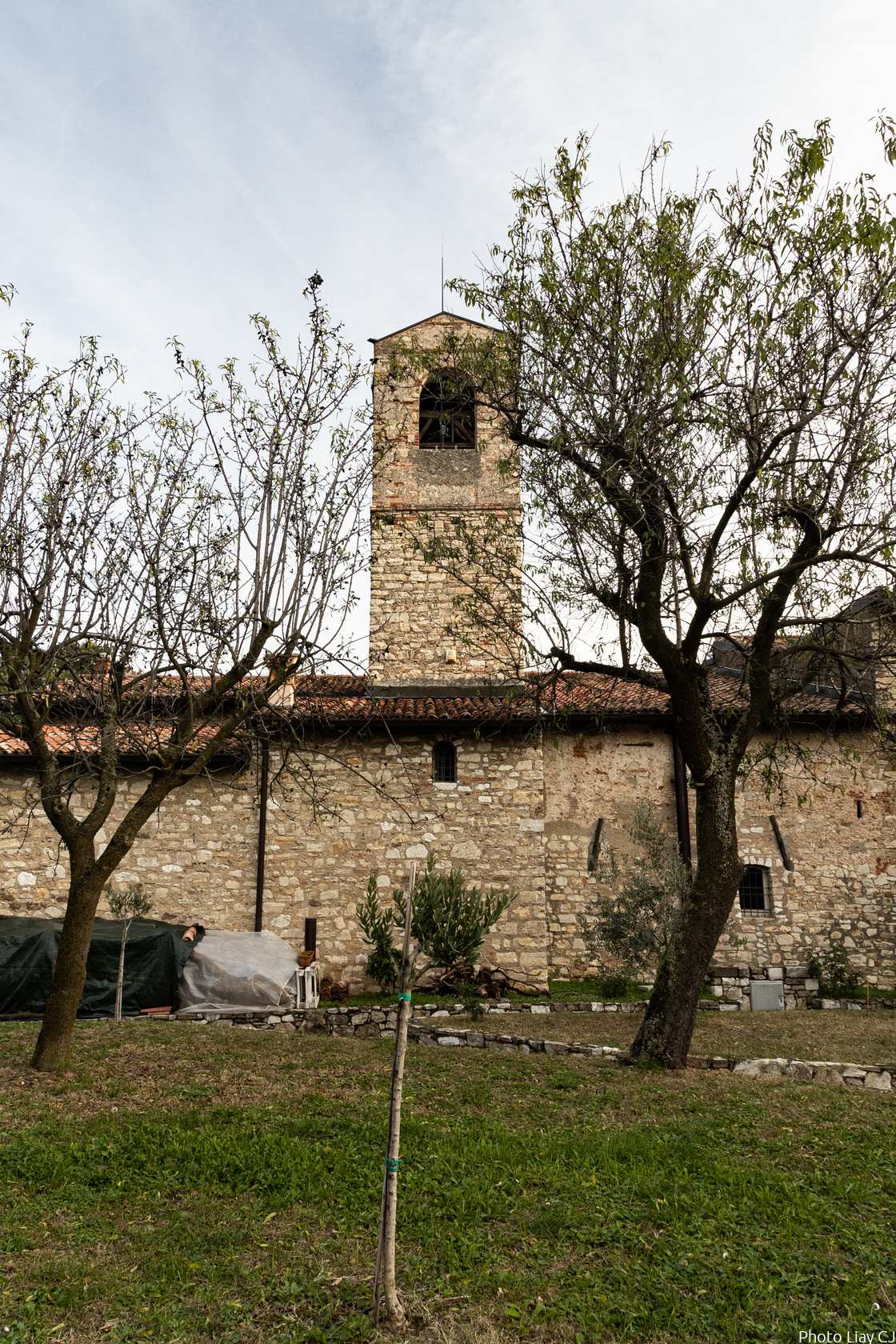
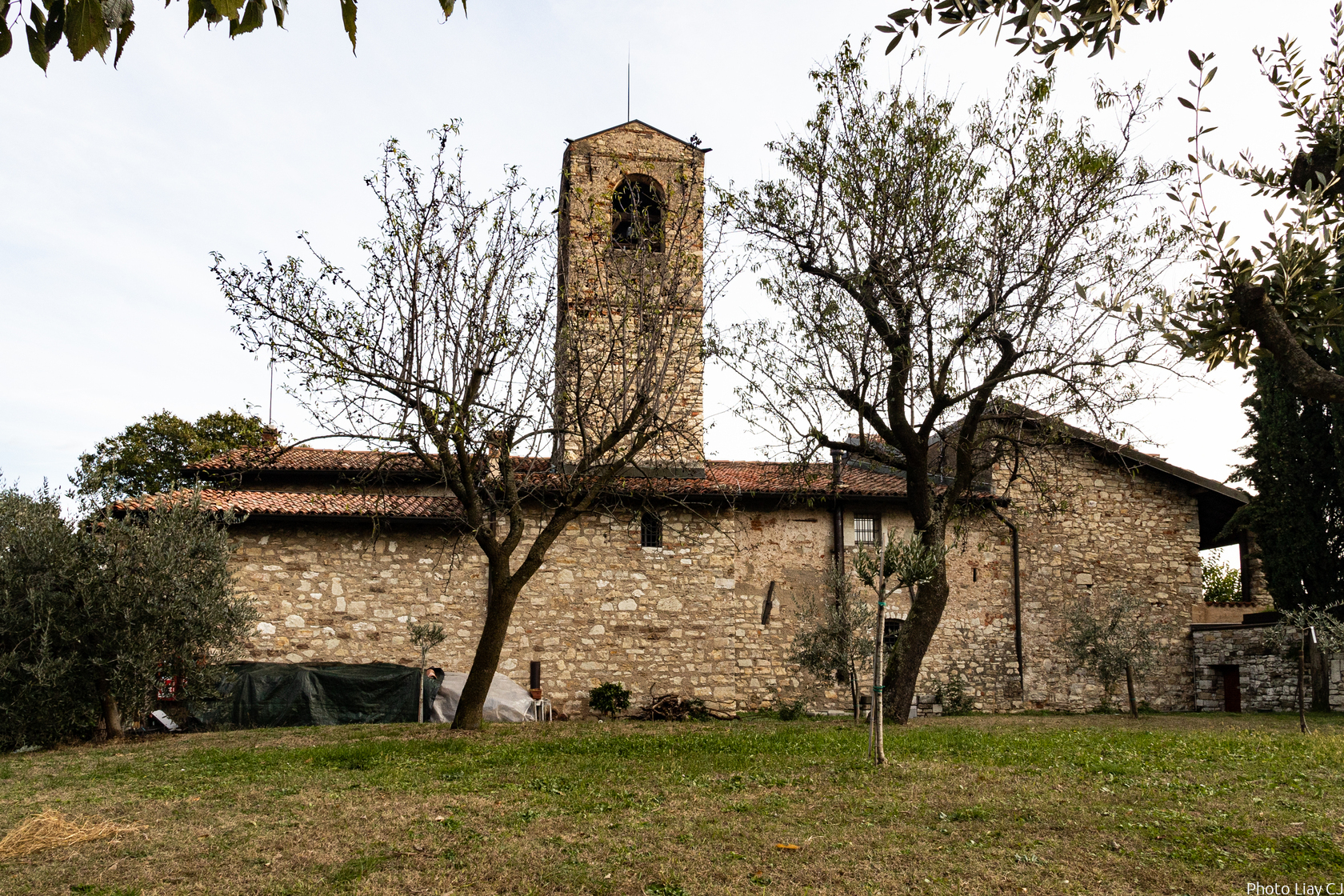
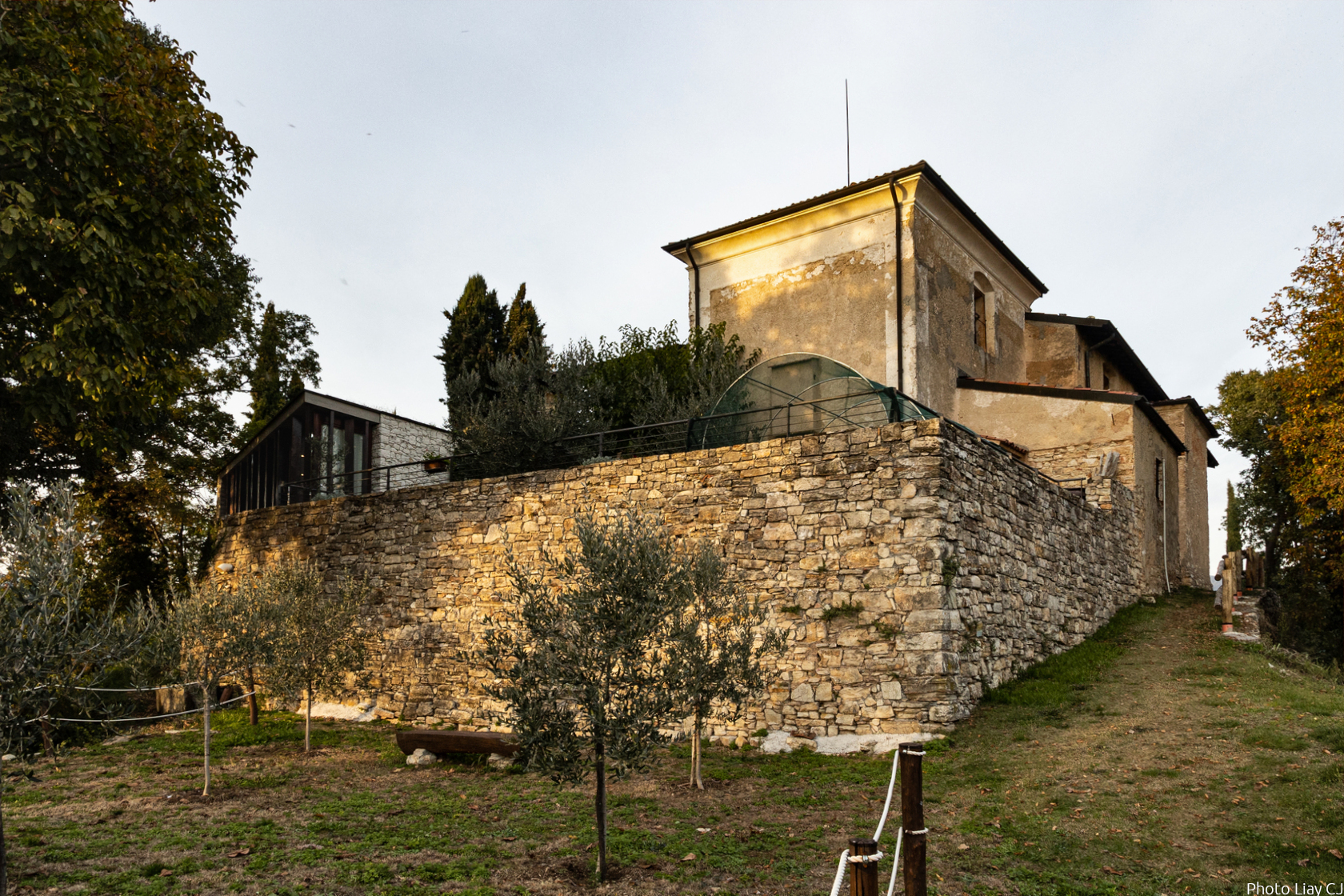
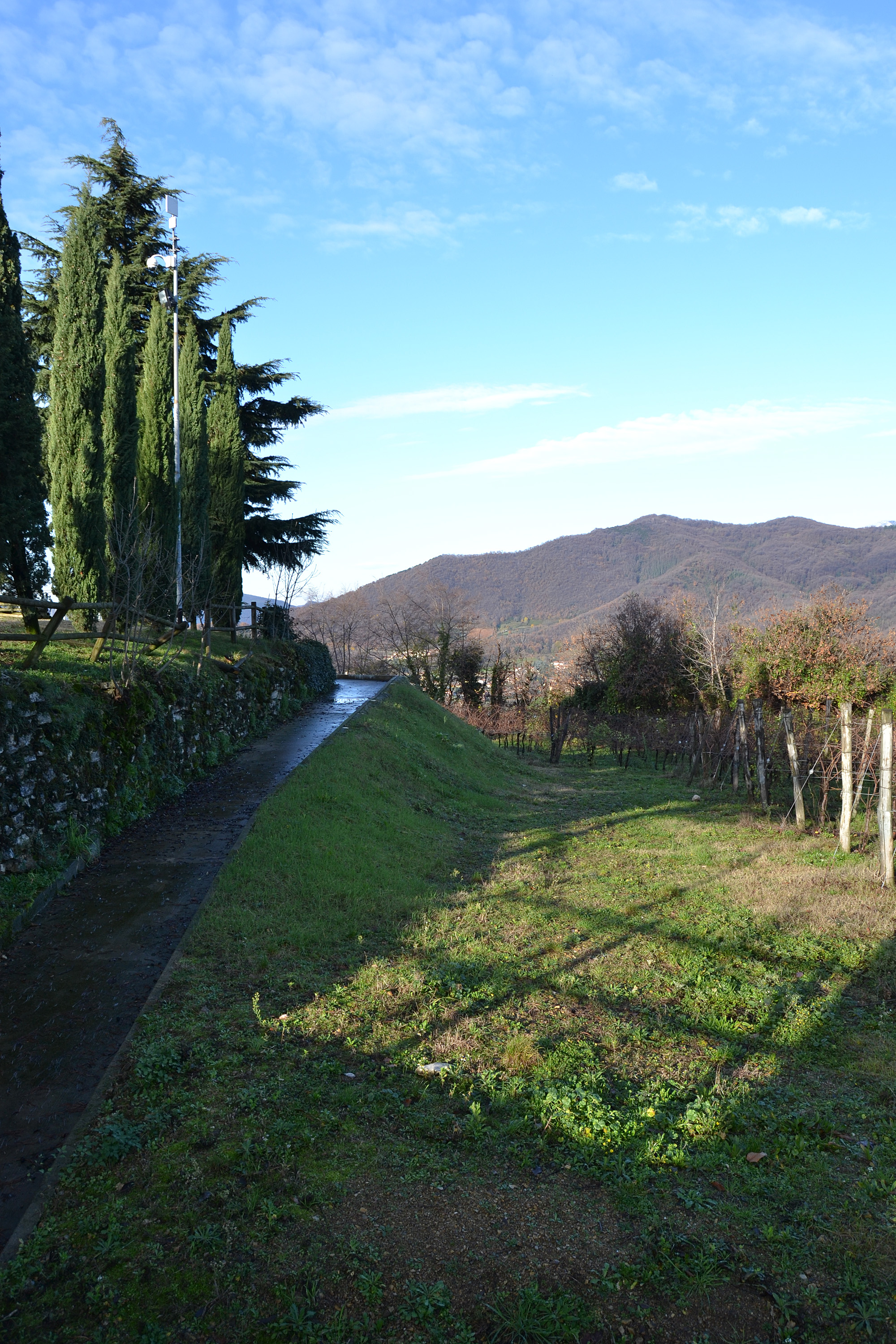
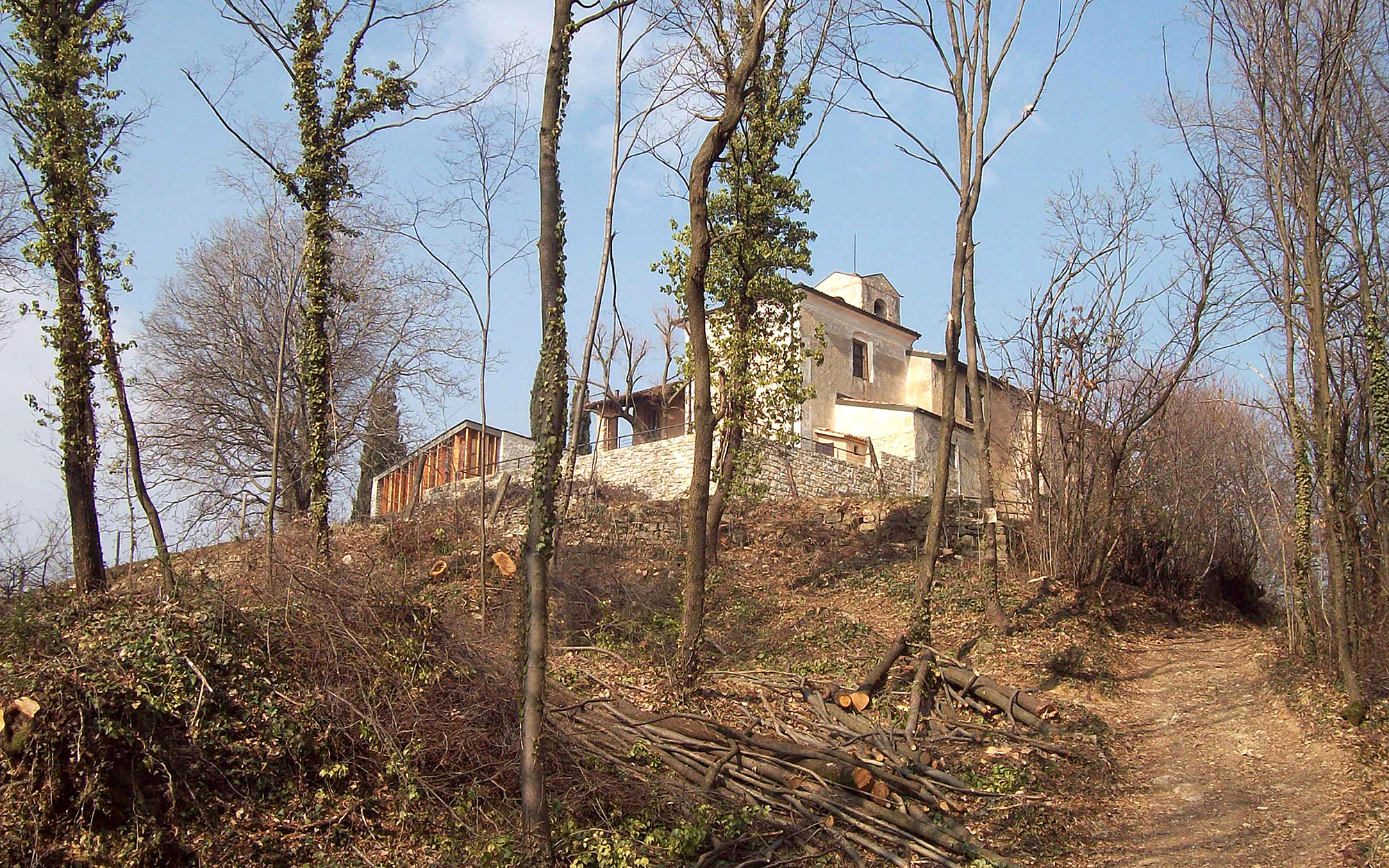
Overlooking the Po Valley from a hill in Franciacorta, the Santuario della Madonna della Rosa stands as an oasis of silence. Despite its proximity to the town of Monticelli Brusati, the complex retains a secluded character, capable of reconnecting the visitor with the evocative power of the natural landscape. The church, originally featuring a 14th-century Gothic-vernacular style, has embraced Renaissance and Baroque layers over time, culminating in the 19th-century addition of the rectory which completes the main structure.
The Architectural Intervention: A Dialogue of Balance
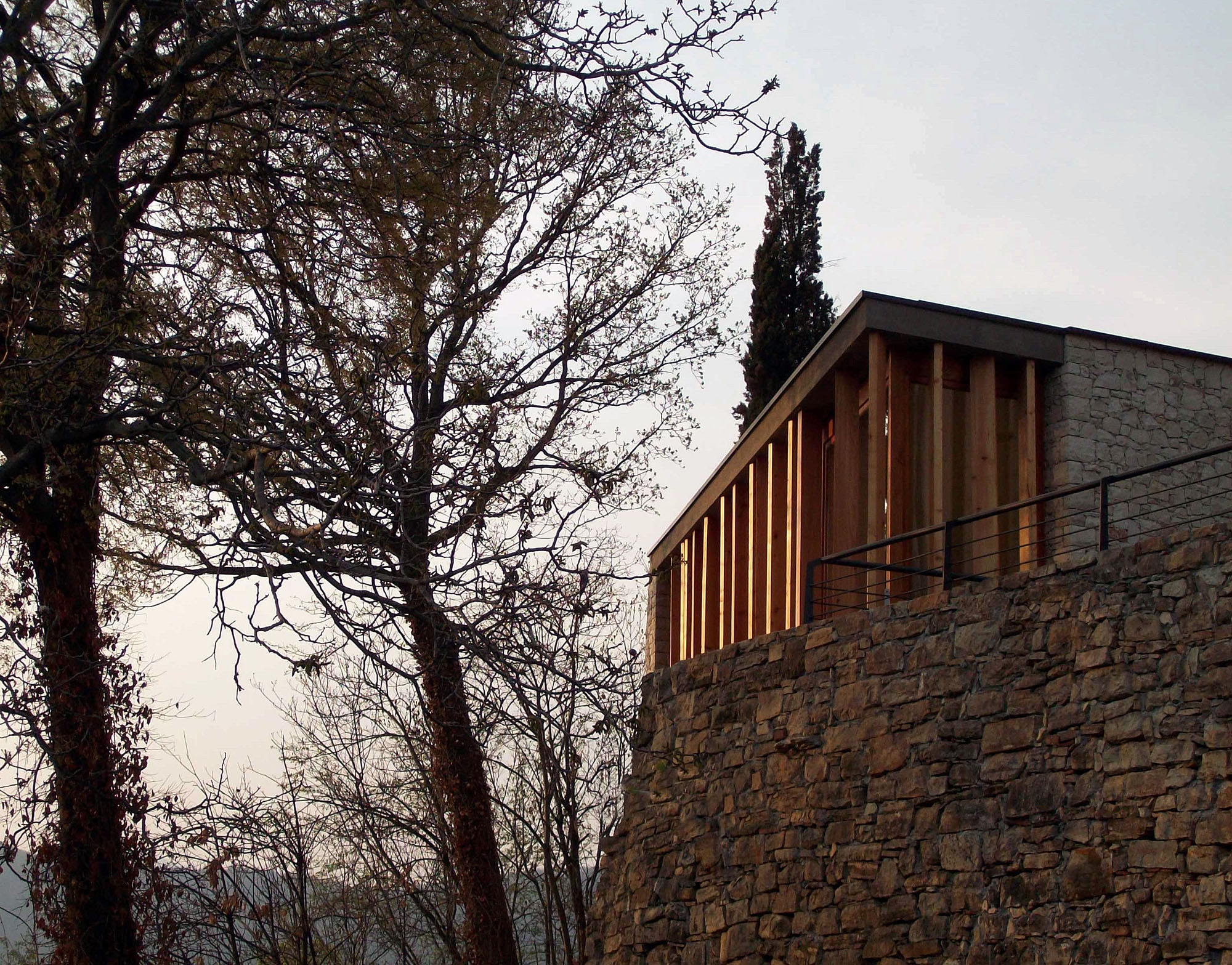
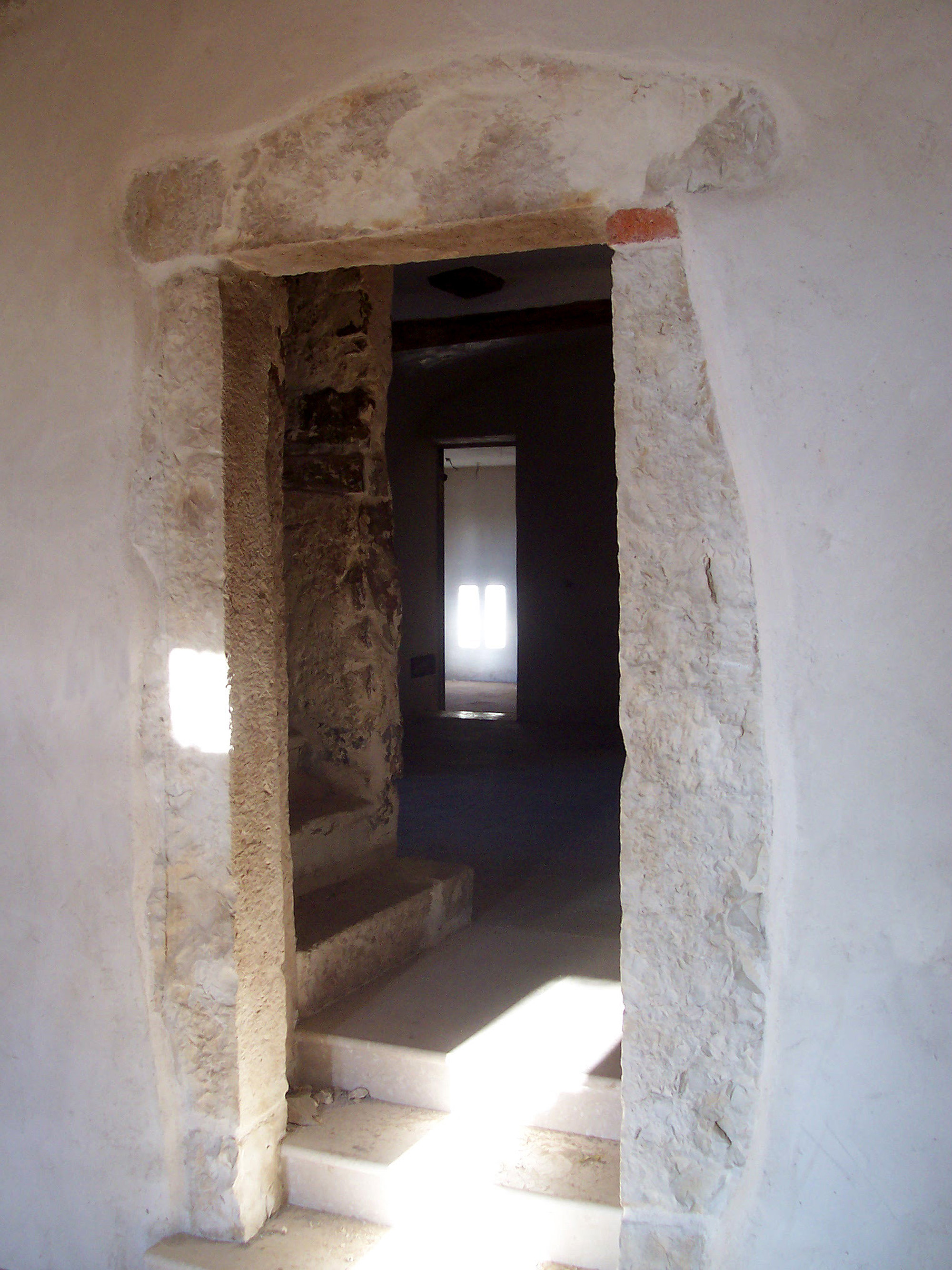
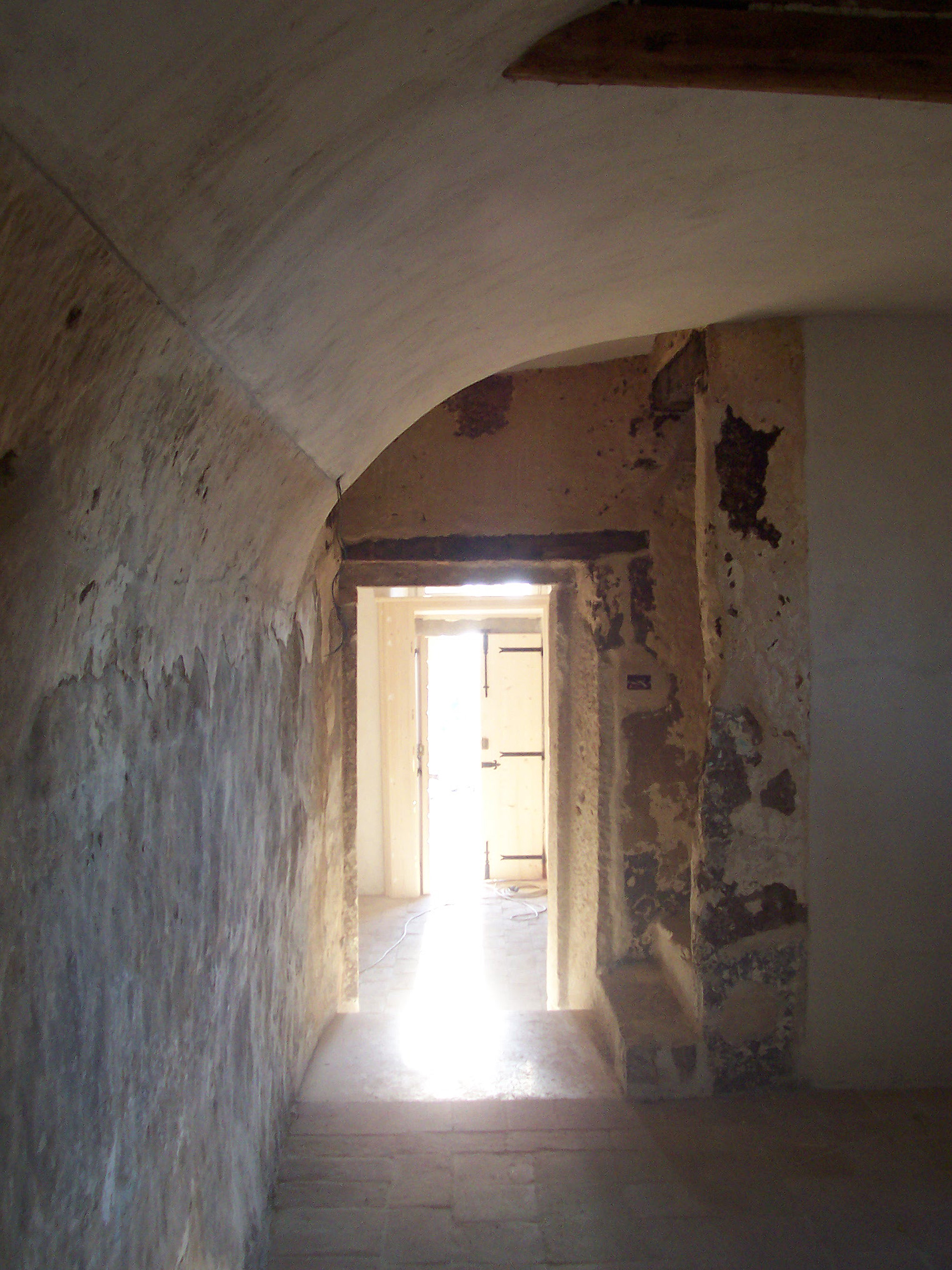
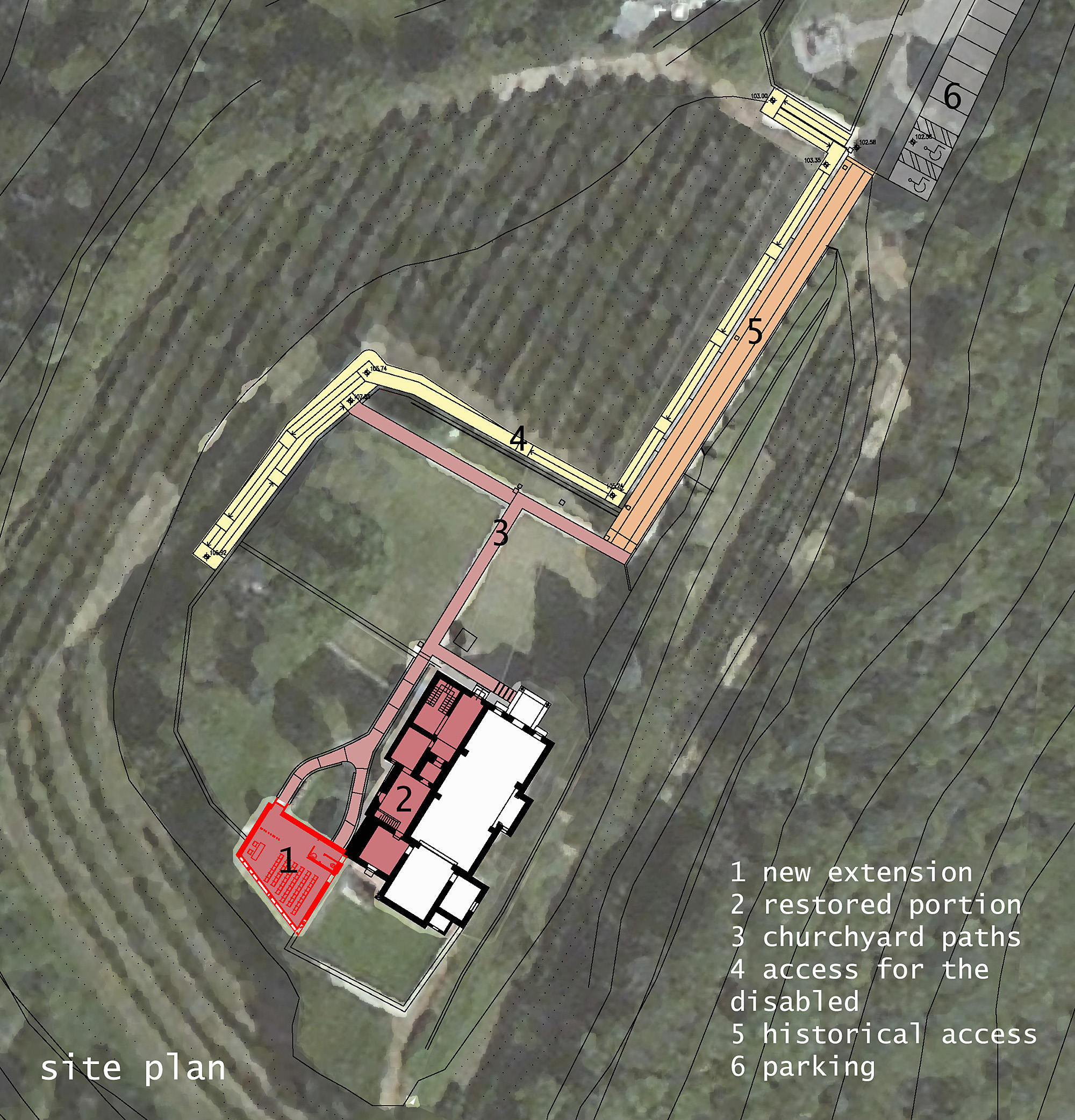
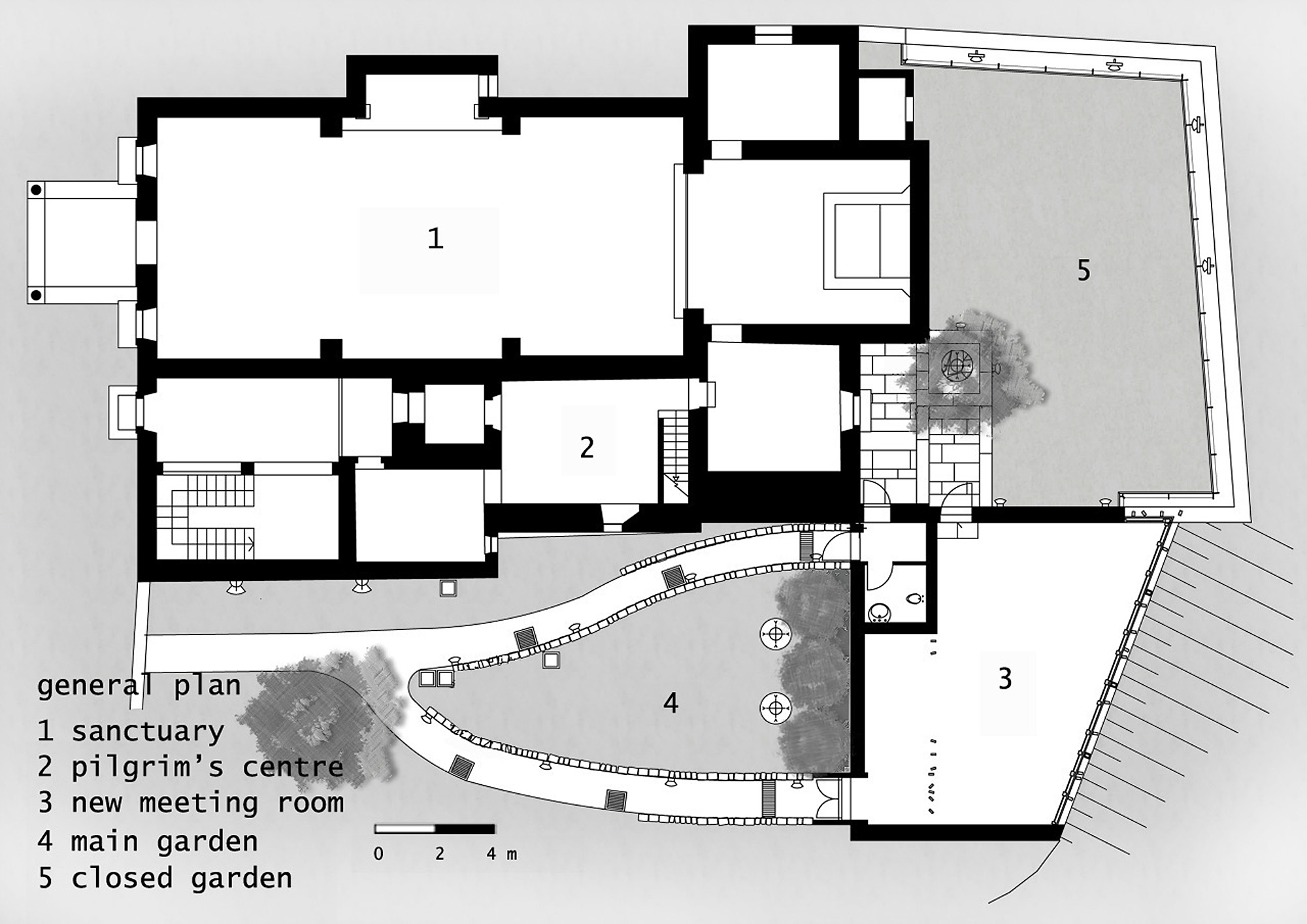
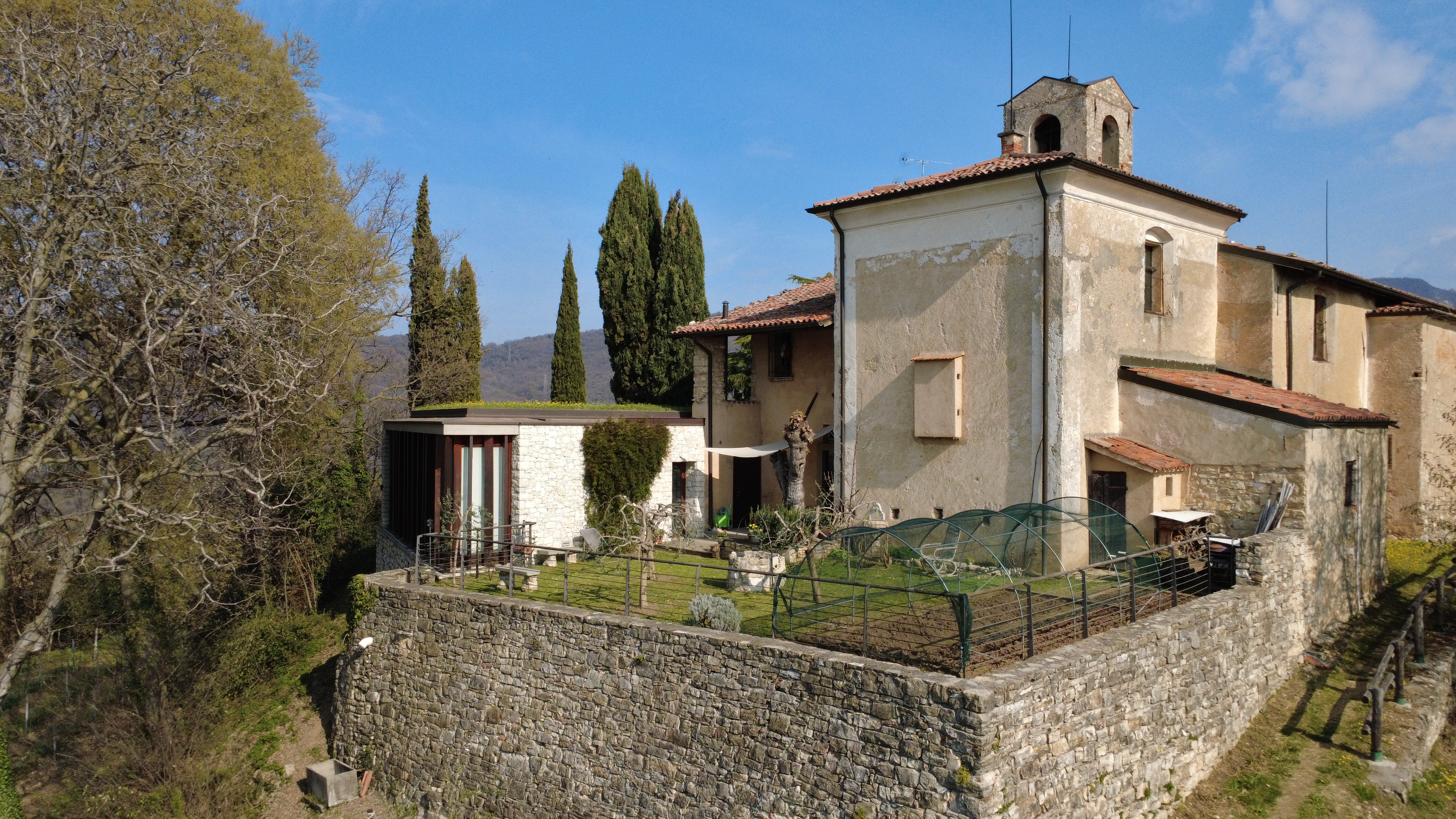
The redevelopment project, carried out in several phases between 2006 and 2011, focused on the repurposing of the ancient residence—currently home to a nun who maintains and guards the complex—and the creation of a new multi-purpose hall. This latter volume, explicitly contemporary in design, seeks a symbiotic balance with the historical and environmental context.
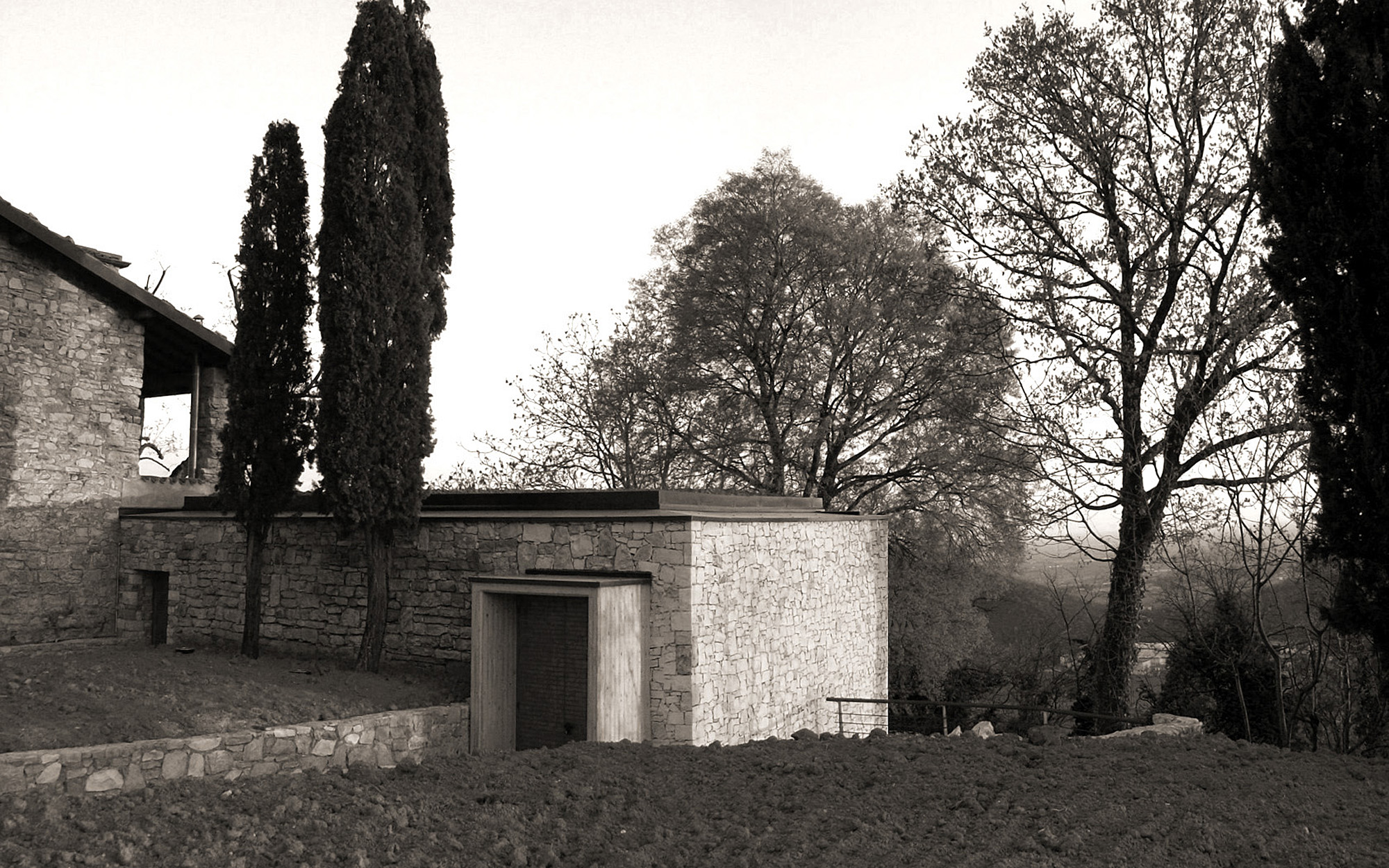
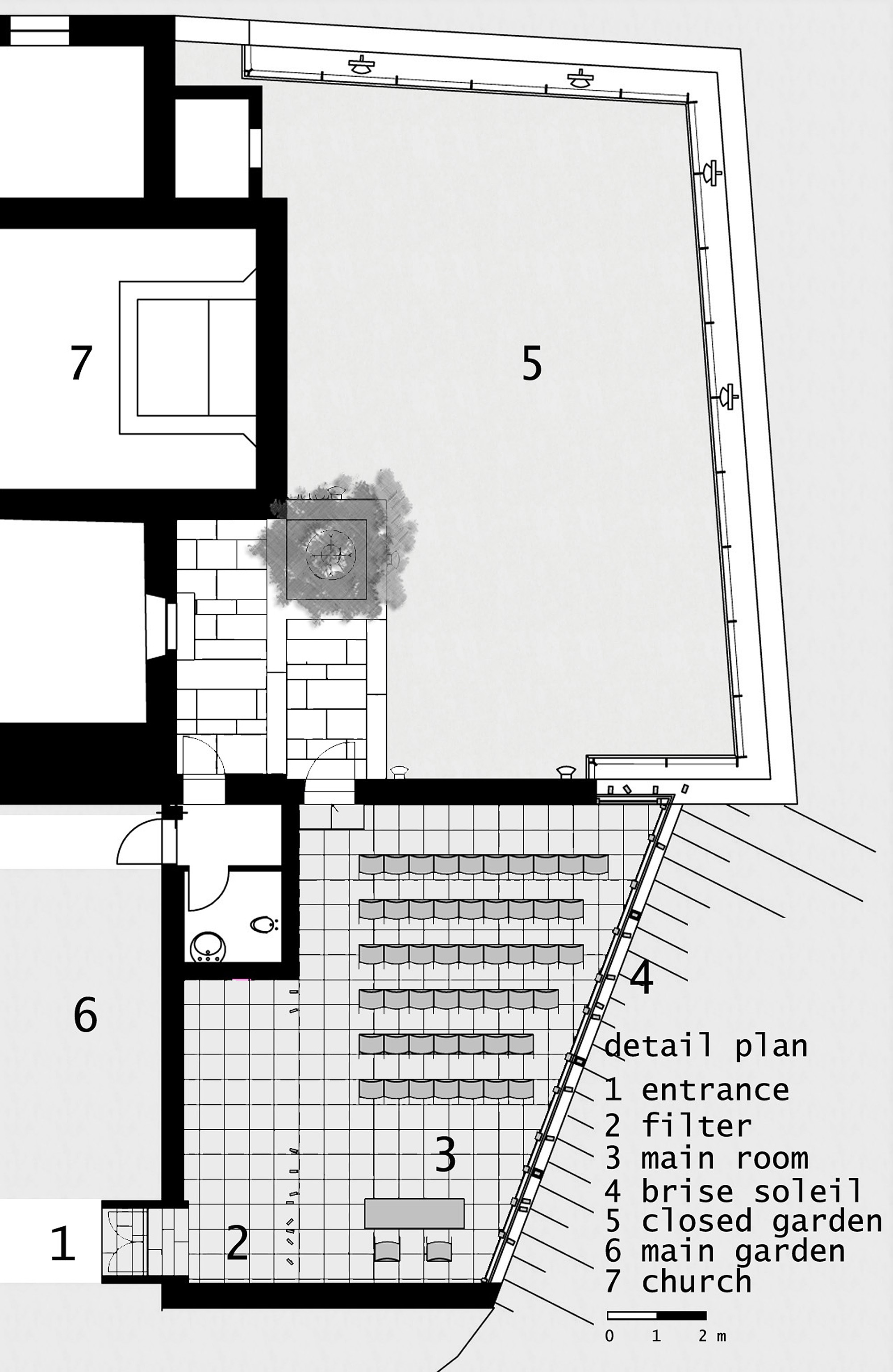
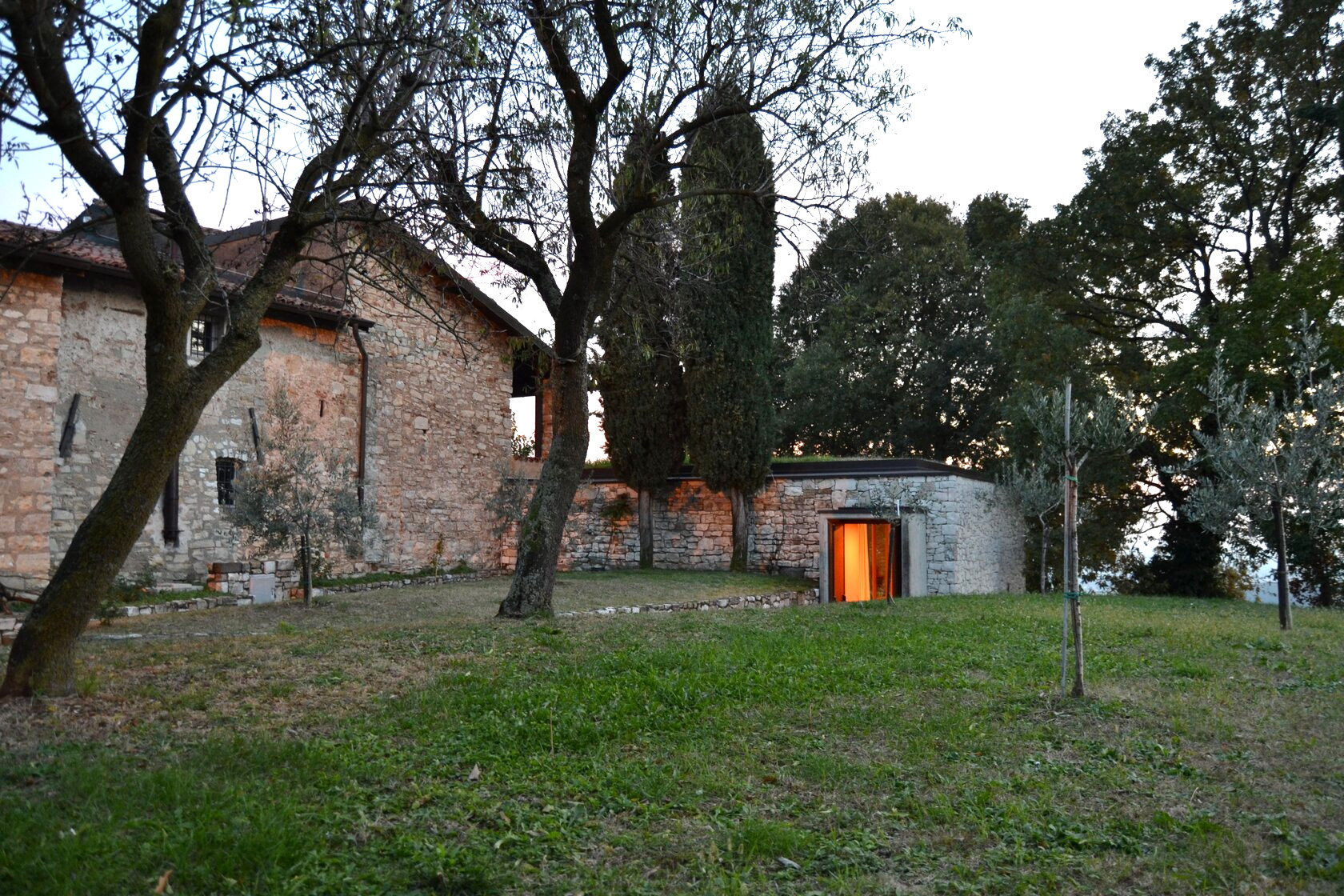
To preserve the intimacy of the site, the extension was conceived as an underground or “hidden” structure:
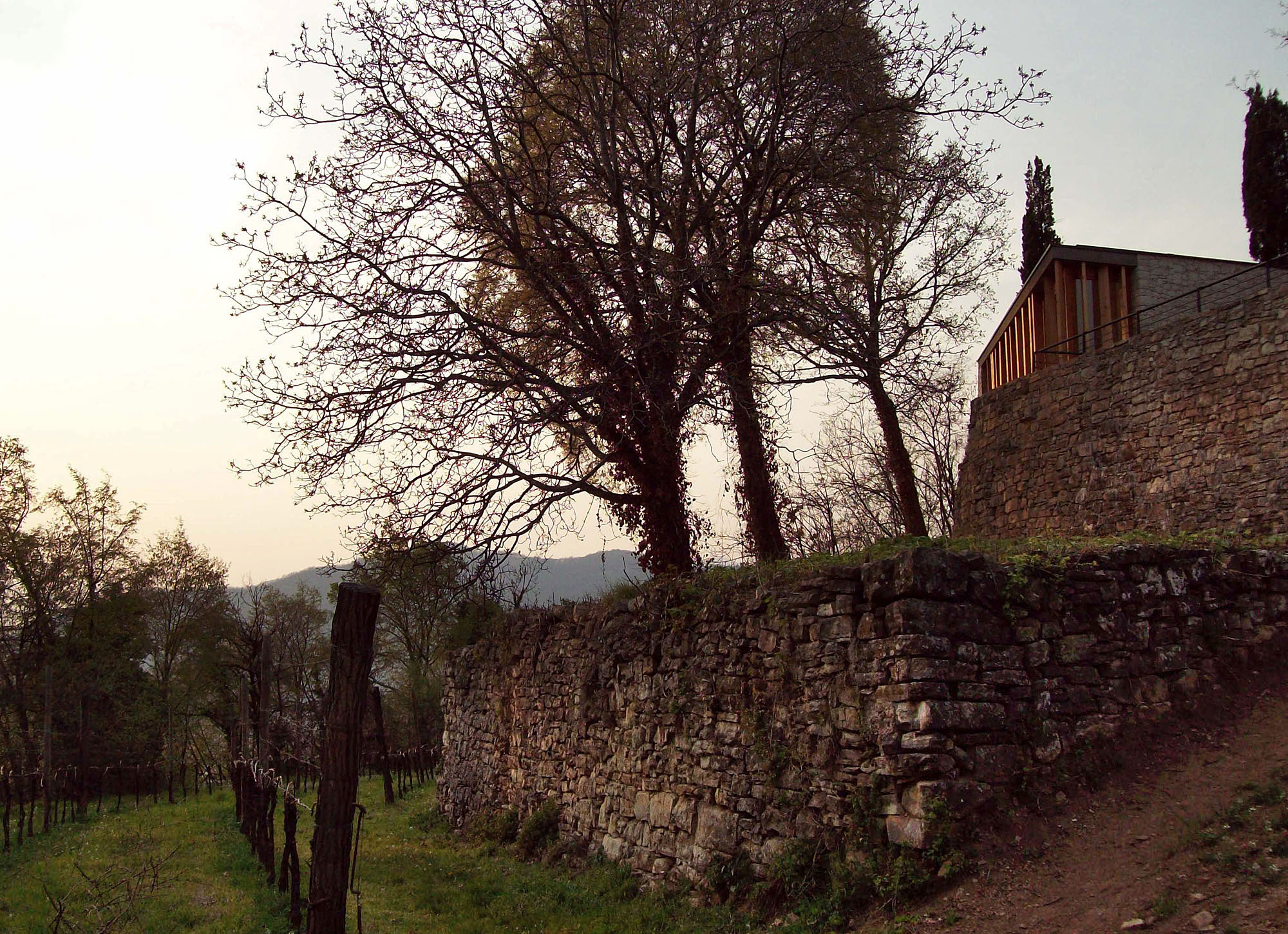
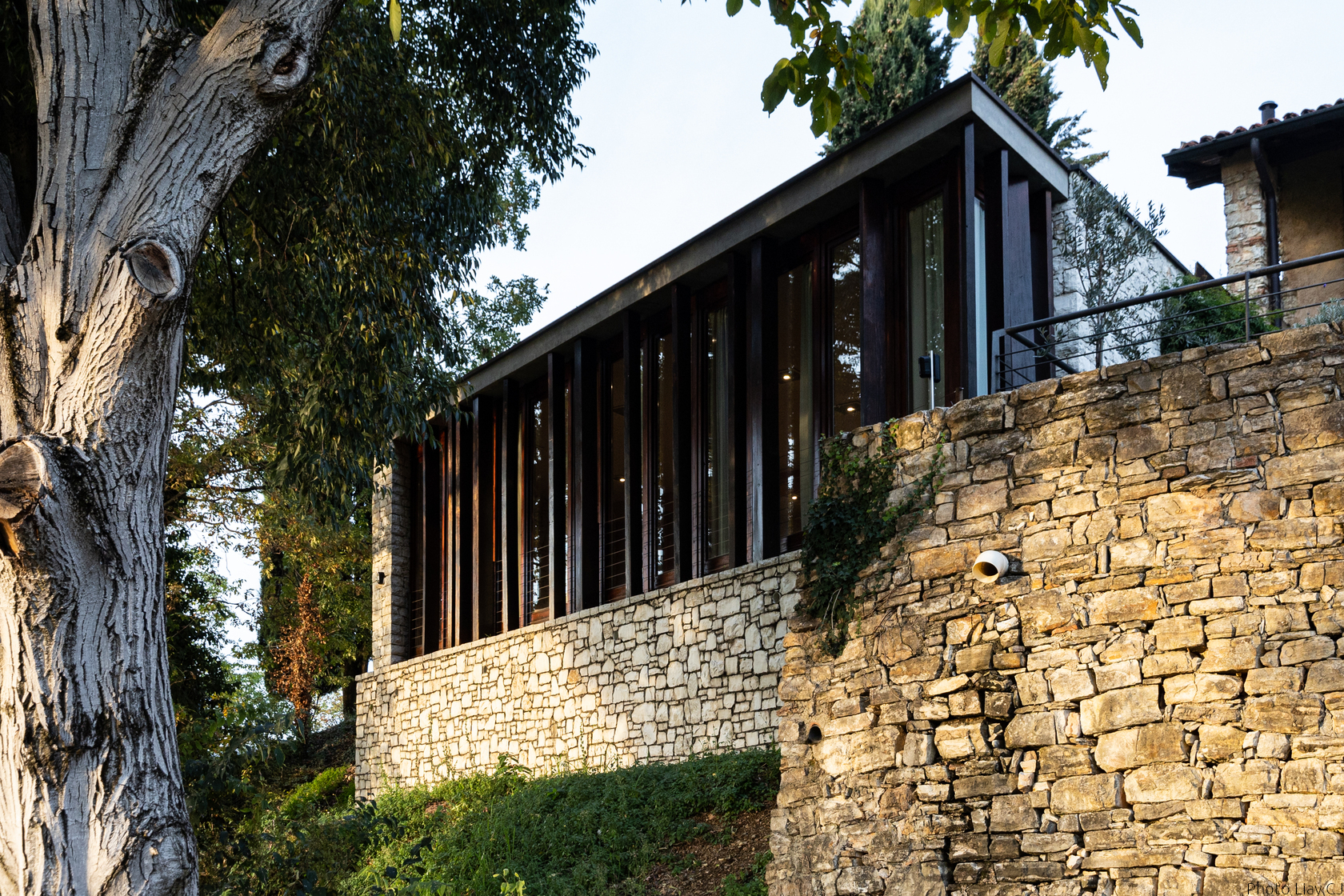
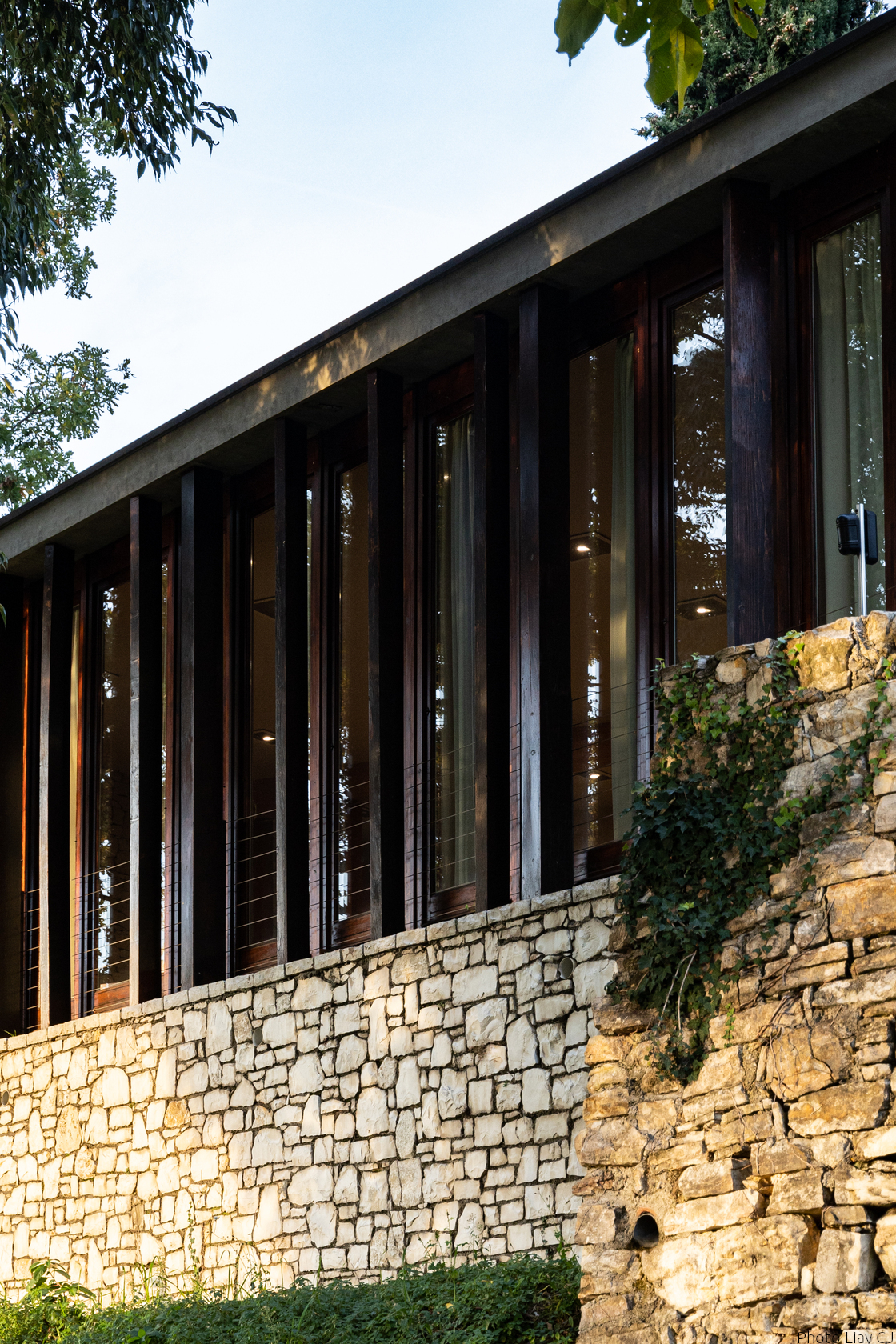
• Material Integration: Built with the same stone as the Sanctuary and topped with a green roof, the hall remains almost invisible from the main parvis.
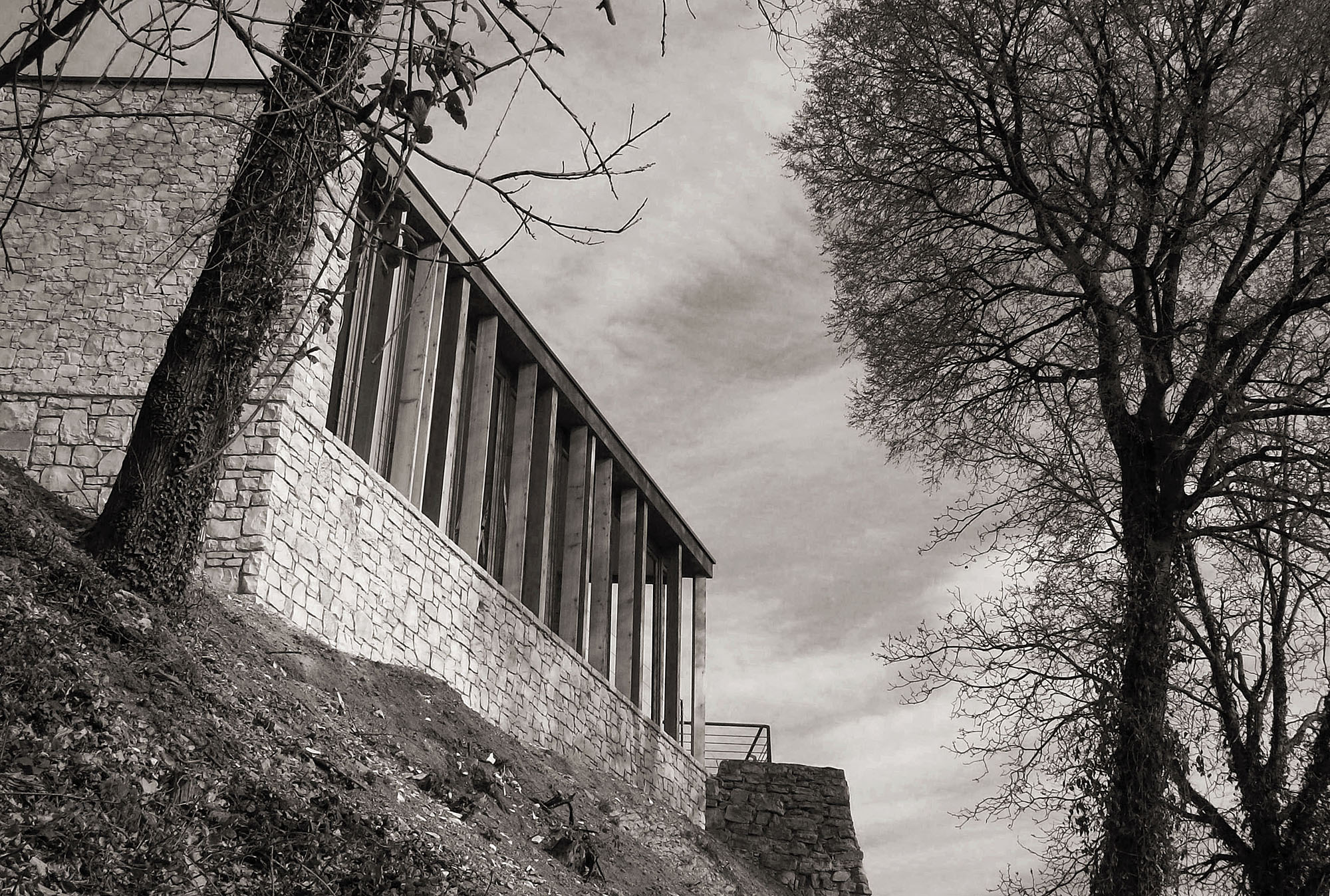
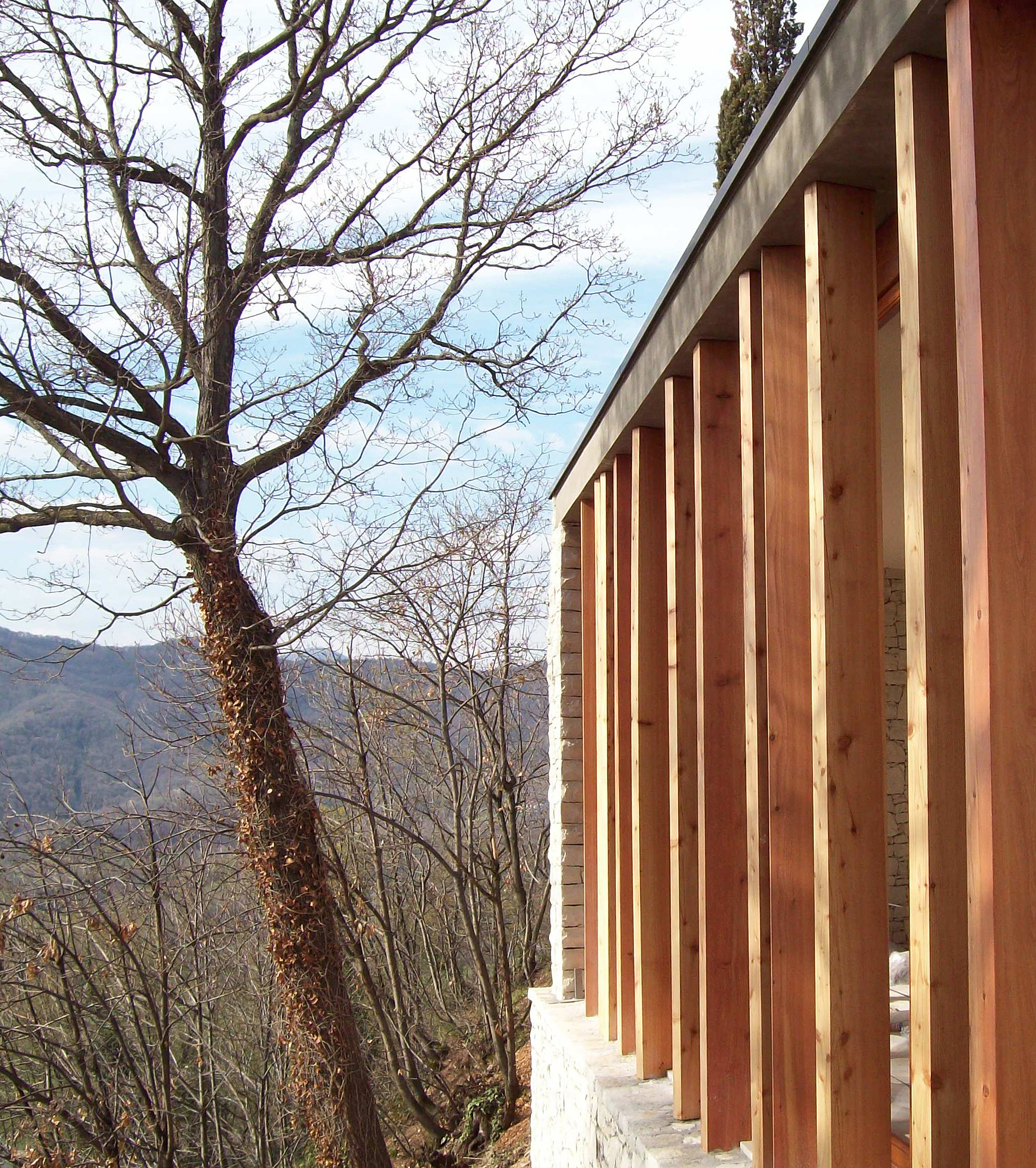
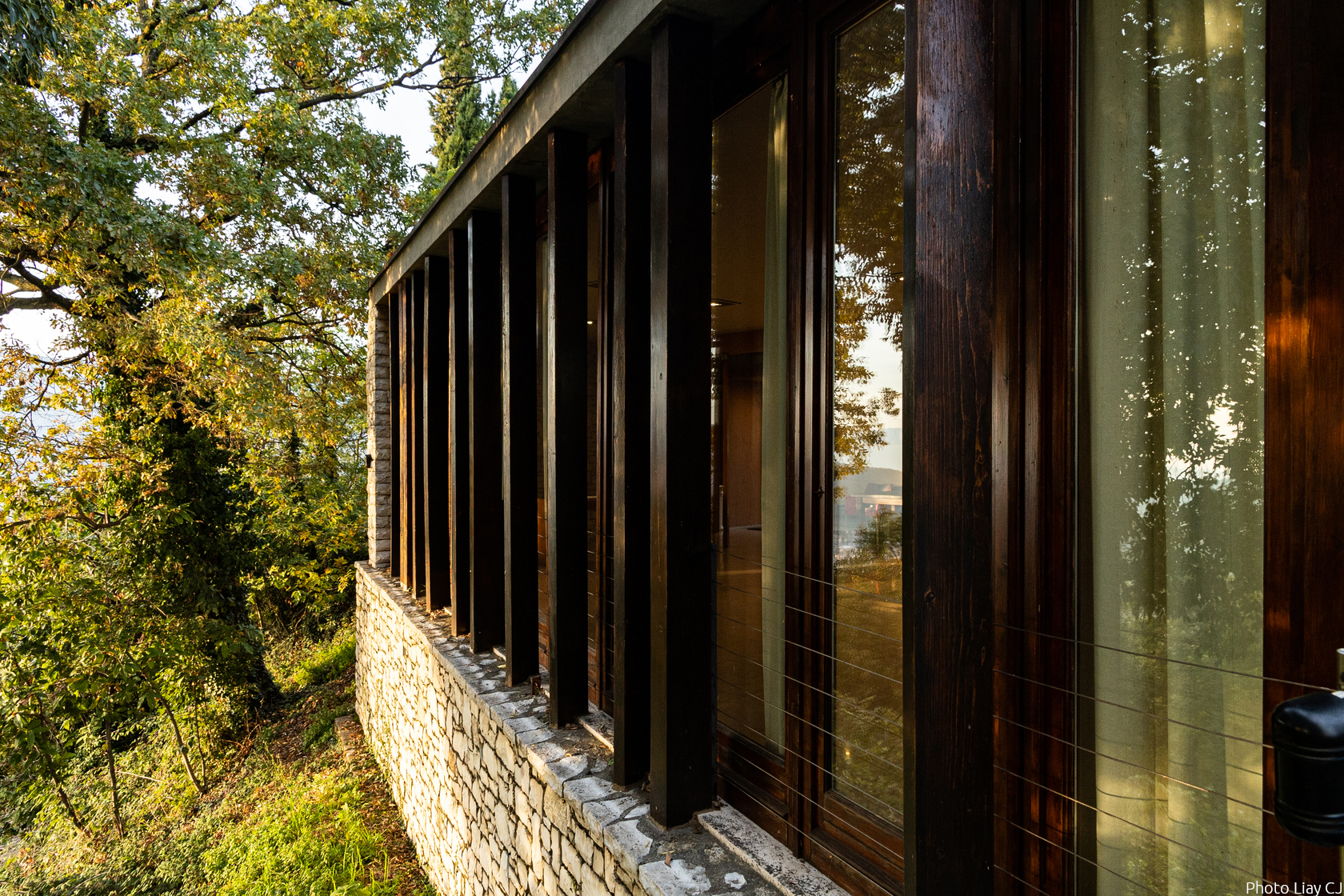
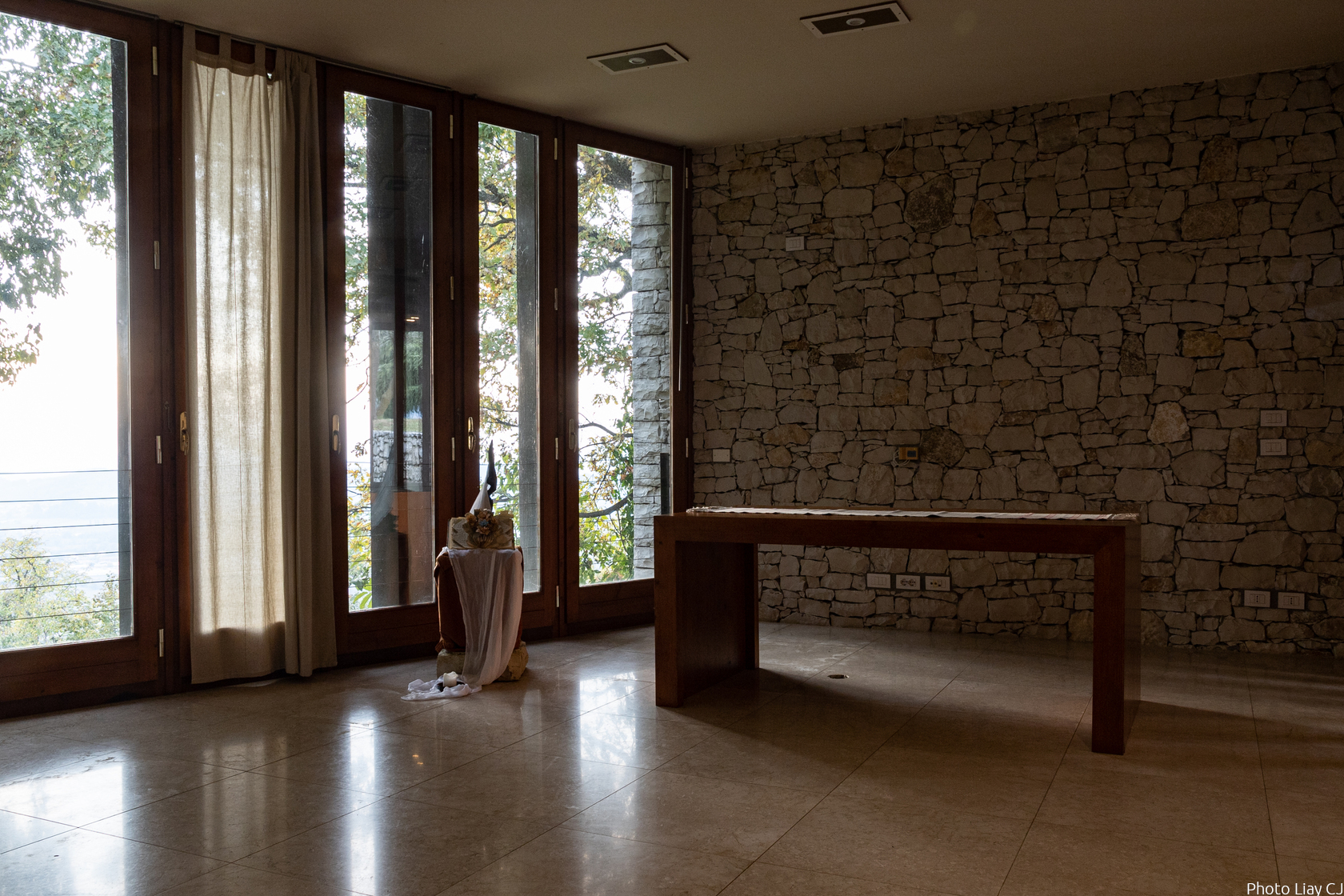
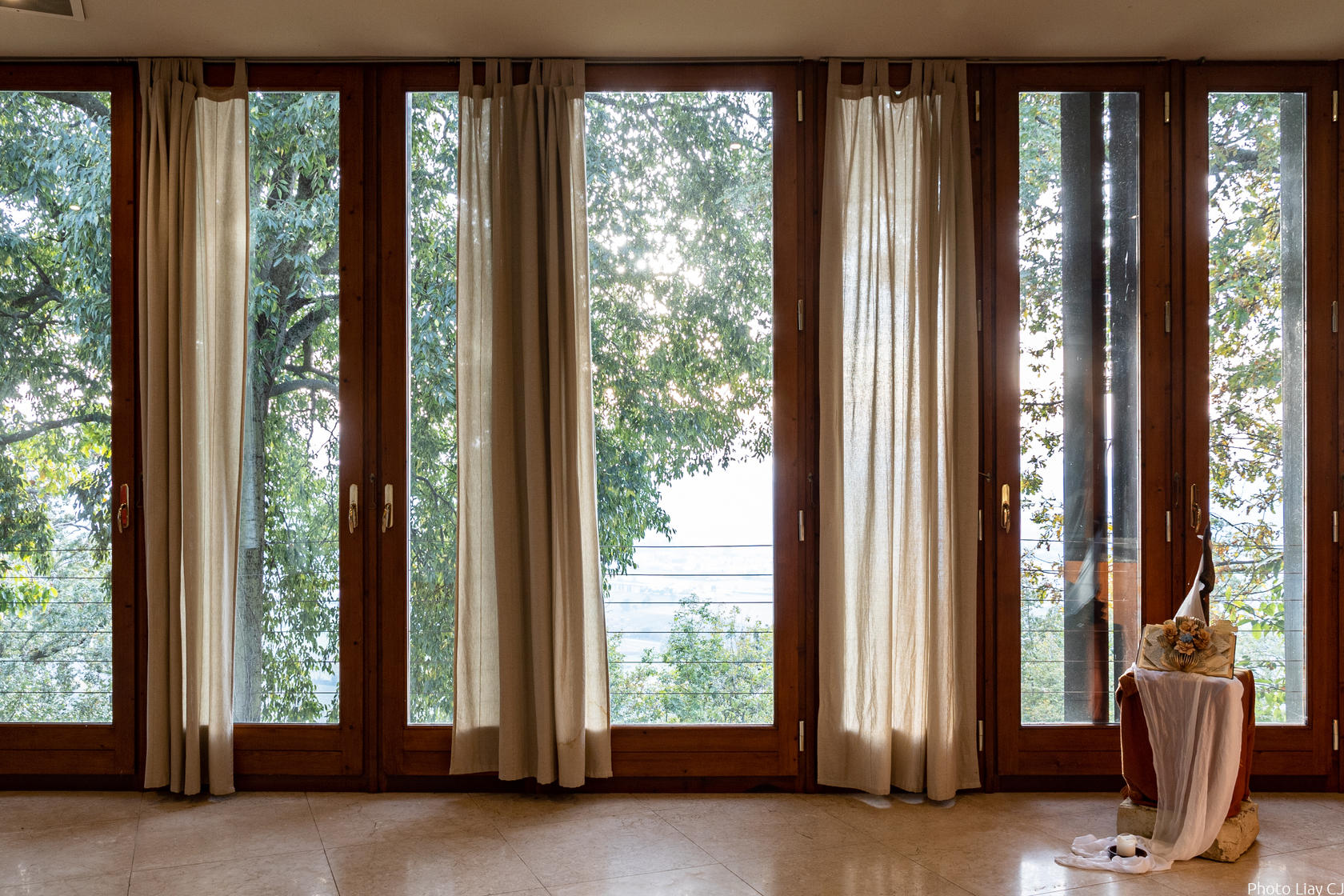
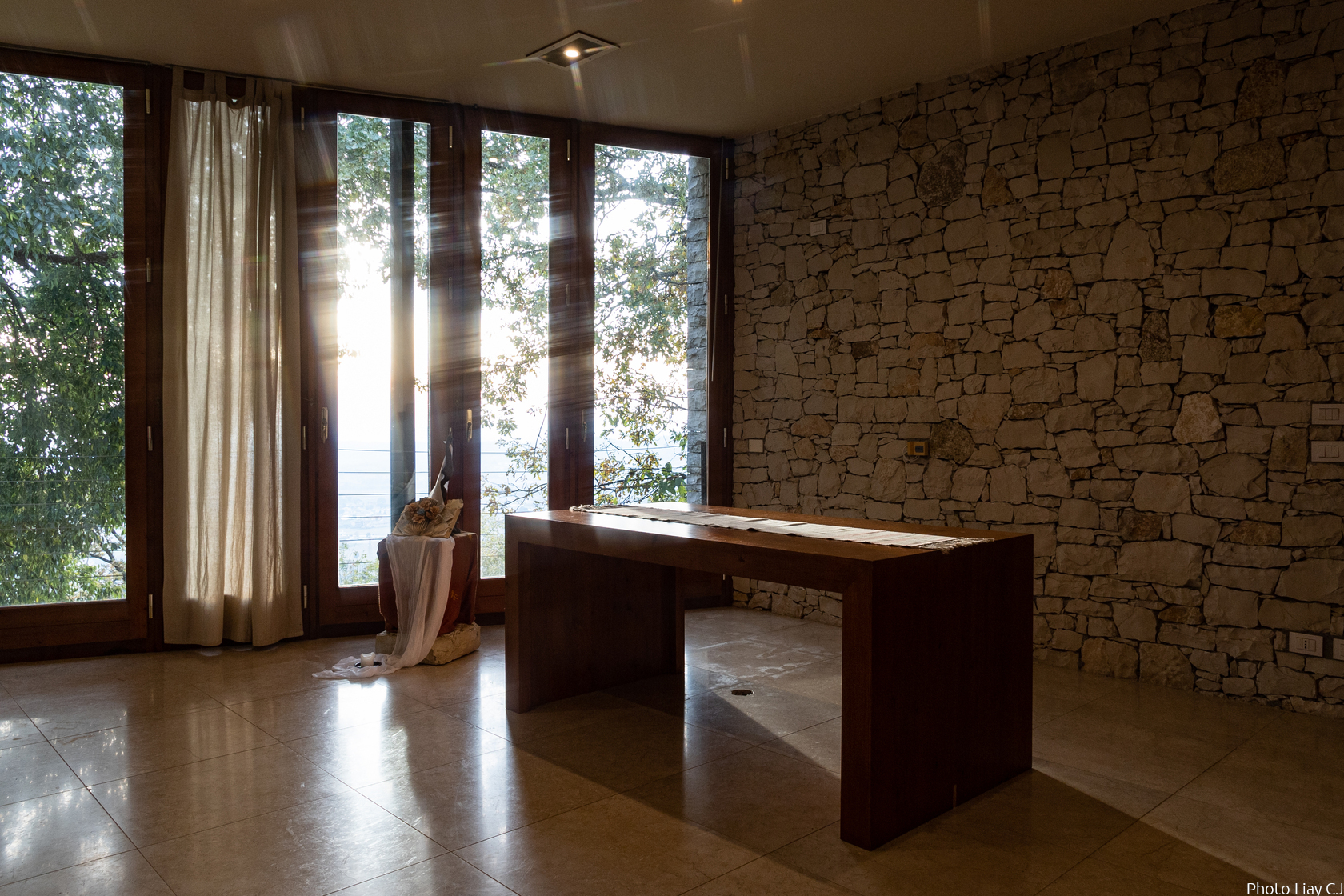
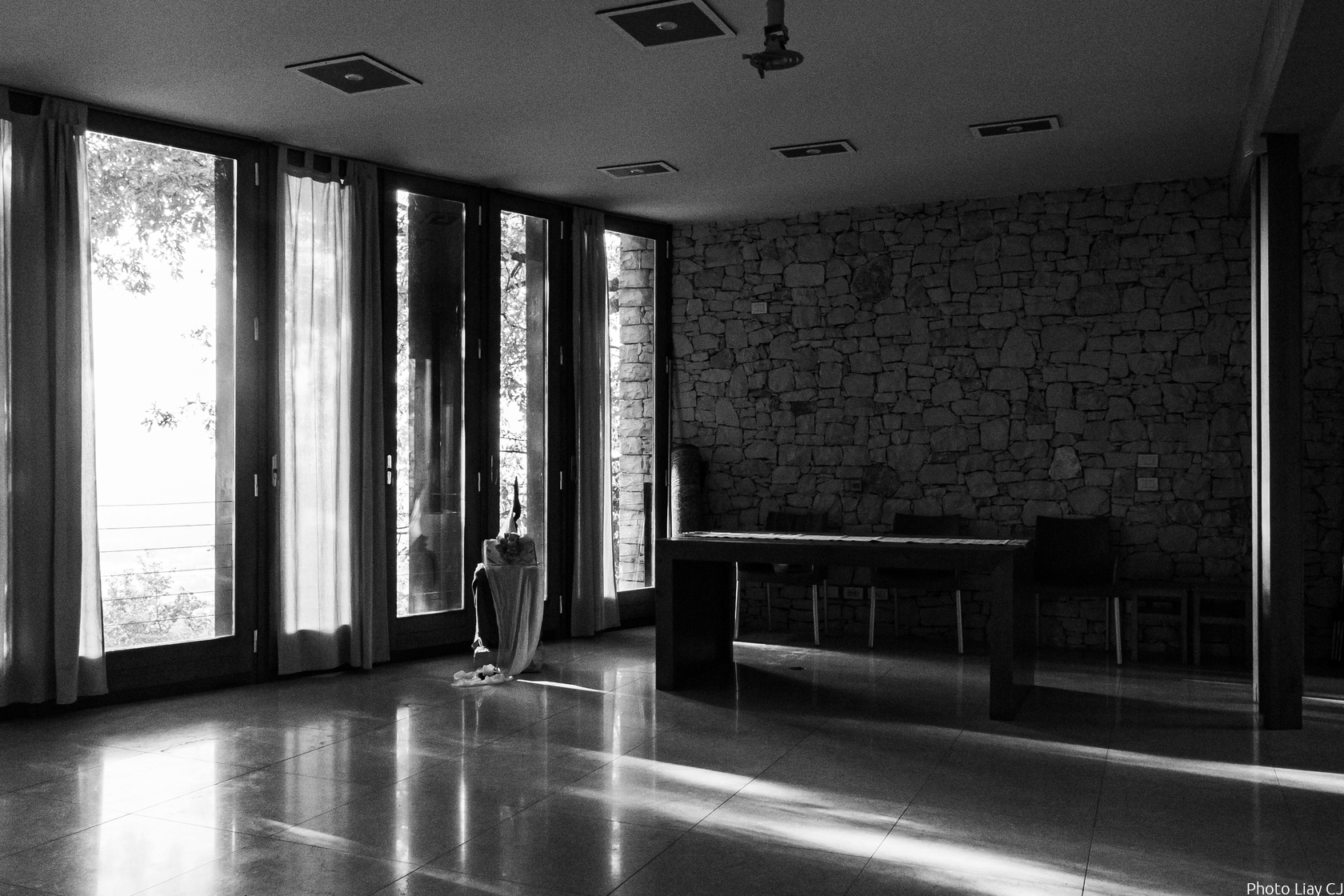
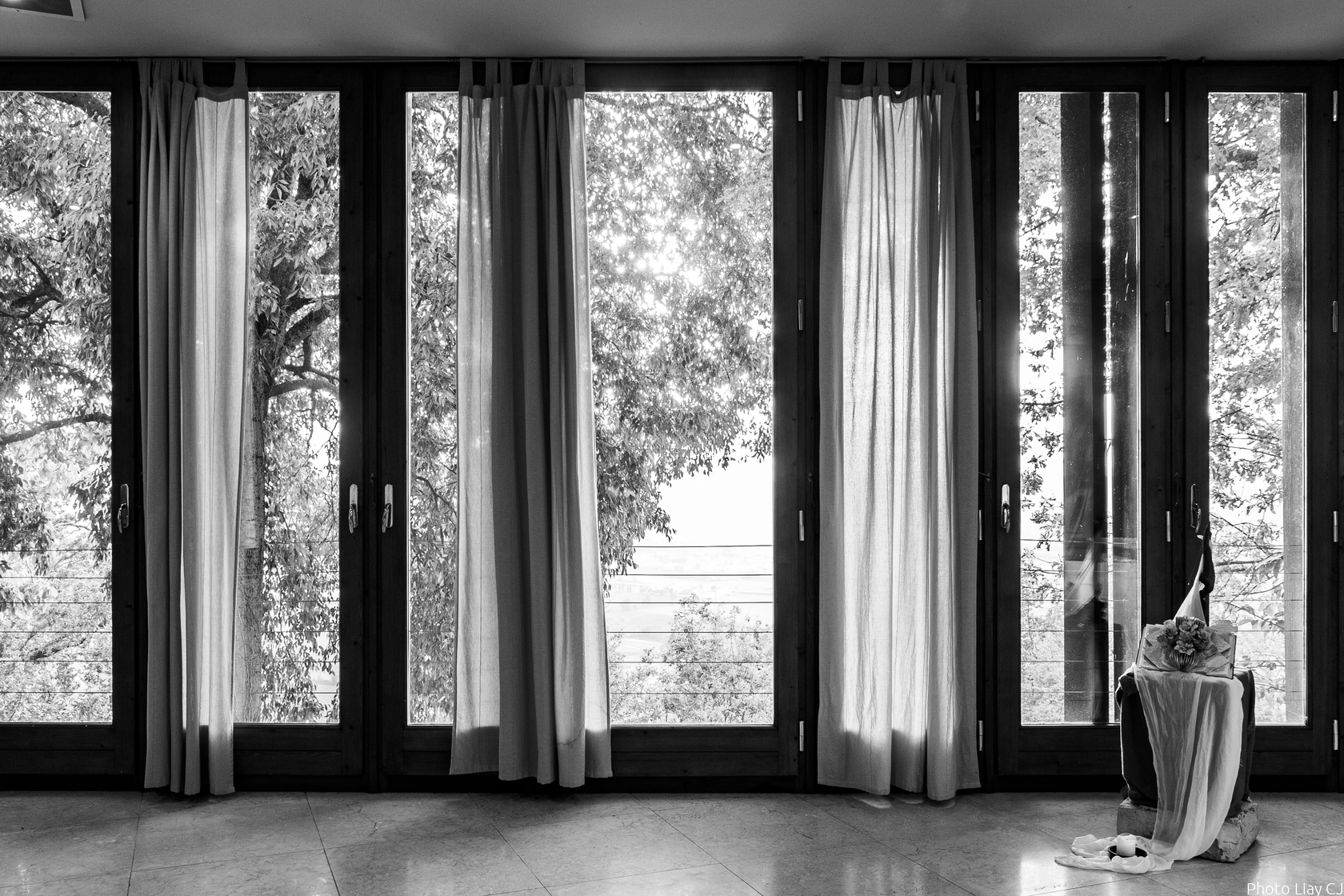
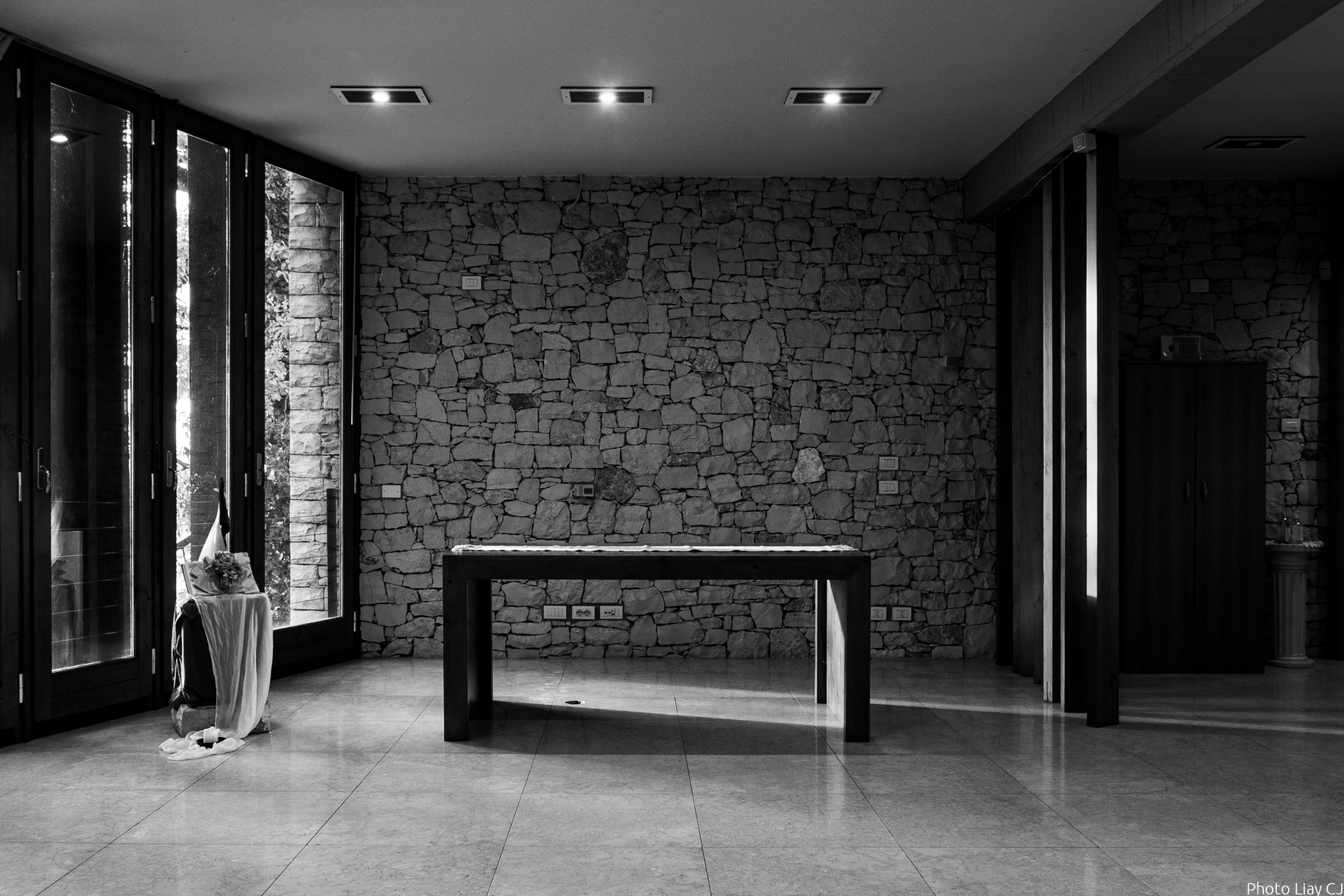
• Transparency and Nature: Internally, the space opens toward the hills through a large floor-to-ceiling window, shielded by larch wood sunshades that filter light like the branches of a forest.
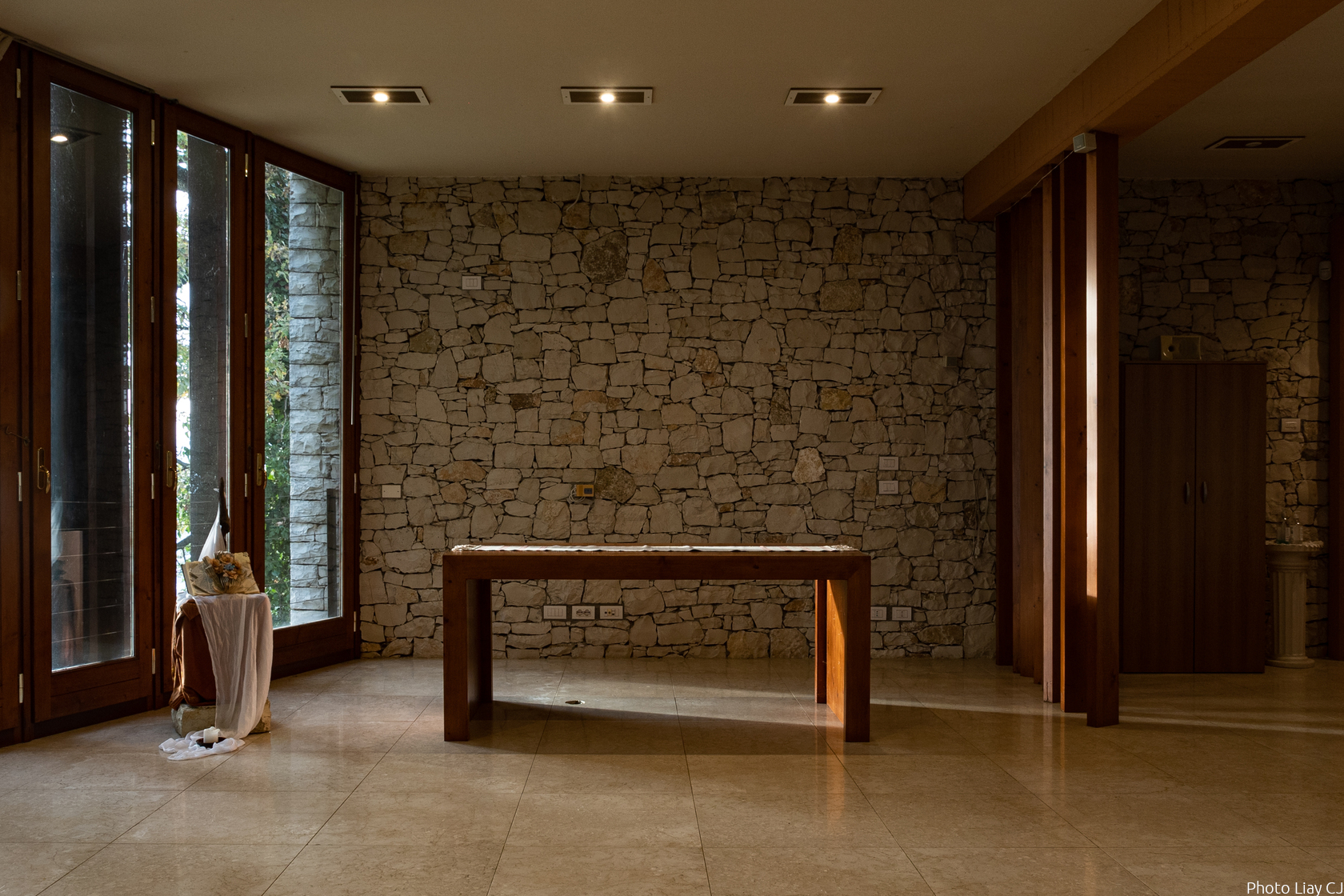
• Tactile Symbiosis: The use of natural materials, such as local stone (left raw on the walls and polished on the floor), guides the visitor through a contemplative path that unites the interior and exterior.
• Accessibility: The completion of accessible routes for people with disabilities in 2011 reinforced the vision of the Sanctuary as a place of universal welcome.
Rediscovering the Frescoes: A Hidden Treasure
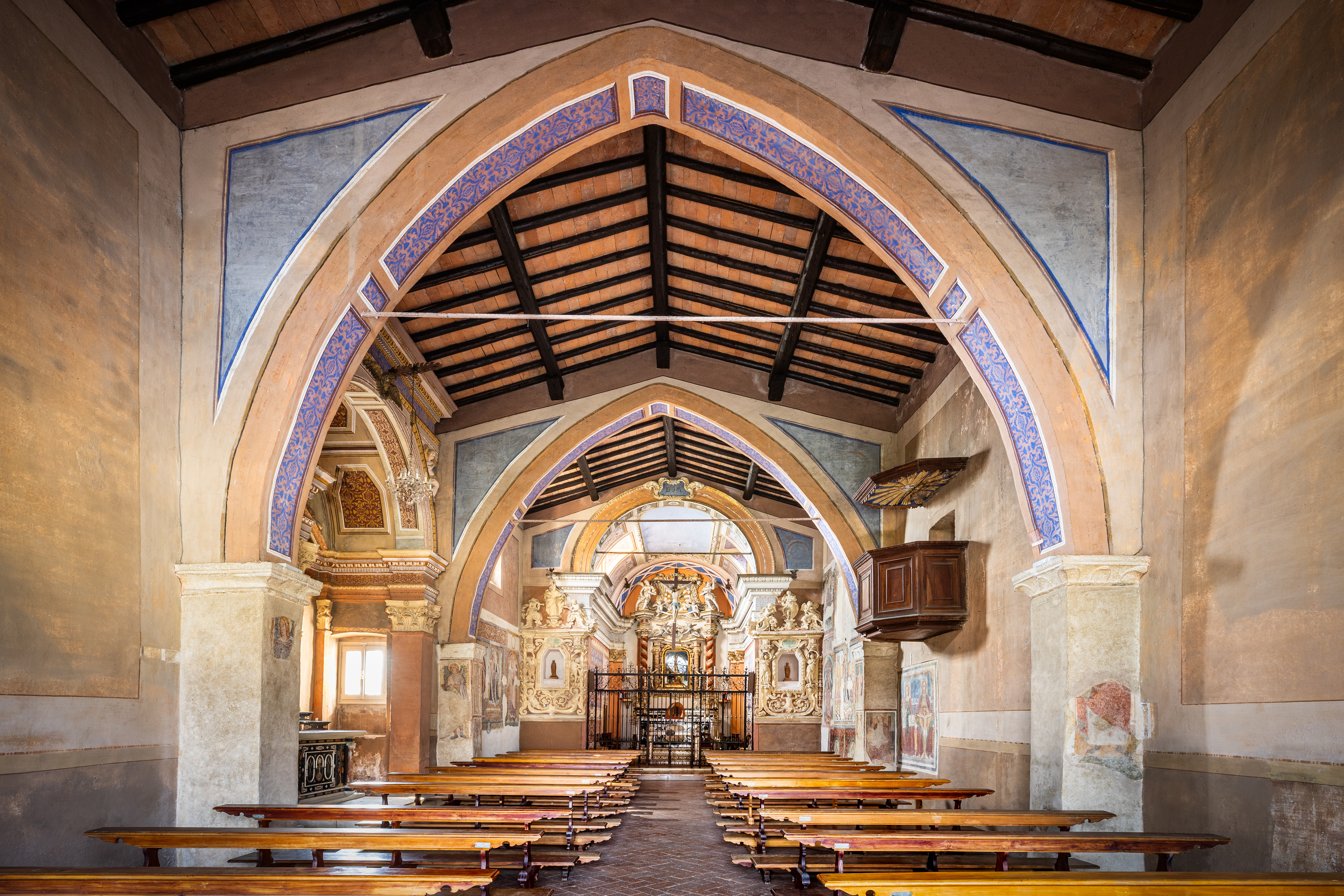
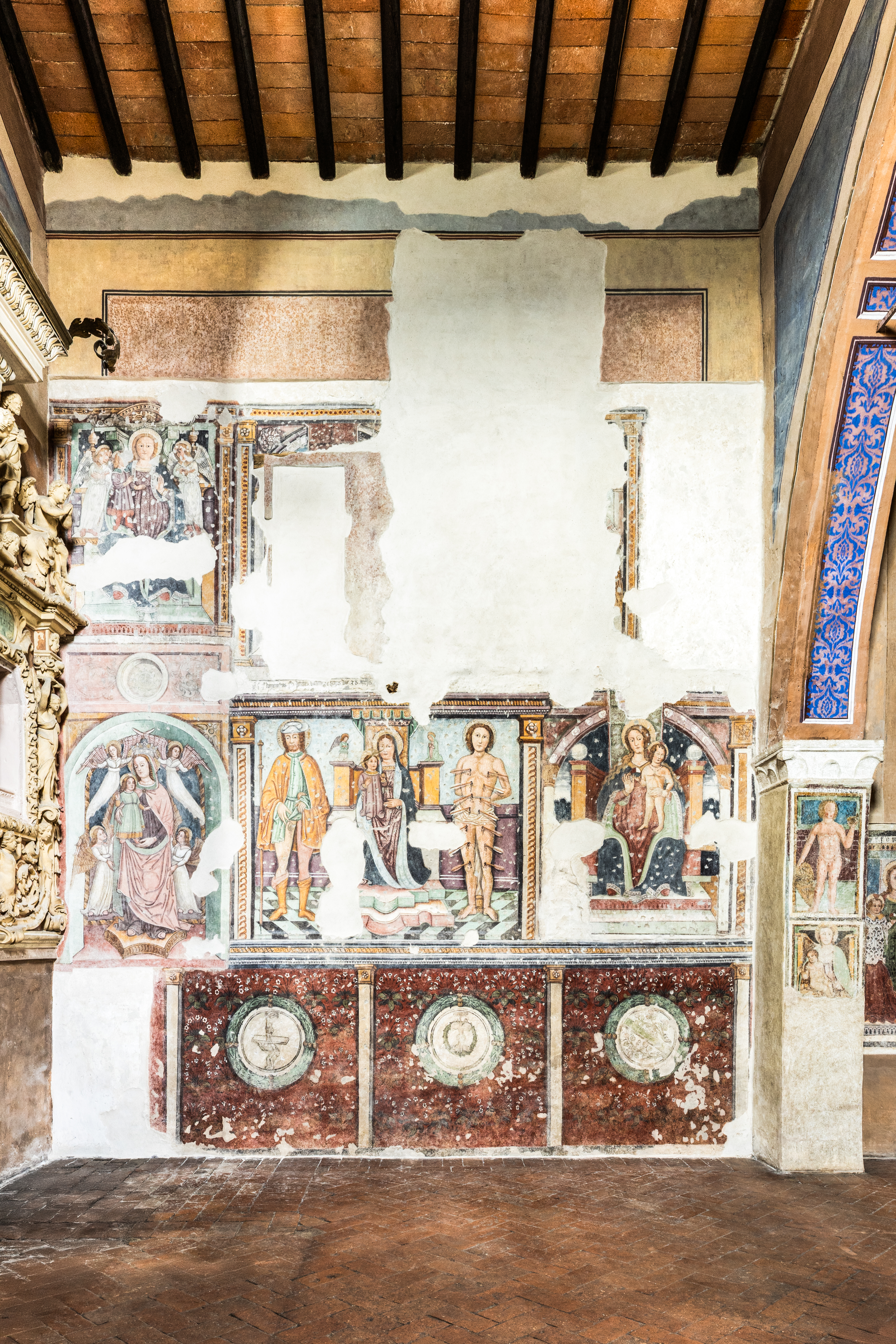
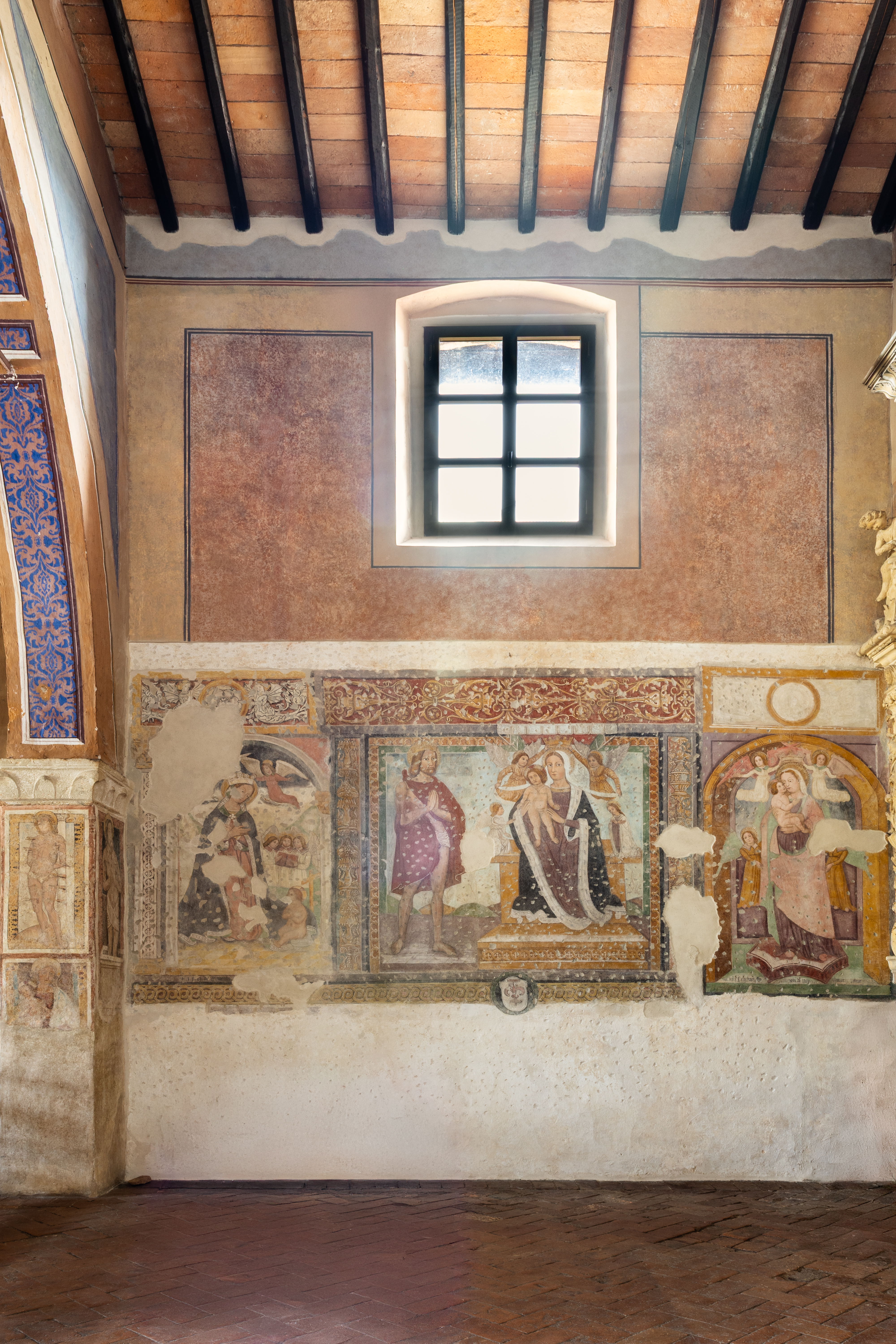
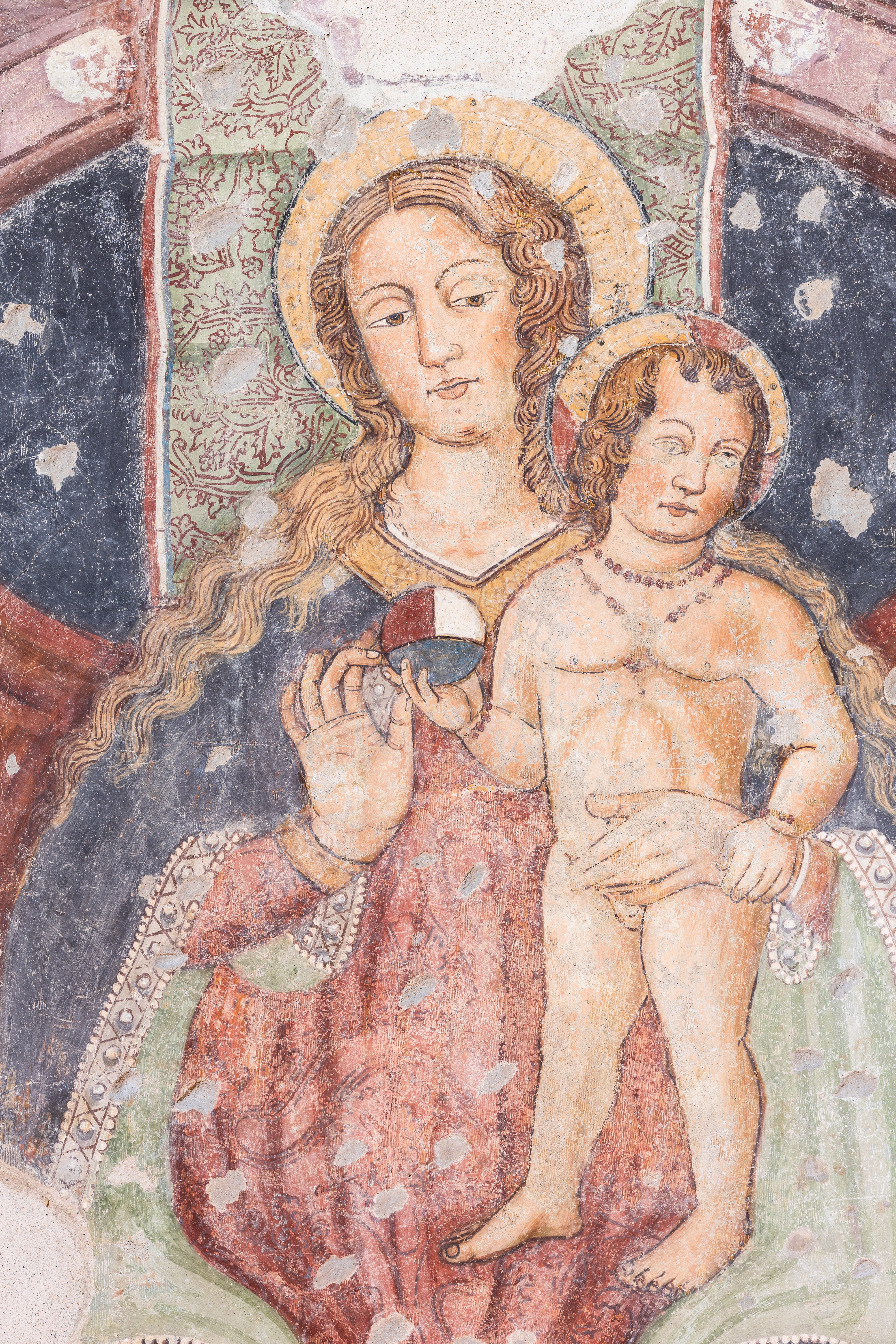
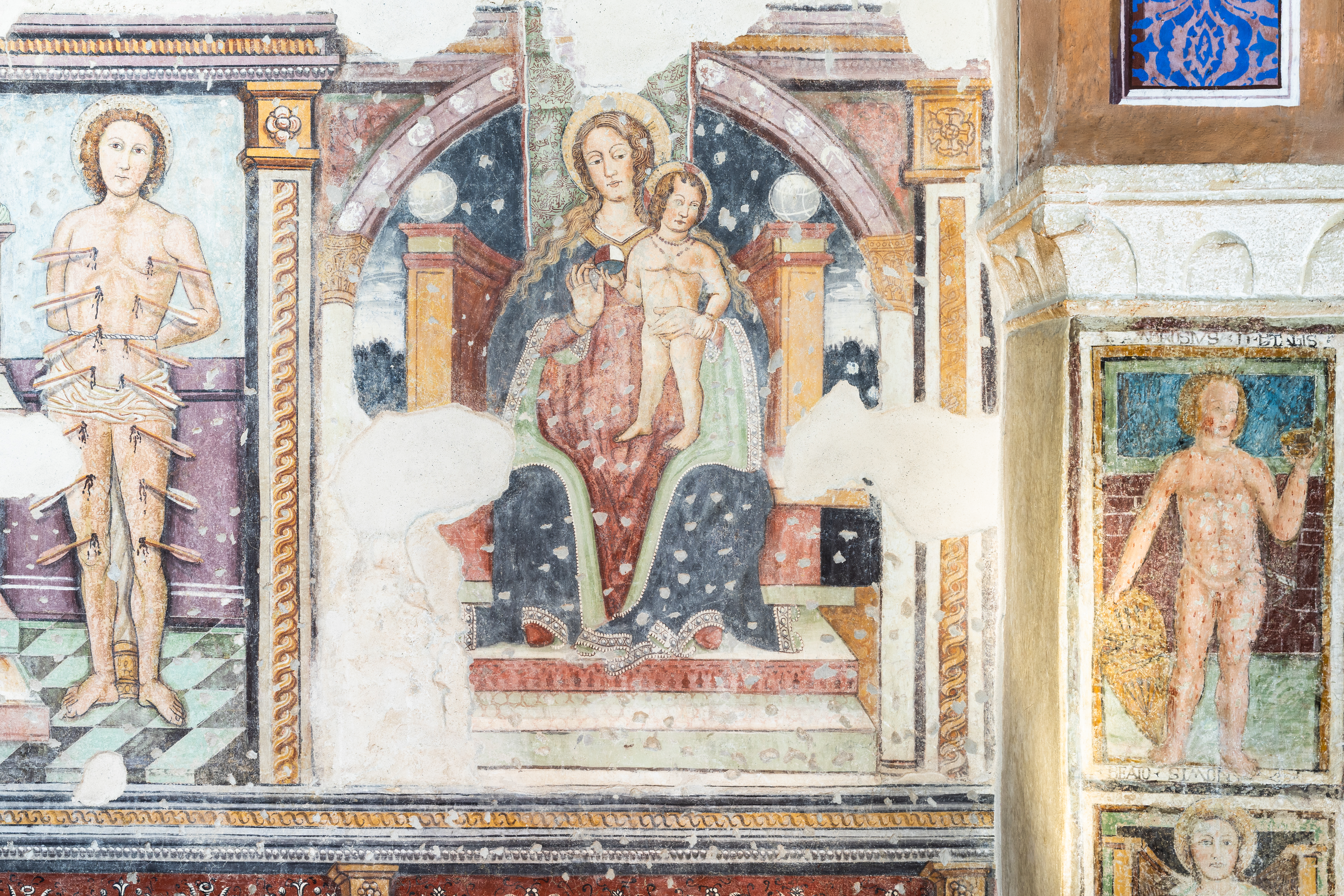
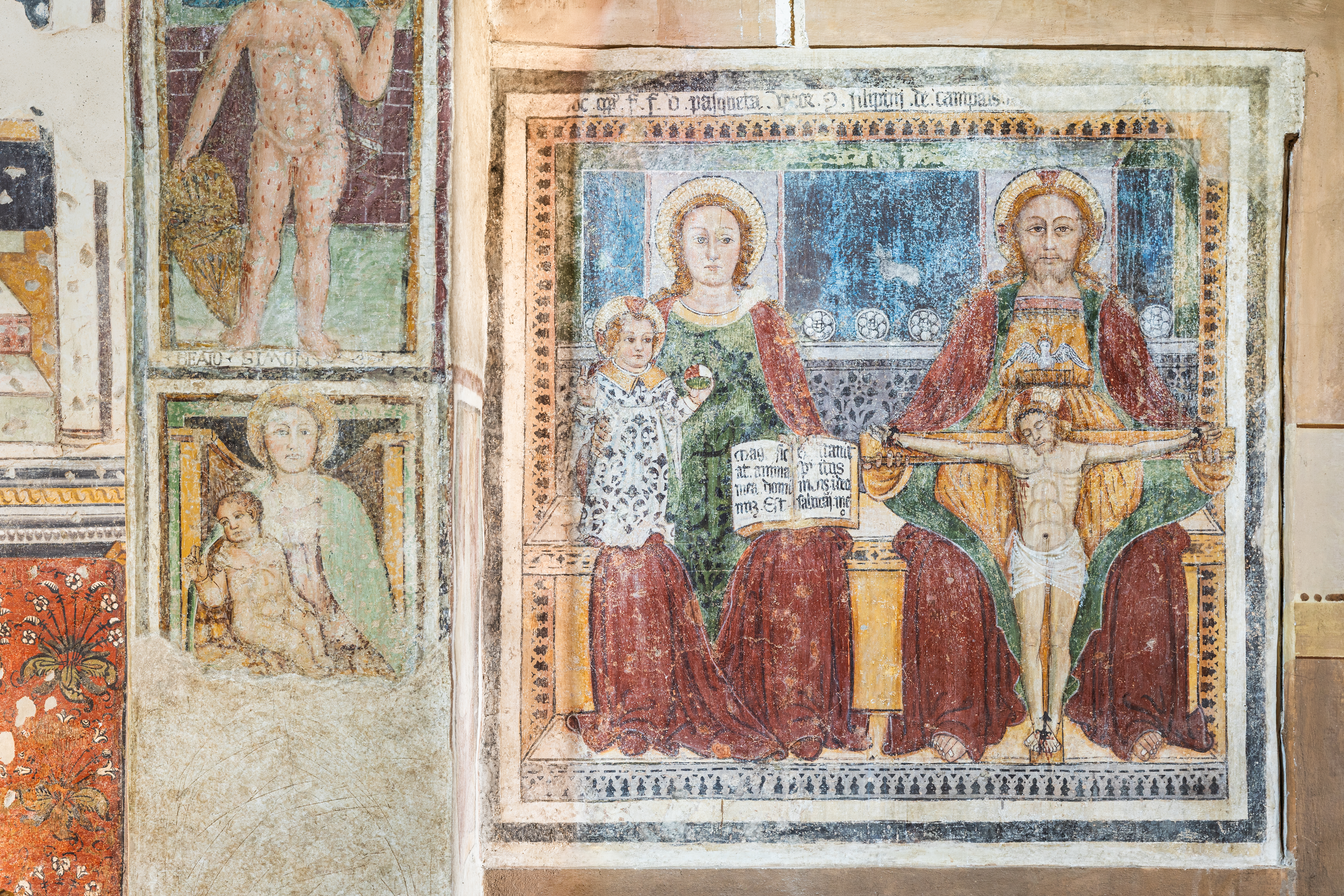
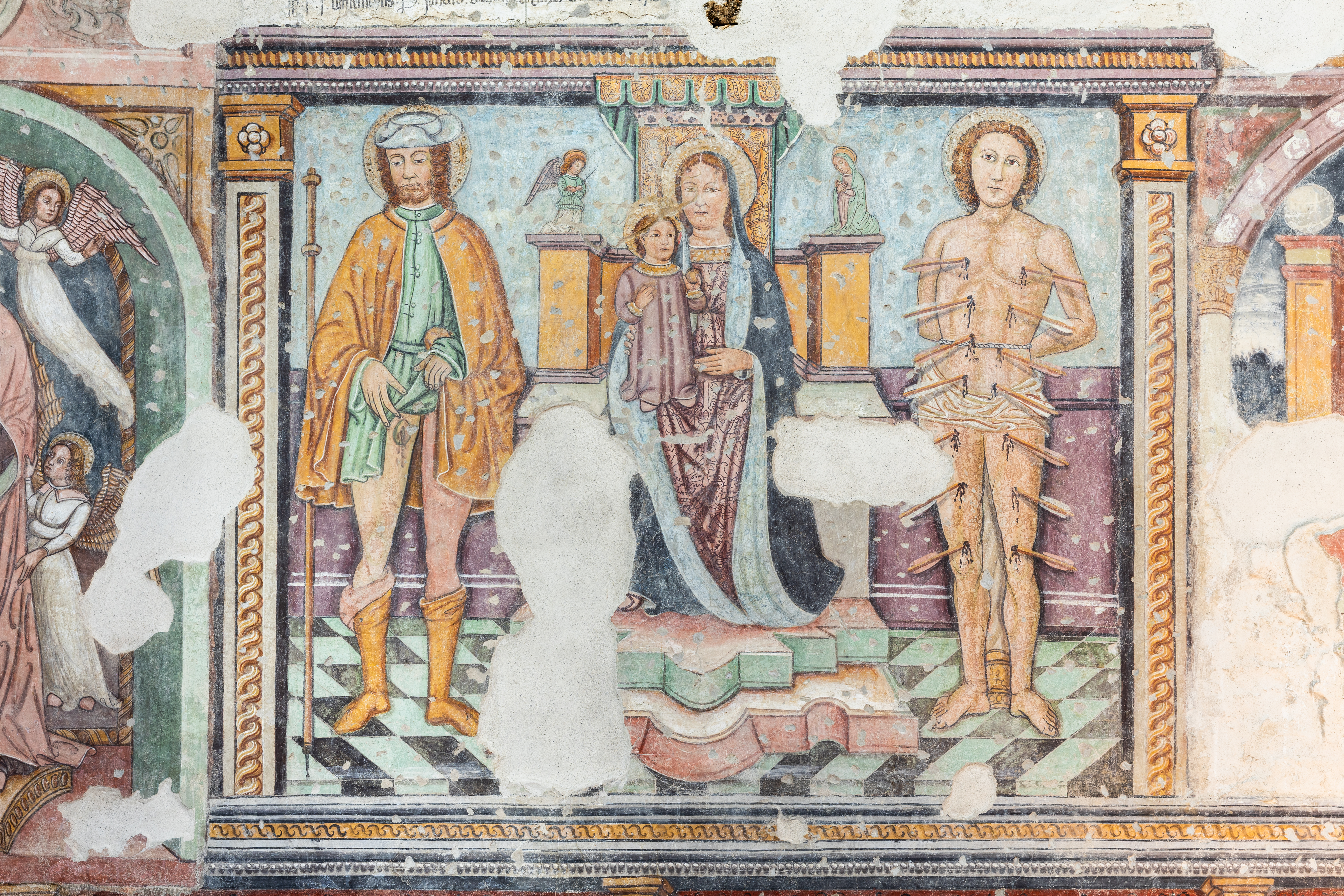
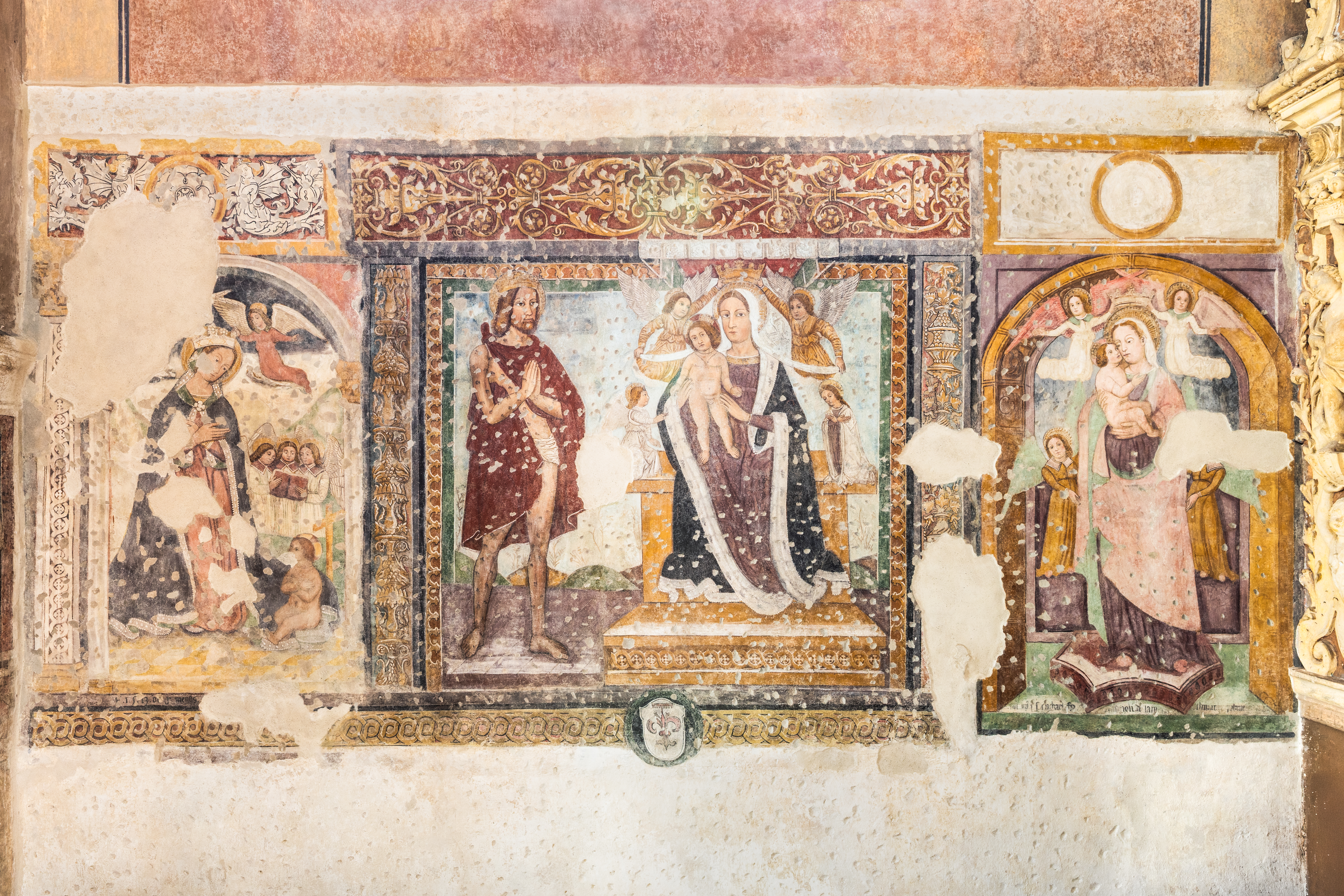
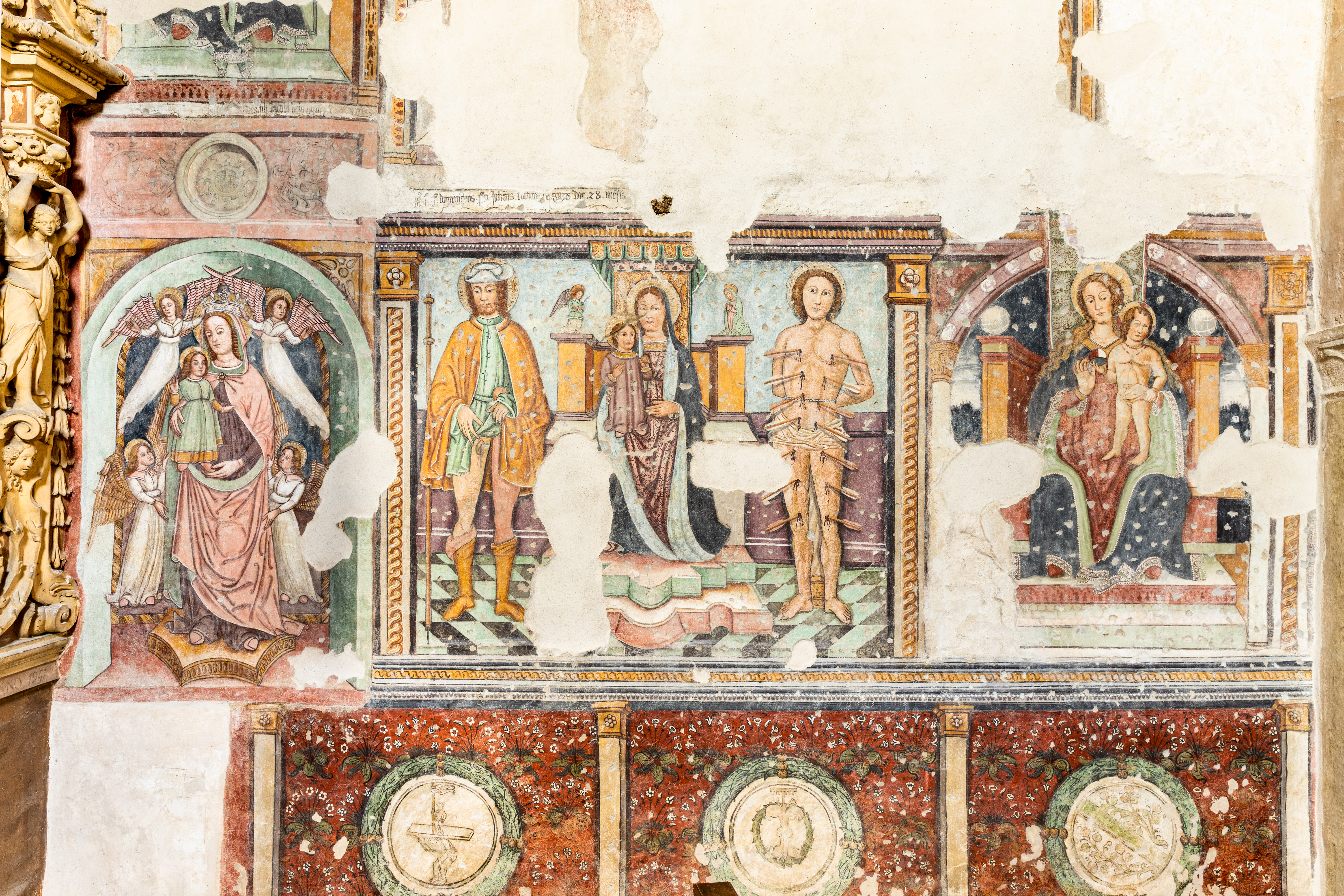
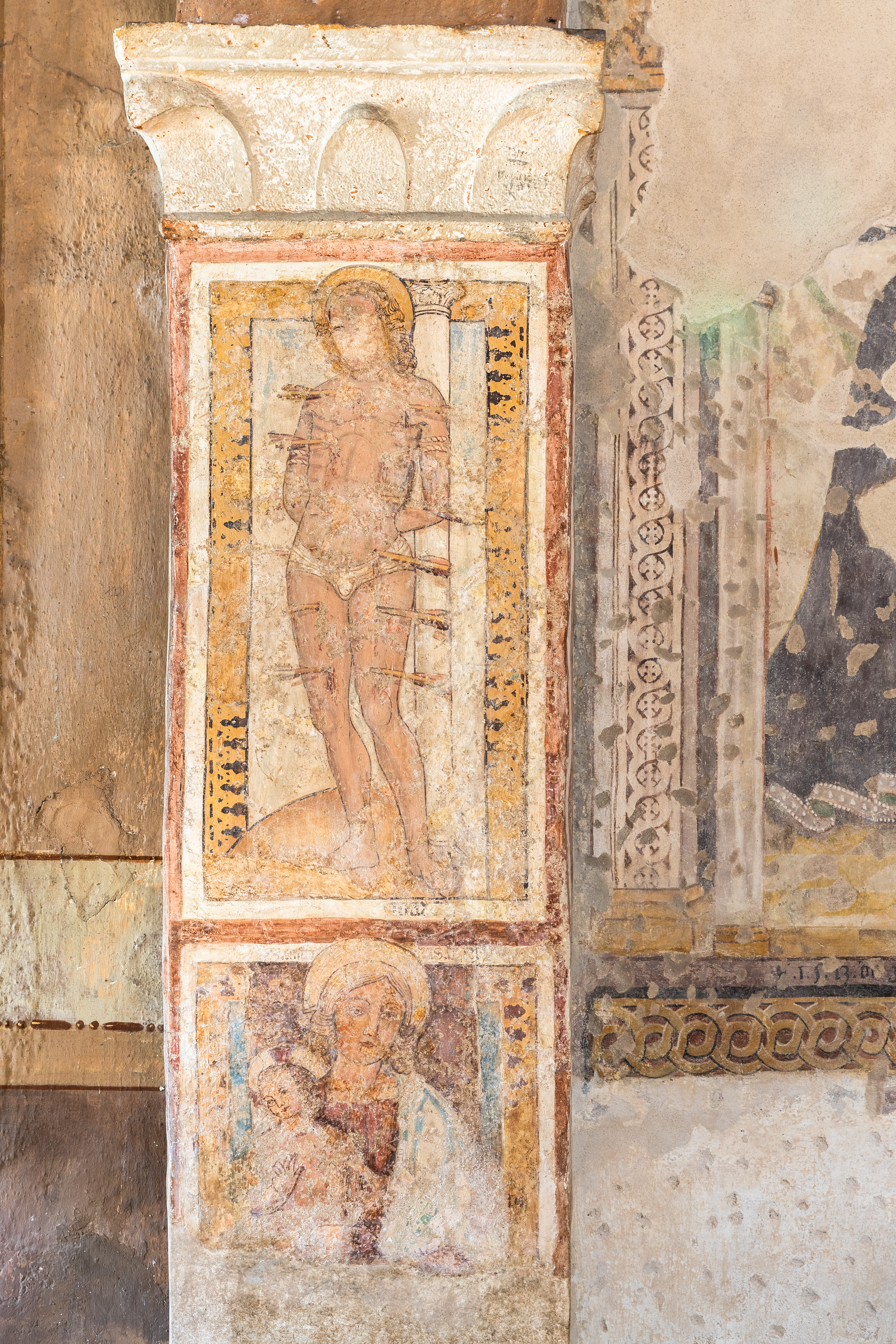
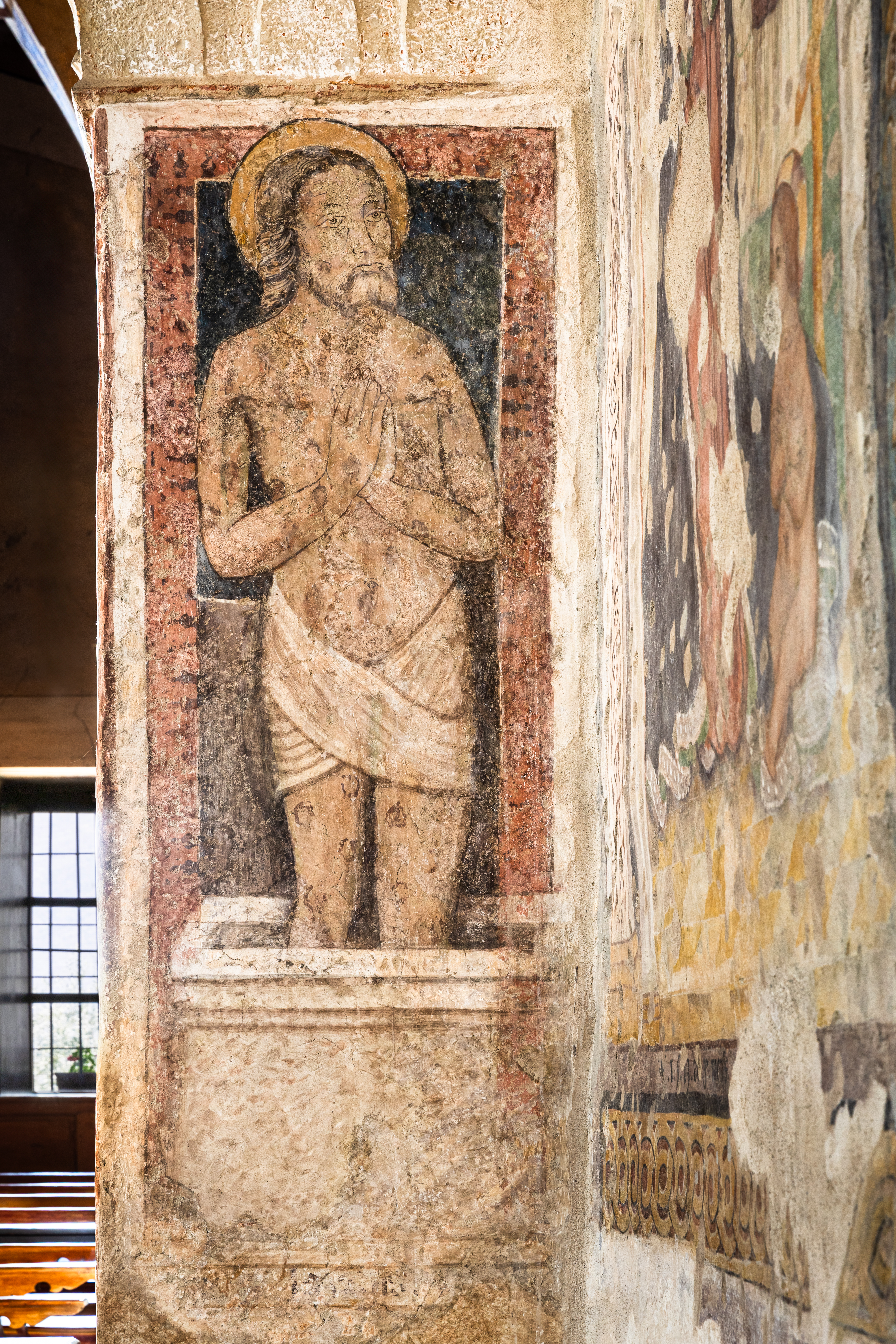
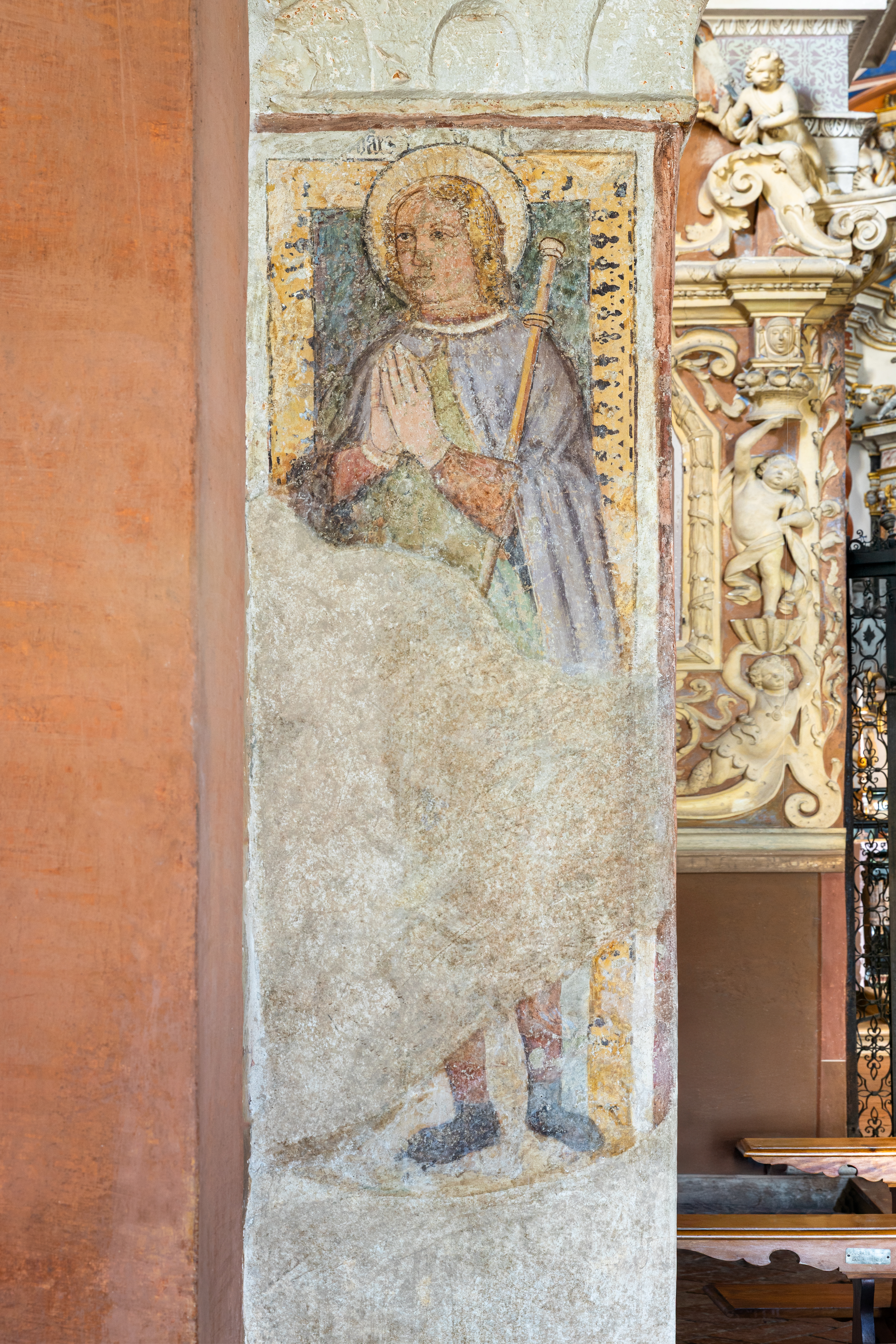
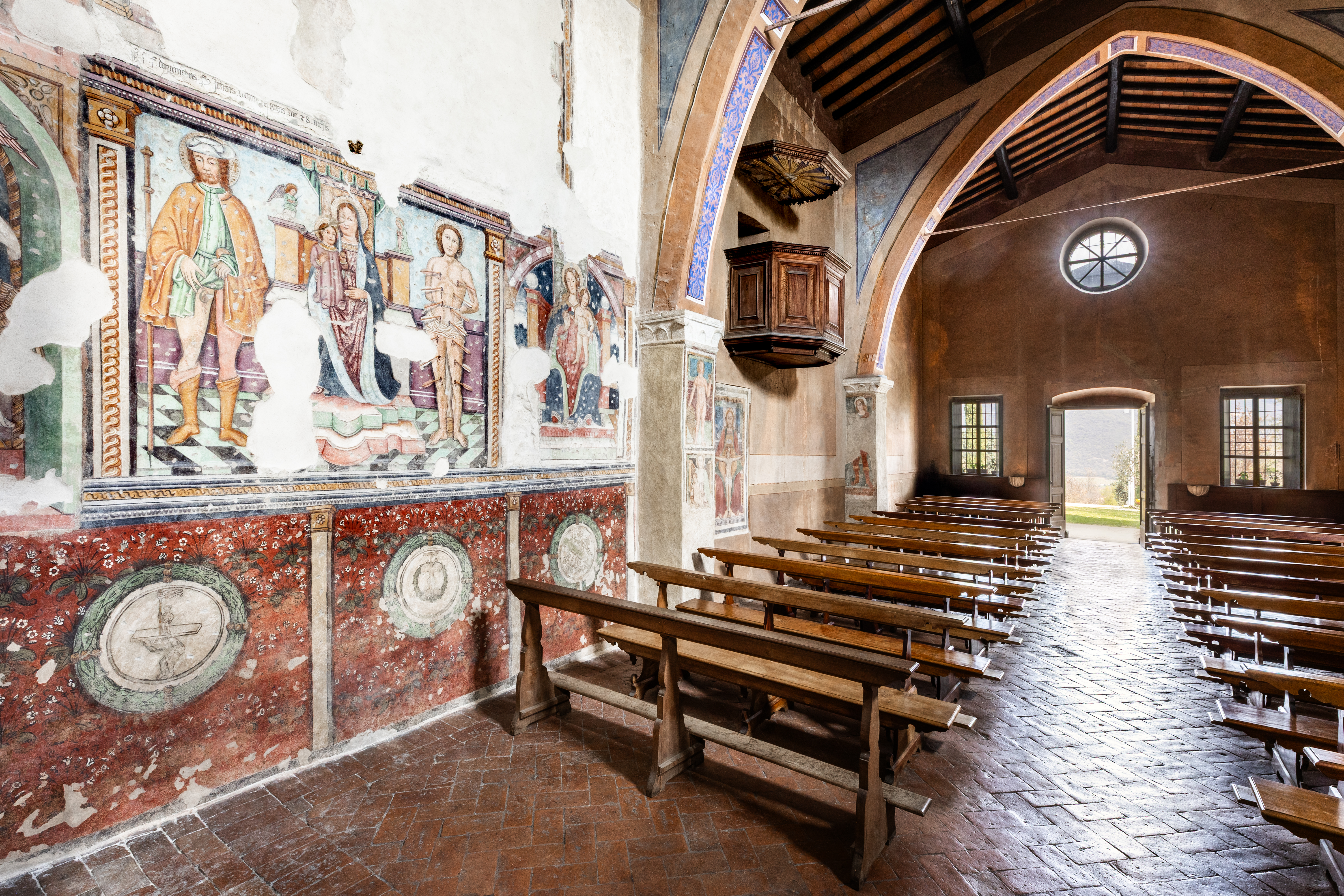
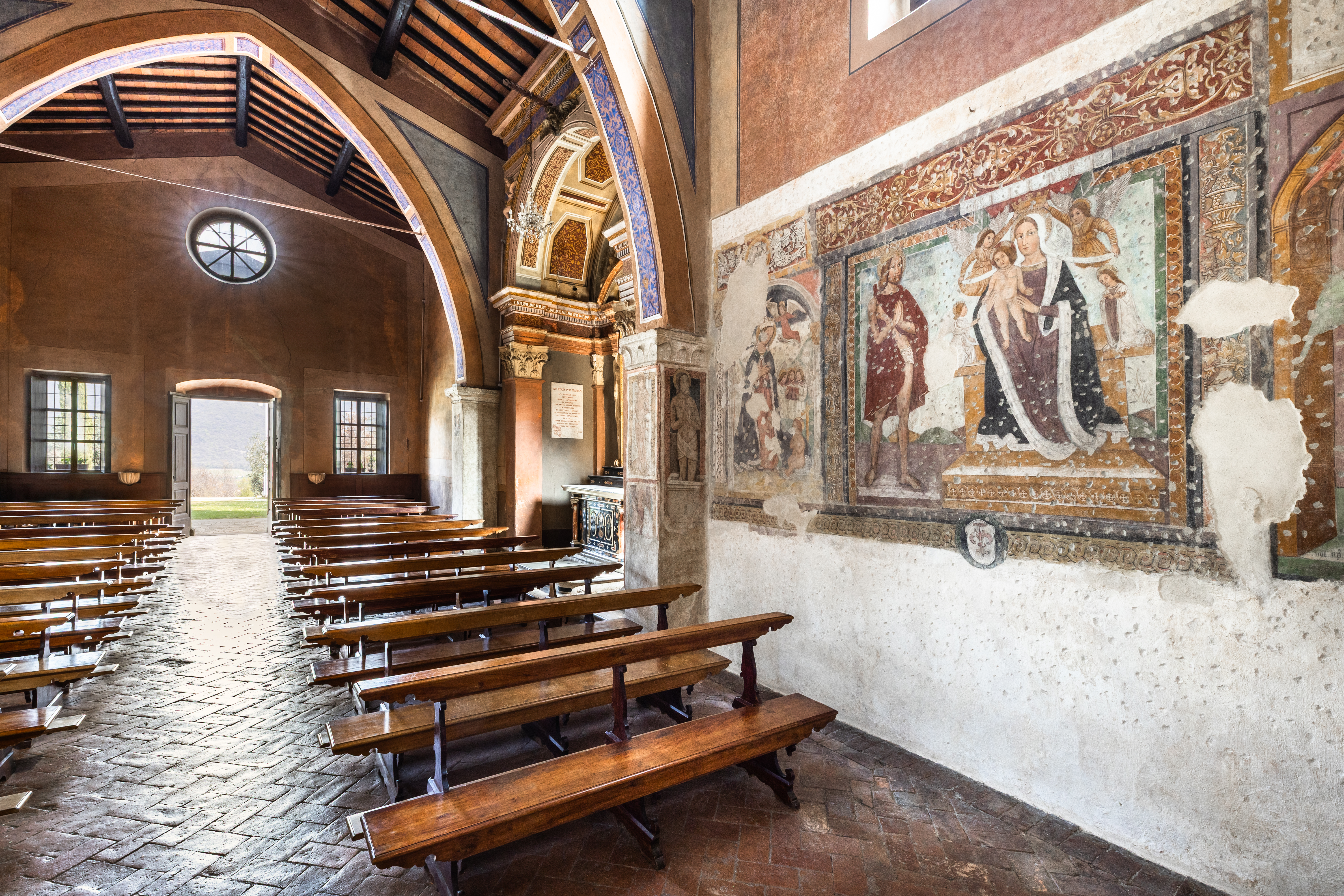
In 2025, the enhancement project reached a fundamental milestone with the recovery of a cycle of frescoes dating between the late 15th and early 16th centuries. Located on the side walls near the presbytery, these paintings were brought back to light thanks to the intuition of the parish priest, Don Daniele Botticini, who was able to see the hidden artistic potential beneath the layers of time.
The restoration, led by Elisabetta Attorrese in synergy with the Soprintendenza (represented by Dr. Massari) and our studio, revealed a complex narrative. Stratigraphic analysis documented centuries of transformations: from the creation of passages for the choir loft to the complete 19th-century plastering—a choice dictated by a taste for homogeneity that had sacrificed previous figurative evidence.
Future Perspectives and General Vision
The project, made possible by the support of the Fondazione Civiltà Bresciana and local entrepreneurs, does not stop here. New surveys are already planned in the presbytery to verify the presence of further decorations beneath the 19th-century paintings by Giovanni Coffetti and Francesco Rossi.
In parallel, the project includes:
1. New Lighting: Replacing the old neon fixtures with a LED system designed to enhance the volumes and the delicacy of the rediscovered pigments.
2. Full Restoration: Investigating the first two bays of the nave to restore chromatic and historical unity to the entire building.
This journey, which began in 2006, treats the Sanctuary not as a simple isolated artifact, but as an organic system of architecture, history, and landscape—a “house of the spirit” where every stone and every fresco tells the deep identity of the Monticelli Brusati community.
Gli interventi sul Santuario della Madonna della Rosa tra Storia, Paesaggio e Restauro
Affacciato sulla Pianura Padana da un colle della Franciacorta, il Santuario della Madonna della Rosa si erge come un’oasi di silenzio. Pur essendo poco distante dall’abitato di Monticelli Brusati, il complesso conserva un carattere isolato, capace di riconnettere il visitatore con la potenza del paesaggio naturale. La chiesa, dall’originale impronta gotico-vernacolare del XIV secolo, ha accolto nel tempo stratificazioni rinascimentali e barocche, fino all’aggiunta di una porzione ottocentesca della canonica che completa il corpo di fabbrica.
L’intervento architettonico: un dialogo di equilibrio
Il progetto di riqualificazione del complesso, realizzato tra gli anni 2006 e 2011 in più fasi, ha puntato sulla rifunzionalizzazione dell’antica abitazione — ora abitata da una suora che si occupa della manutenzione di tutto il complesso e che lo custodisce — e sulla creazione di una nuova sala polifunzionale. Quest’ultimo volume, dichiaratamente contemporaneo, ricerca un equilibrio quasi simbiotico con il contesto storico e ambientale.
Per preservare l’intimità del luogo, l’ampliamento è stato concepito come una struttura ipogea o “nascosta”:
• Integrazione materica: Costruita con la medesima pietra del Santuario e sormontata da un tetto giardino, la sala appare quasi invisibile dal sagrato principale.
• Trasparenza e natura: All’interno, lo spazio si apre verso le colline grazie a un’ampia vetrata a tutta altezza, schermata da frangisole in legno di larice che filtrano la luce come rami di un bosco.
• Simbiosi tattile: L’uso di materiali naturali, come la pietra locale (grezza sulle pareti e levigata a terra), accompagna il visitatore in un percorso di contemplazione che unisce interno ed esterno.
• Accessibilità: Il completamento dei percorsi per persone con disabilità, realizzato nel 2011, consolidando una visione del Santuario come luogo di accoglienza universale.
La riscoperta degli affreschi: un tesoro celato
Nel 2025, il percorso di valorizzazione ha segnato una tappa fondamentale con il recupero di un ciclo di affreschi databili tra la fine del Quattrocento e l’inizio del Cinquecento. Situati nelle pareti laterali prossime al presbiterio, questi dipinti sono tornati alla luce grazie a un’intuizione del parroco, Don Daniele Botticini, che ha saputo scorgere oltre le stratificazioni del tempo il potenziale artistico ancora nascosto.
Il restauro, condotto da Elisabetta Attorrese in sinergia con la Soprintendenza (nella figura della Dott.ssa Massari) e il nostro studio, ha rivelato una narrazione complessa. Le analisi stratigrafiche hanno documentato secoli di trasformazioni: dalla creazione di passaggi per la cantoria fino alla completa intonacatura ottocentesca, dettata da un gusto per l’omogeneità che aveva sacrificato le testimonianze figurative precedenti.
Altri interventi, prospettive future e visione d’insieme
L’opera, resa possibile dal sostegno della Fondazione Civiltà Bresciana e delle realtà imprenditoriali del territorio, non si ferma qui. Sono già in programma nuovi sondaggi nel presbiterio per verificare la presenza di ulteriori decorazioni sotto le pitture ottocentesche di Giovanni Coffetti e Francesco Rossi.
Parallelamente, il progetto prevede:
1. Nuova Illuminazione: La sostituzione dei vecchi impianti a neon con un sistema a LED studiato per esaltare le volumetrie e la delicatezza dei pigmenti ritrovati.
2. Recupero integrale: L’indagine sulle prime due campate della navata per restituire unità cromatica e storica all’intero edificio.
Questo cammino, iniziato nel 2006, tratta il Santuario non come un semplice manufatto isolato, ma come un sistema organico di architettura, storia e paesaggio — una “casa dello spirito” dove ogni pietra e ogni affresco raccontano l’identità profonda della comunità di Monticelli Brusati.