Gardone Val Trompia, Italy – 2025
Progetto Esecutivo – Constructional Drawings
Overall dimension 1000 sqm
CONTEXT
The “Beretta” Institute in Gardone Val Trompia includes a series of technical high schools, distributed across several buildings. The intervention concerns the ITIS headquarters at Via Convento 27 and a building to be demolished and rebuilt at Via Alfieri 28, recently acquired by the Municipality of Gardone Val Trompia for the creation of technological laboratories. Ownership remains with the Municipality, but the Province of Brescia will construct the building and manage it for 30 years. From an urban planning perspective, the area is designated for educational use. The building, dating back to 1958, is not subject to cultural heritage protection.
EXISTING CONDITIONS AND PROJECT ASSUMPTIONS
The purchased building consists of a 465 m² lightweight warehouse and another adjacent structure of approximately 85 m² in reinforced concrete. The project plans for the demolition of the warehouse and the construction of a new two-storey pavilion connected to the rest of the institute, intended for laboratories and a mechanical workshop. Part of the existing building will be retained and renovated. The intervention improves accessibility and adds a third entrance for potential future use by the Municipality.
DESIGN APPROACH AND DETAILS
Functional/spatial organization:
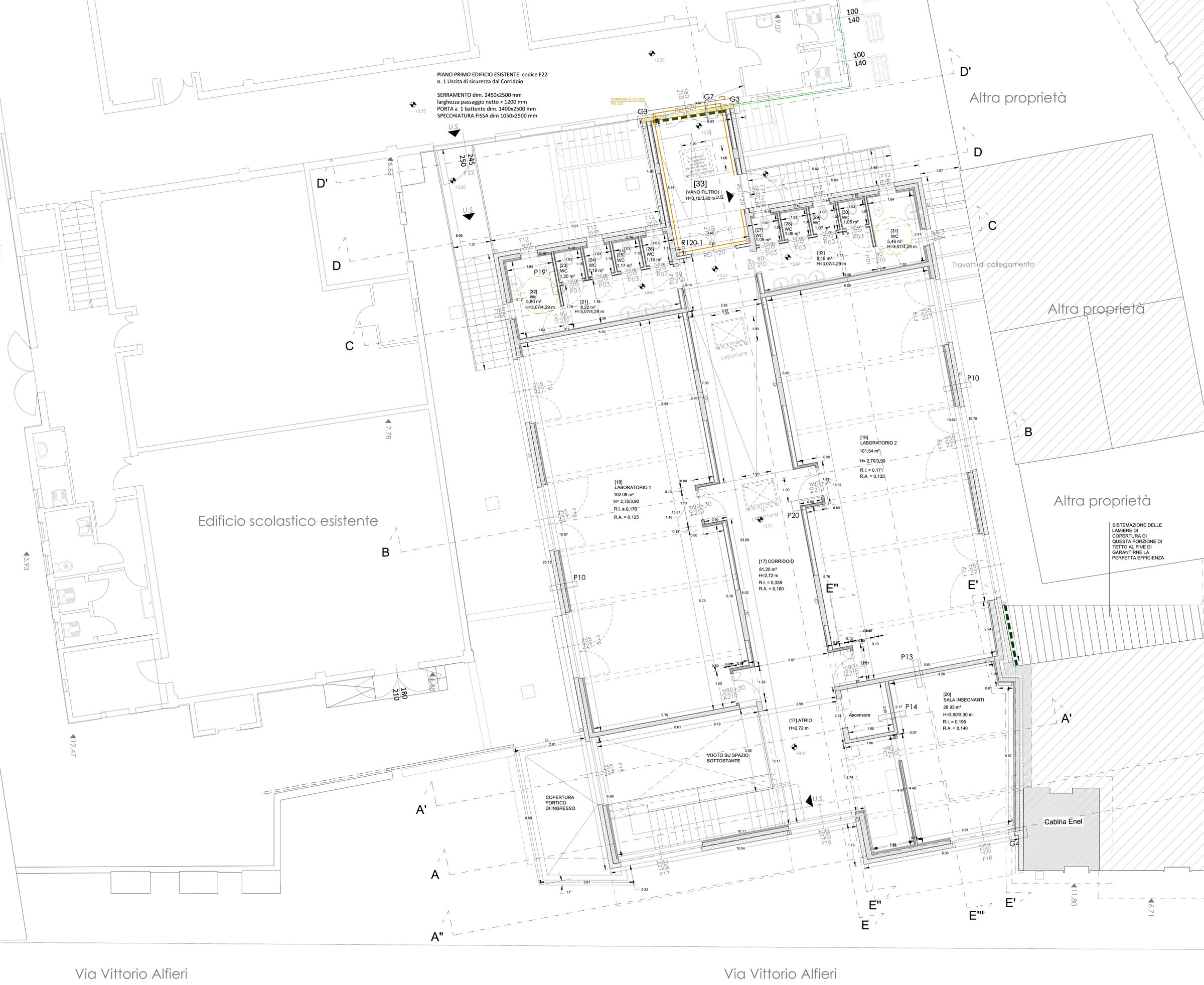
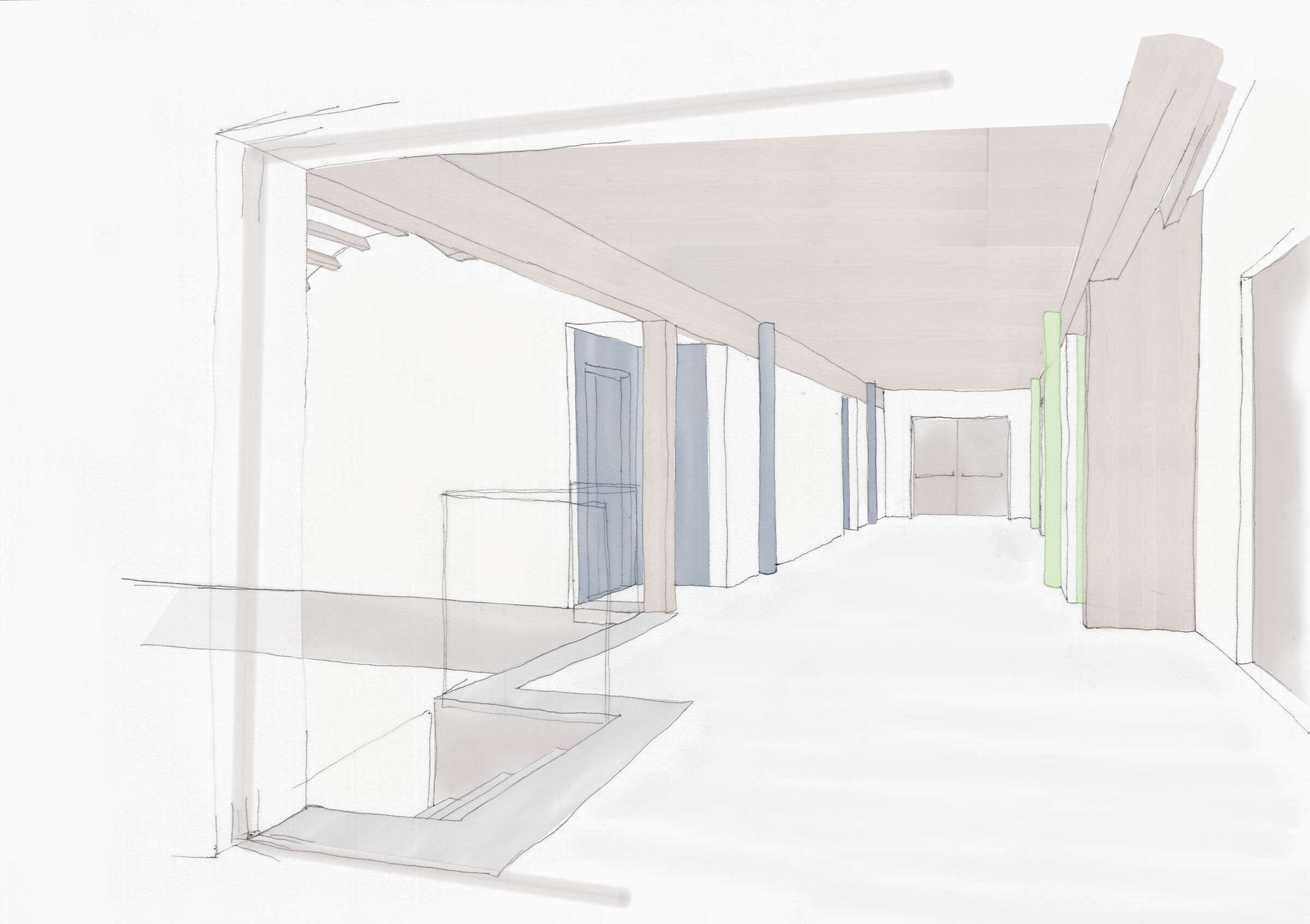
The new building hosts a technology hub. A double-height atrium with a front office and staircase leads to the laboratories. On the ground floor, there will be the workshop, a storage room, restrooms, and a technician’s office. On the first floor, two additional laboratories and a teachers’ room are located. The building is accessible via three entrances, one of which also allows access for heavy machinery.
Design criteria and materials:
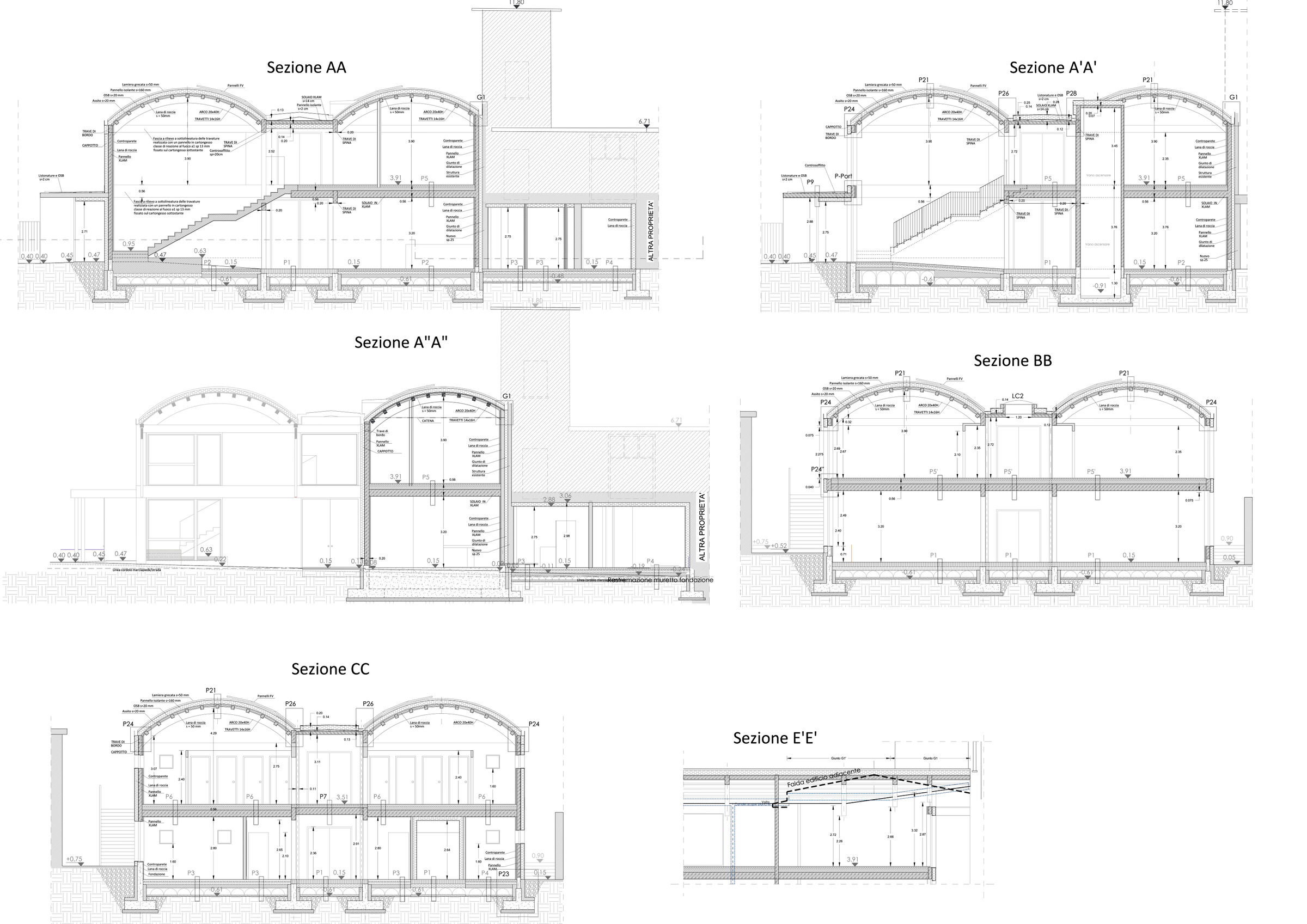
The building is constructed using prefabricated wood (XLAM), focusing on sustainable building practices, energy efficiency (NZEB Italian level), and thermal-acoustic comfort. A 33 kW photovoltaic system and underfloor heating (with air heaters only in the workshop) ensure sustainability. Aluminum window frames and precise insulation further enhance performance. The structure is earthquake-resistant and includes a radon barrier.
Genius loci, building location, relationship with the built environment, the city, and the landscape.
The location of the building is partly a necessity: since this is a demolition and reconstruction project with extremely constraining contextual conditions (distances or adjacencies to/from existing buildings), the plan positioning of the new pavilion has limited freedom.
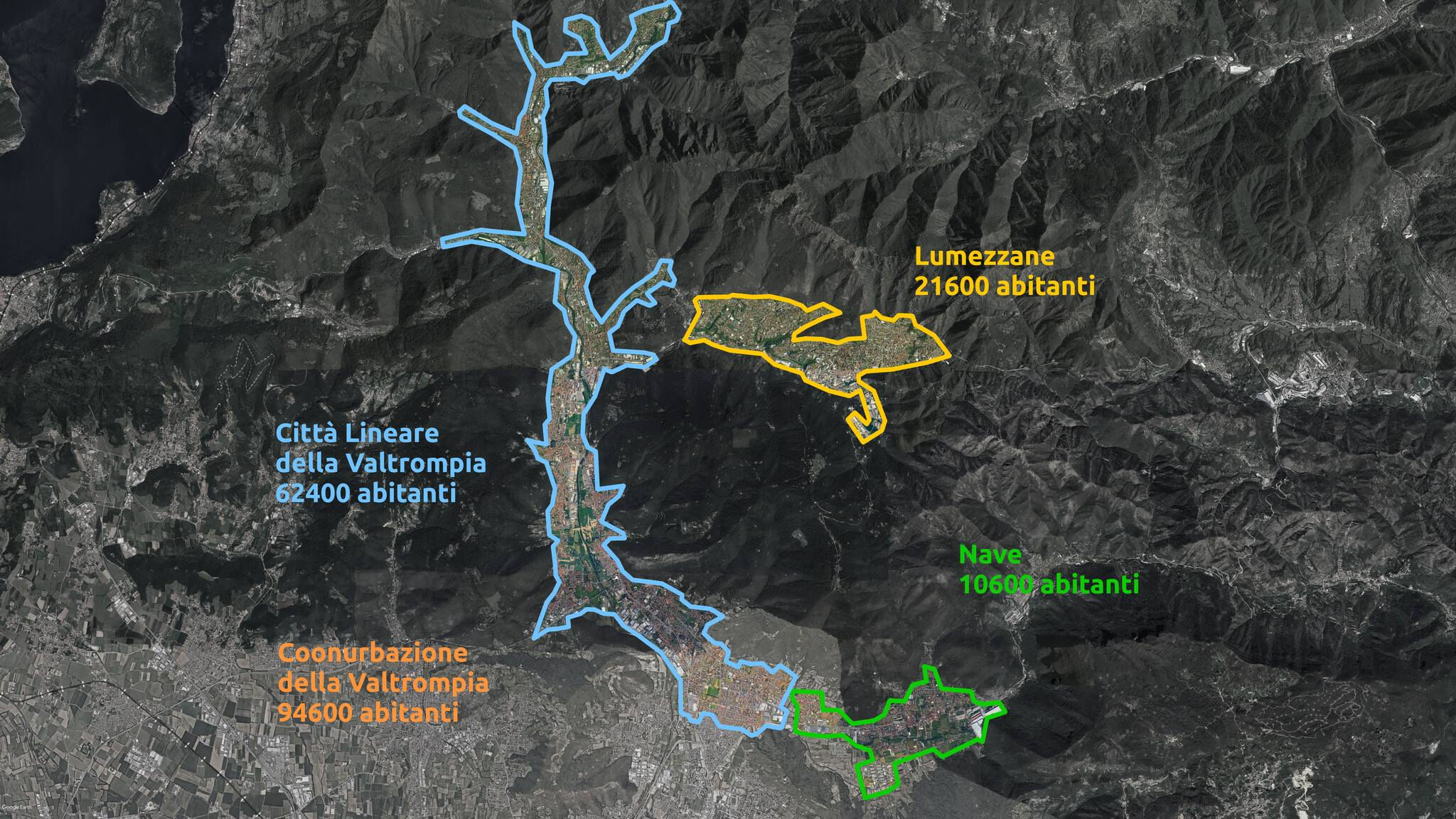
On the other hand, the tight spaces, proximity of buildings, and urban density are also characteristic of all Gardone Val Trompia and the portion of the valley that, continuing north of the City of Brescia, extends uninterrupted to Marcheno. A secondary, implicit city, laid out linearly along the river and valley. A city that is scarcely designed or planned—especially outside the historic centers of its various communities—and built more out of necessity and industriousness, with often mixed results in terms of spatial quality, for better or worse.
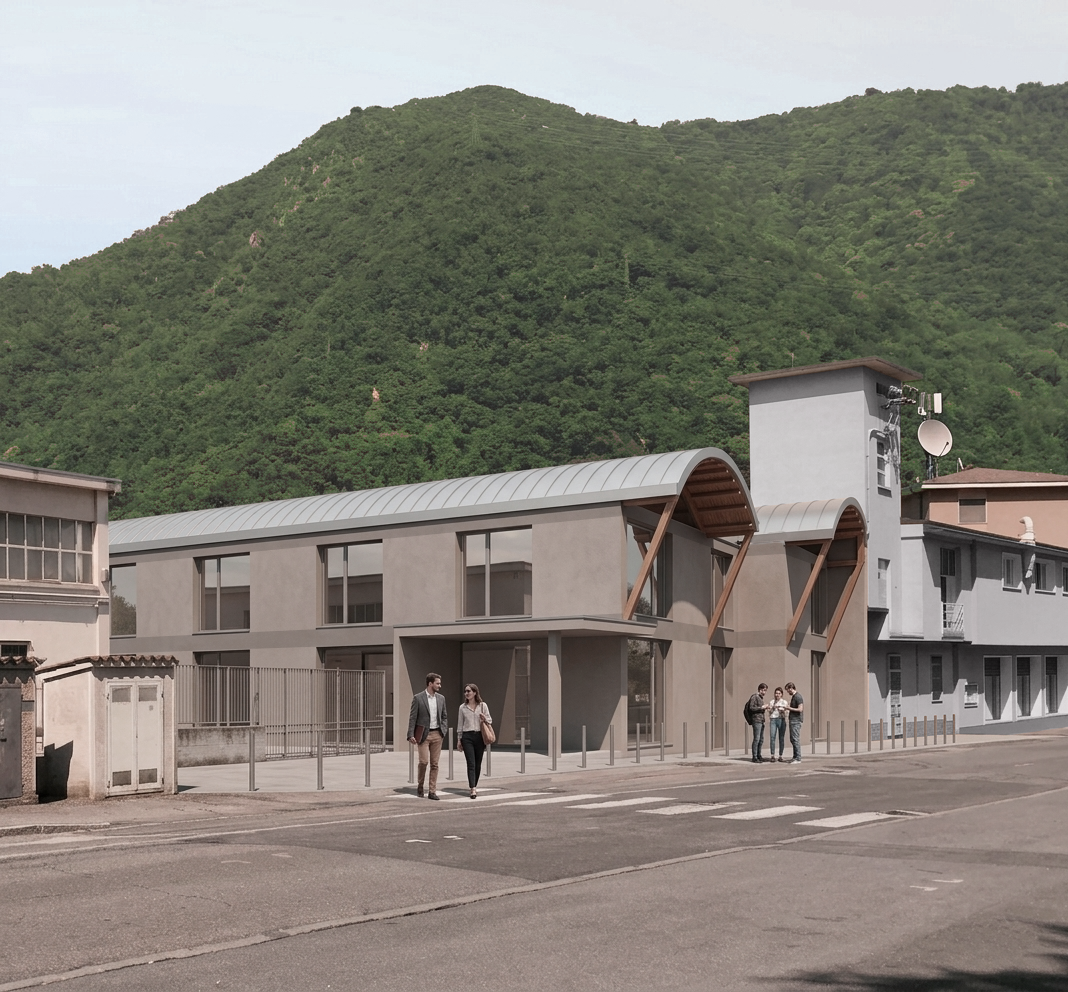
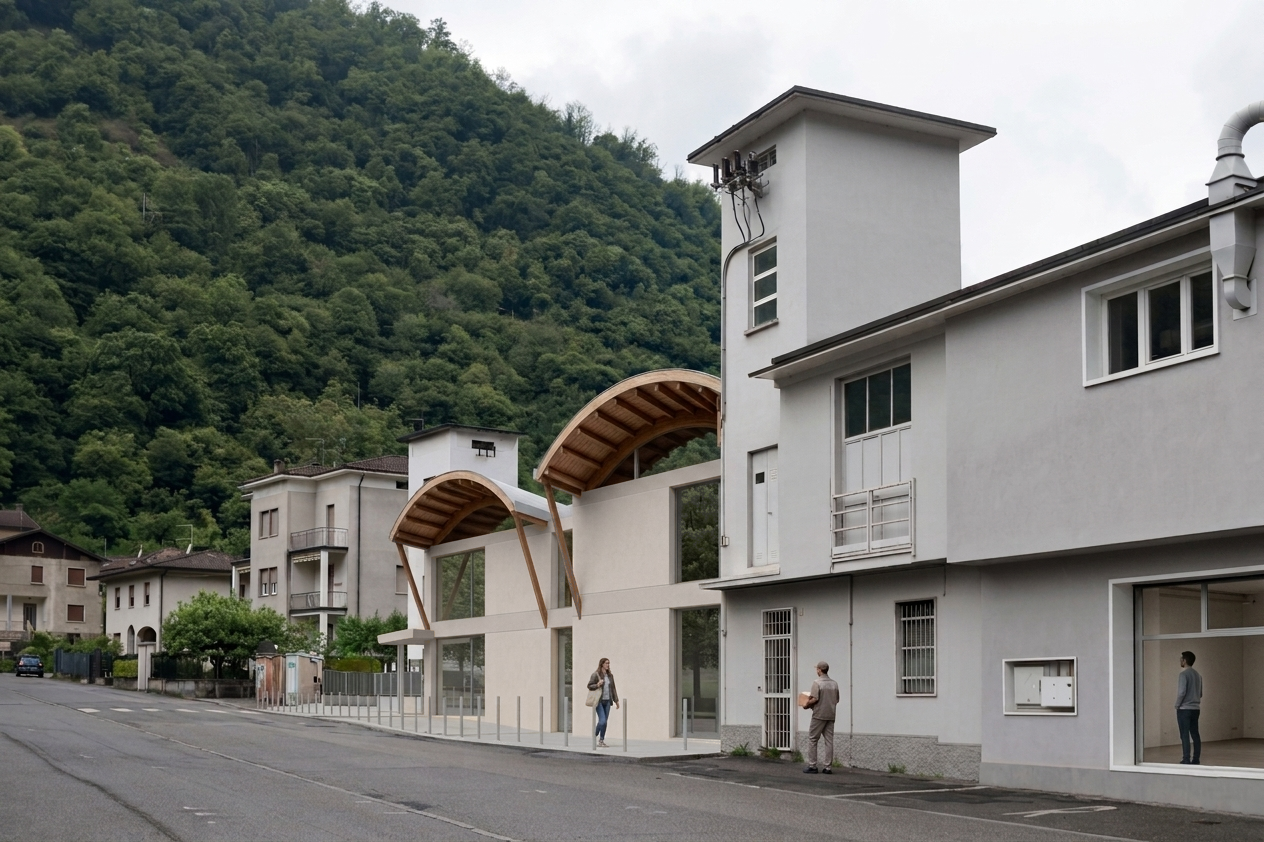
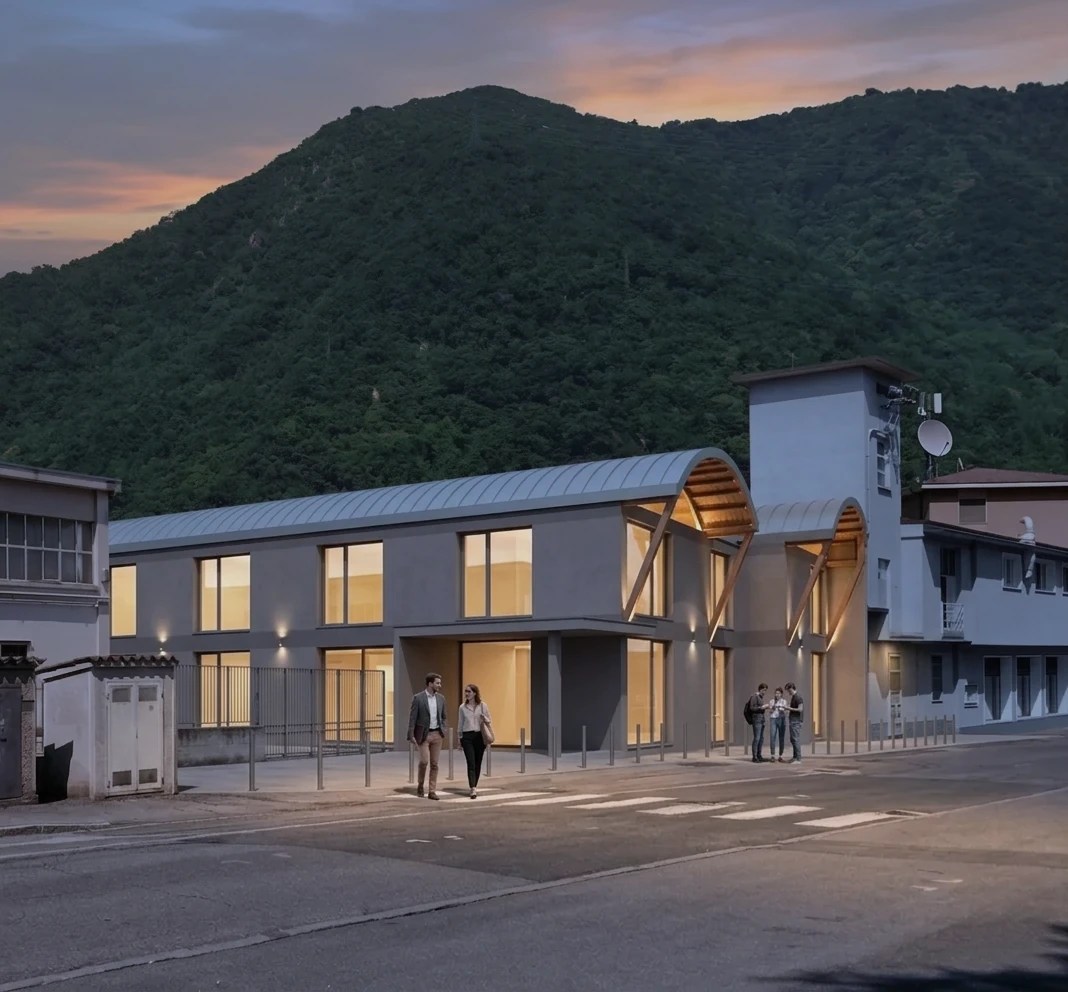
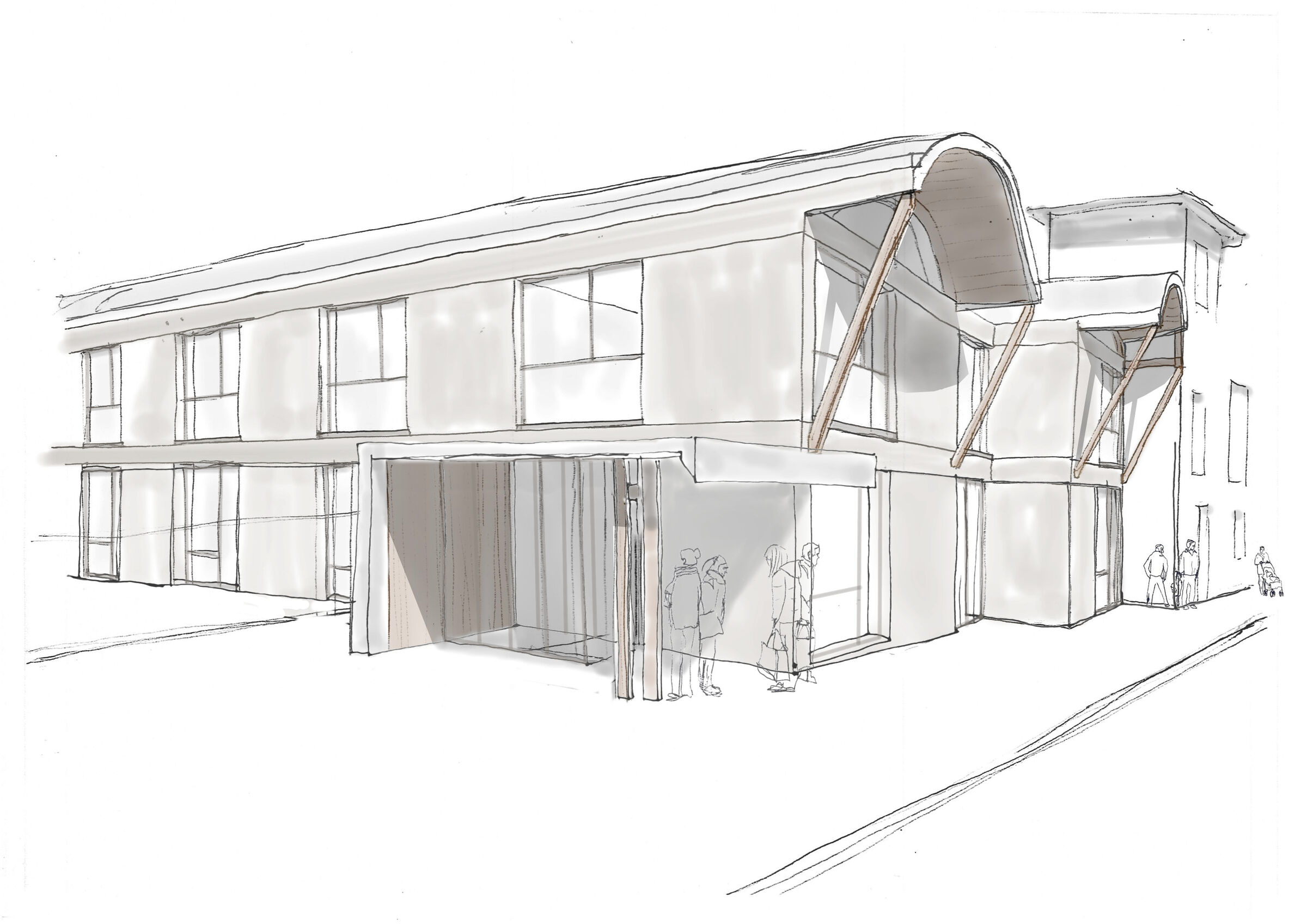
Beyond this dense urban strip, on both sides of the valley, the mountains and forests mark a visual and physical divide between human space and natural space. Like one of Calvino’s Invisible Cities, the city of Valtrompia (a note here: this city is the third largest in Eastern Lombardy after Brescia and Bergamo. The user base of the “I.I.S. Beretta” is not limited to Gardone Valtrompia – 11,000 inhabitants – but refers to a city of 70,000–100,000 inhabitants depending on how one defines its boundaries) also has its distinctive traits and constructive elements that morphologically define it: the vaulted warehouse shape, which is also present in the building being demolished, born of constructive simplicity, lightness, and the need for unified spaces, perhaps unintentionally echoes and interacts with the rounded shapes of the forested pre-Alps surrounding the city.
Reusing this form in the new project thus goes hand in hand with shaping it from the plan—i.e., from the spatial organization of the functions and activities the new school pavilion will host.
Construction Organization
The spatial organization of the new pavilion originates from the floor plan, with a central north-south spine running through both floors (a “virtual” corridor on the ground floor and a real one upstairs, eventually becoming a bridge), serving as the primary circulation axis, and two flanking areas under the large vaults containing functional spaces.
The floor plan generates the building’s form as much as the surrounding landscape does.
The construction typology, defined by the material—CLT – combined with arched roofing—also shapes the architecture.
In other words, the architectural form is a unified response to the urban and natural environment, local history, building functions, and construction materials.
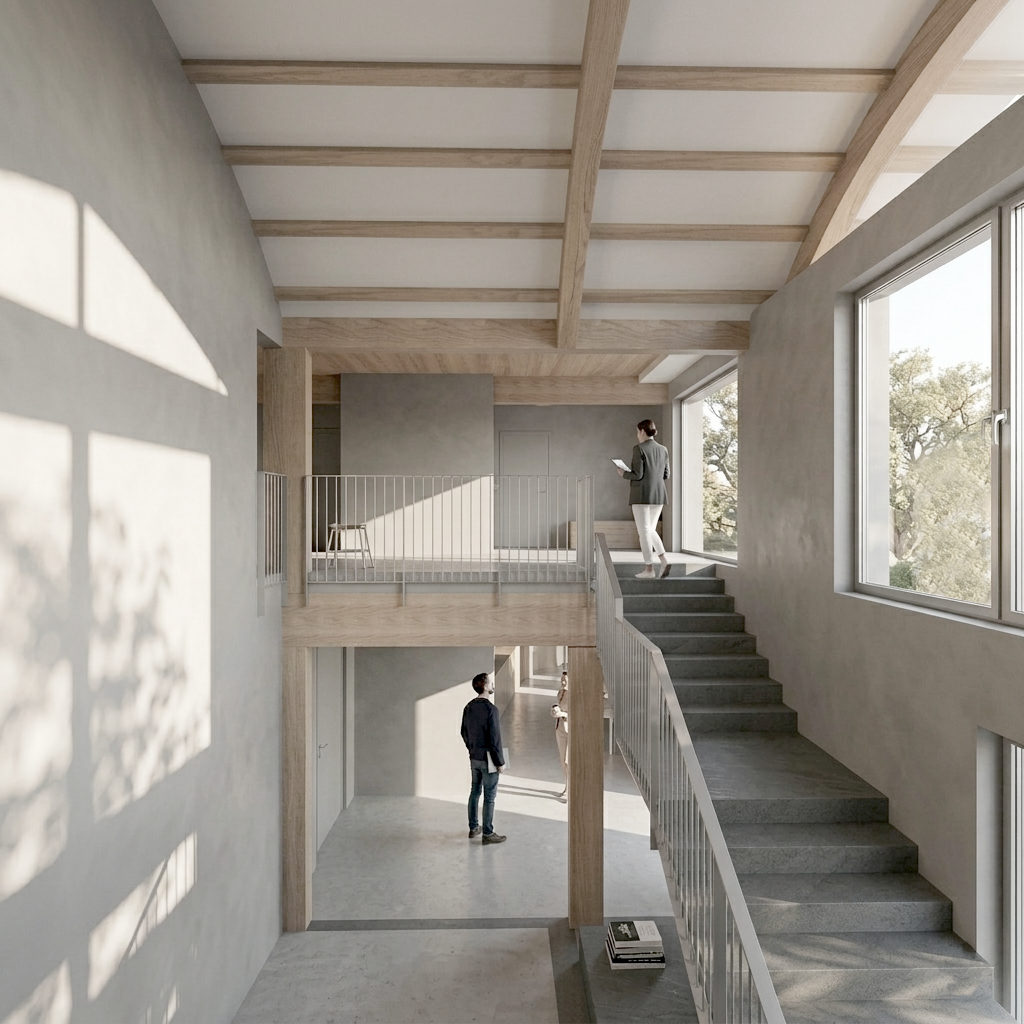
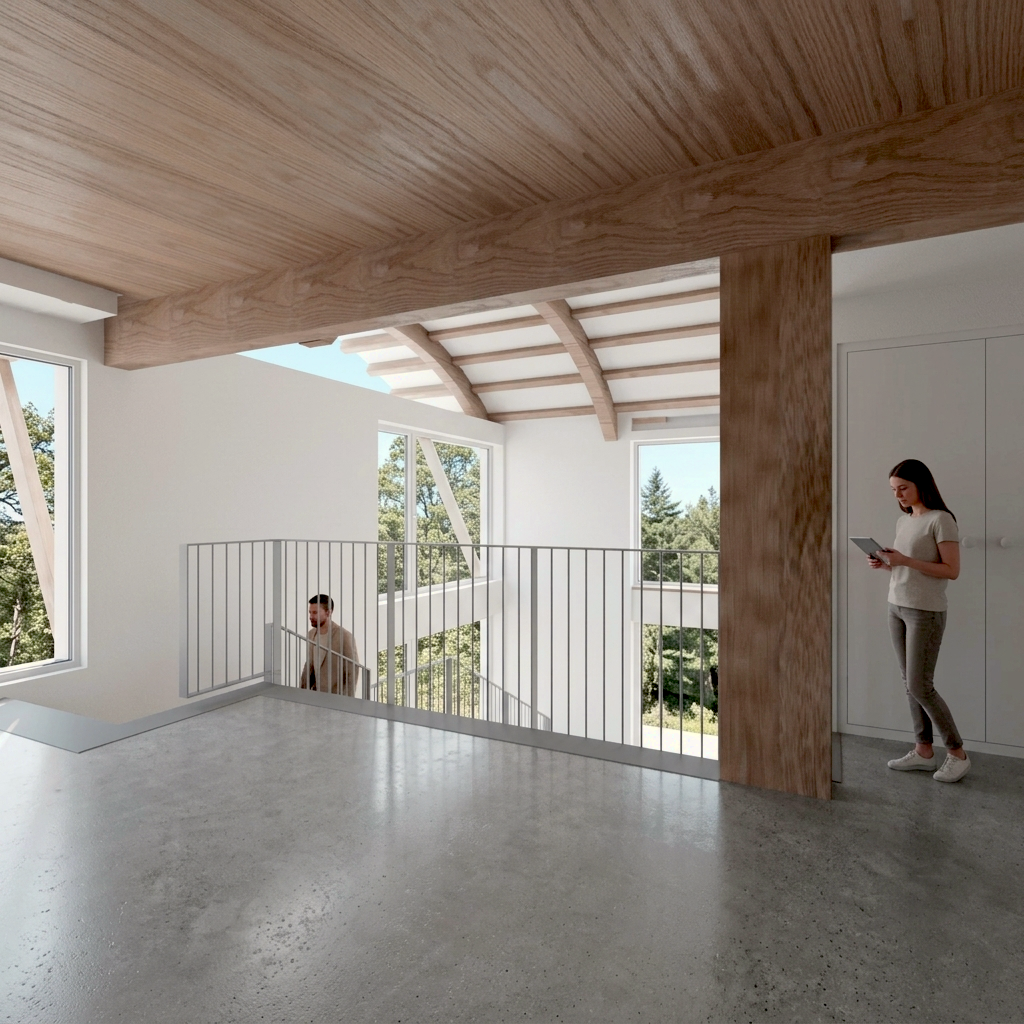
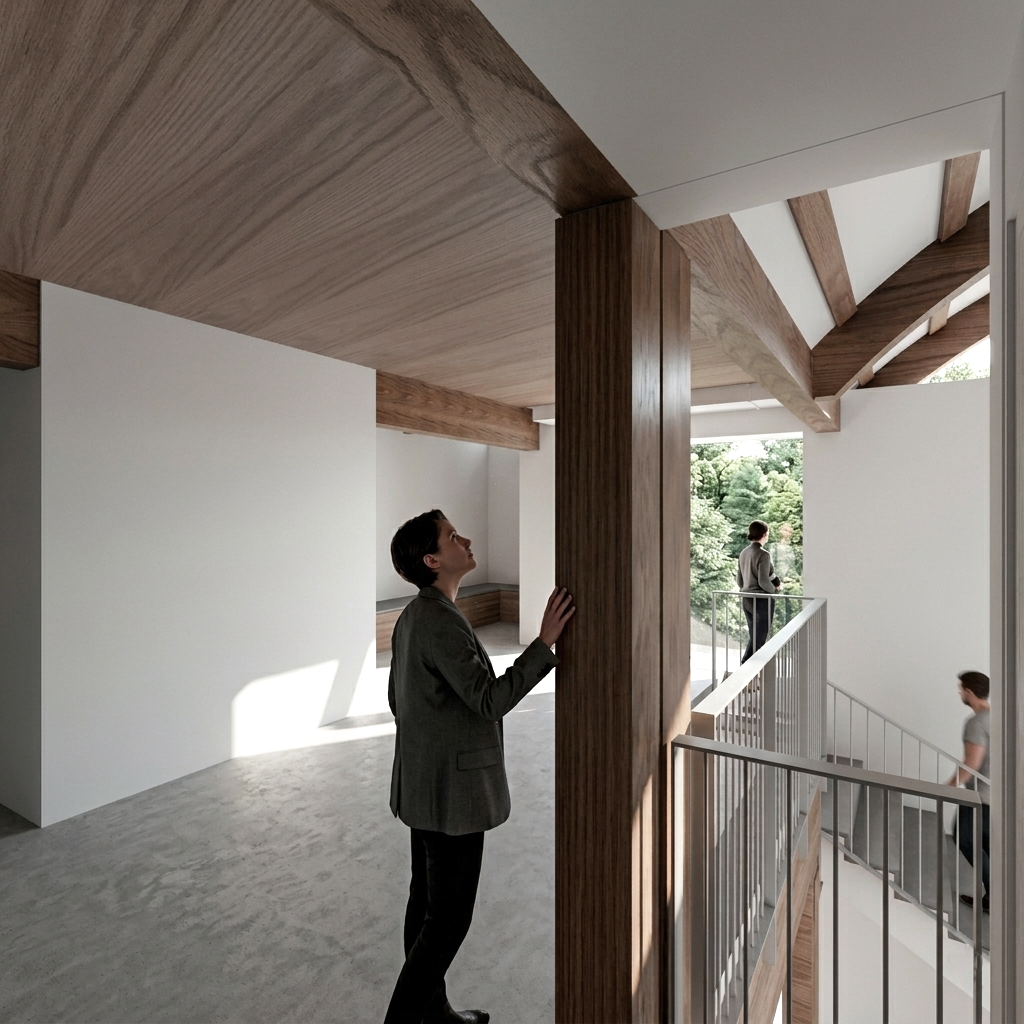
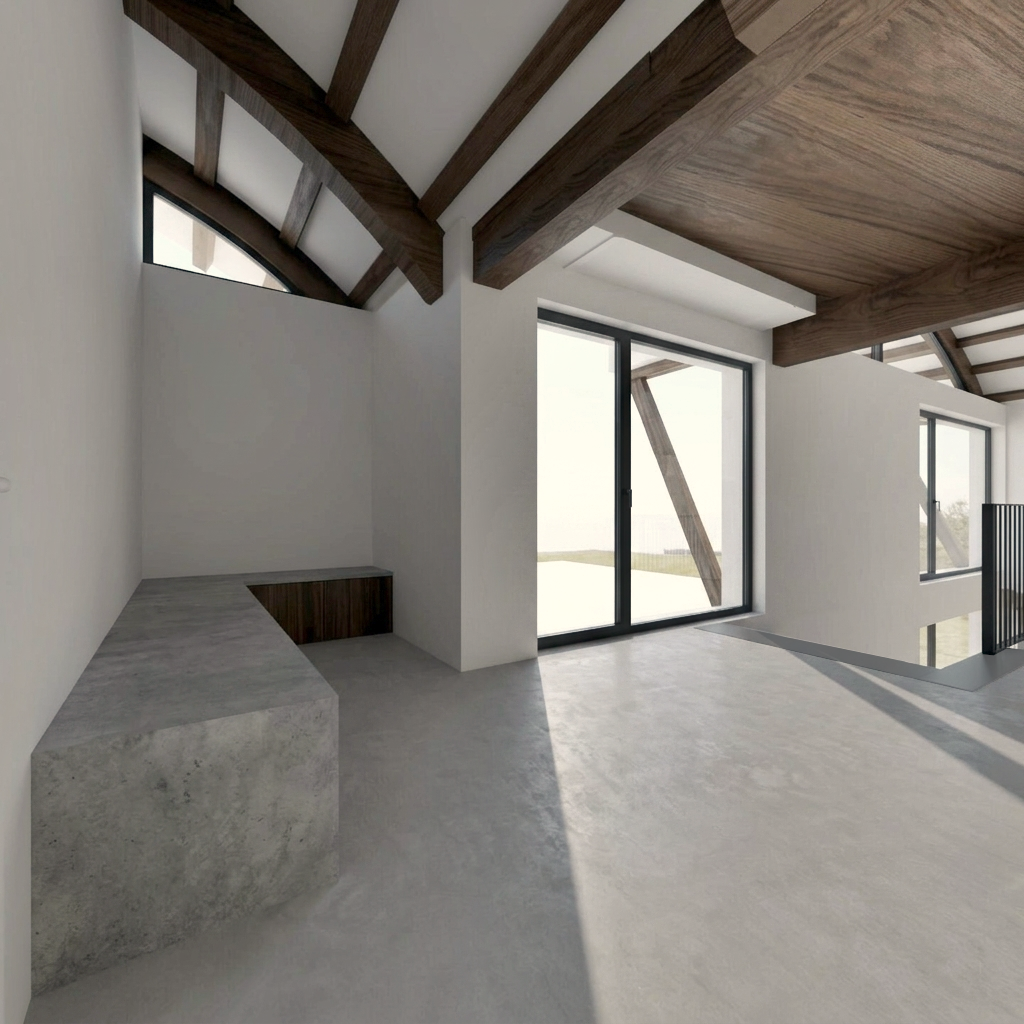
Due to regulatory and performance requirements, particularly regarding acoustics and fire safety, most of the wooden structure cannot be left exposed, even though the entire structure is made of wood. Still, the project aims to reveal the construction simply and clearly, showing each element for what it is and the role it plays. Arches, pillars, and beams remain visible, as does the XLAM floor slab in the mechanical workshop. Structural walls are largely clad (with insulation on the exterior and various finishes inside), but beams are highlighted using color or plasterboard bands (plasterboard indoors, aquapanel outdoors) to emphasize the construction’s geometry and order. This system gives the spaces airiness and underlines the building’s constructive simplicity. The term “order,” from classical architecture onward, encompasses both structural clarity and legibility.
Symbolic and Functional Architectural Enhancements
The project seeks to integrate architectural enhancement interventions with functional design solutions—details and choices that enrich the activities taking place inside the building, both formal (labs and classes) and informal (breaks, social moments among students and between students and teachers).
These details aim to make the school spaces more livable and foster awareness and focus. The design also fosters a sense of belonging and identity for students and staff with the building that forms a significant part of their daily lives.
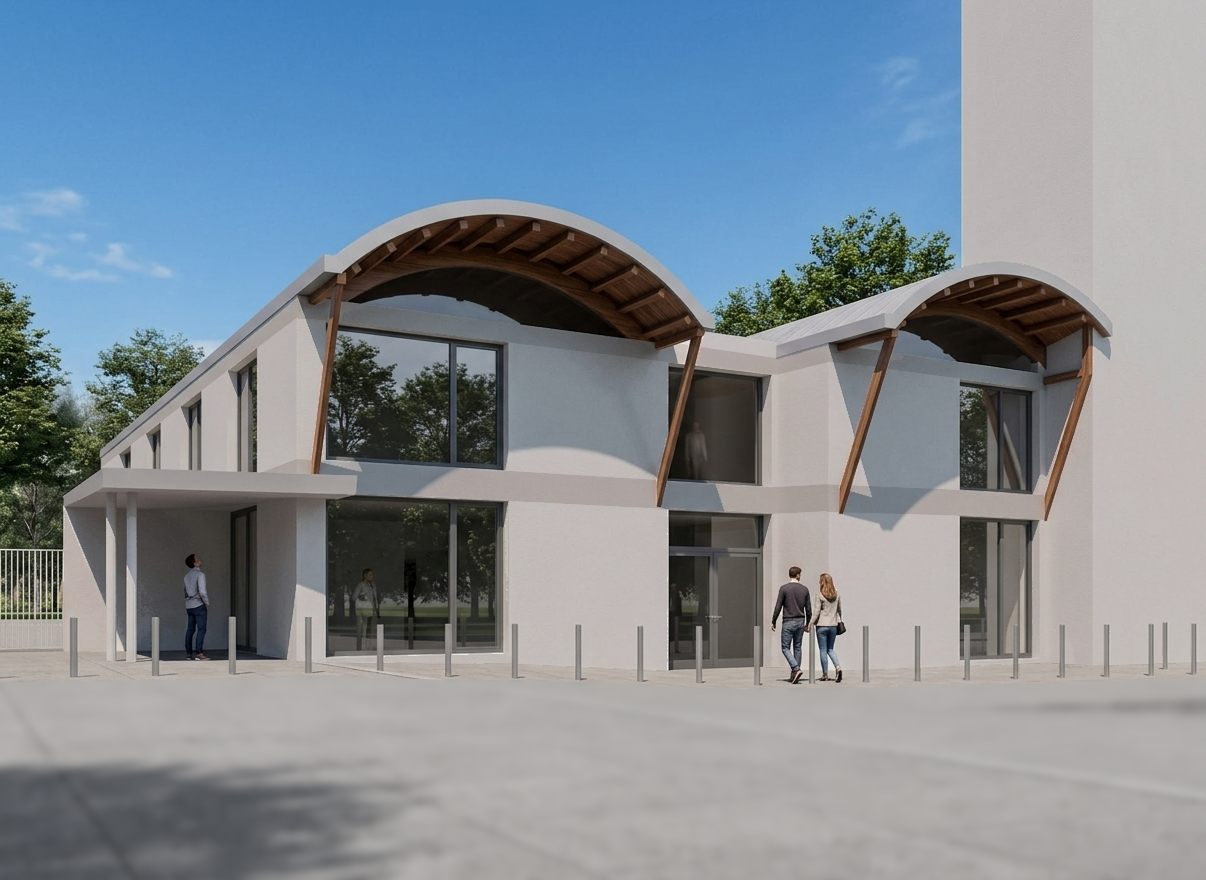
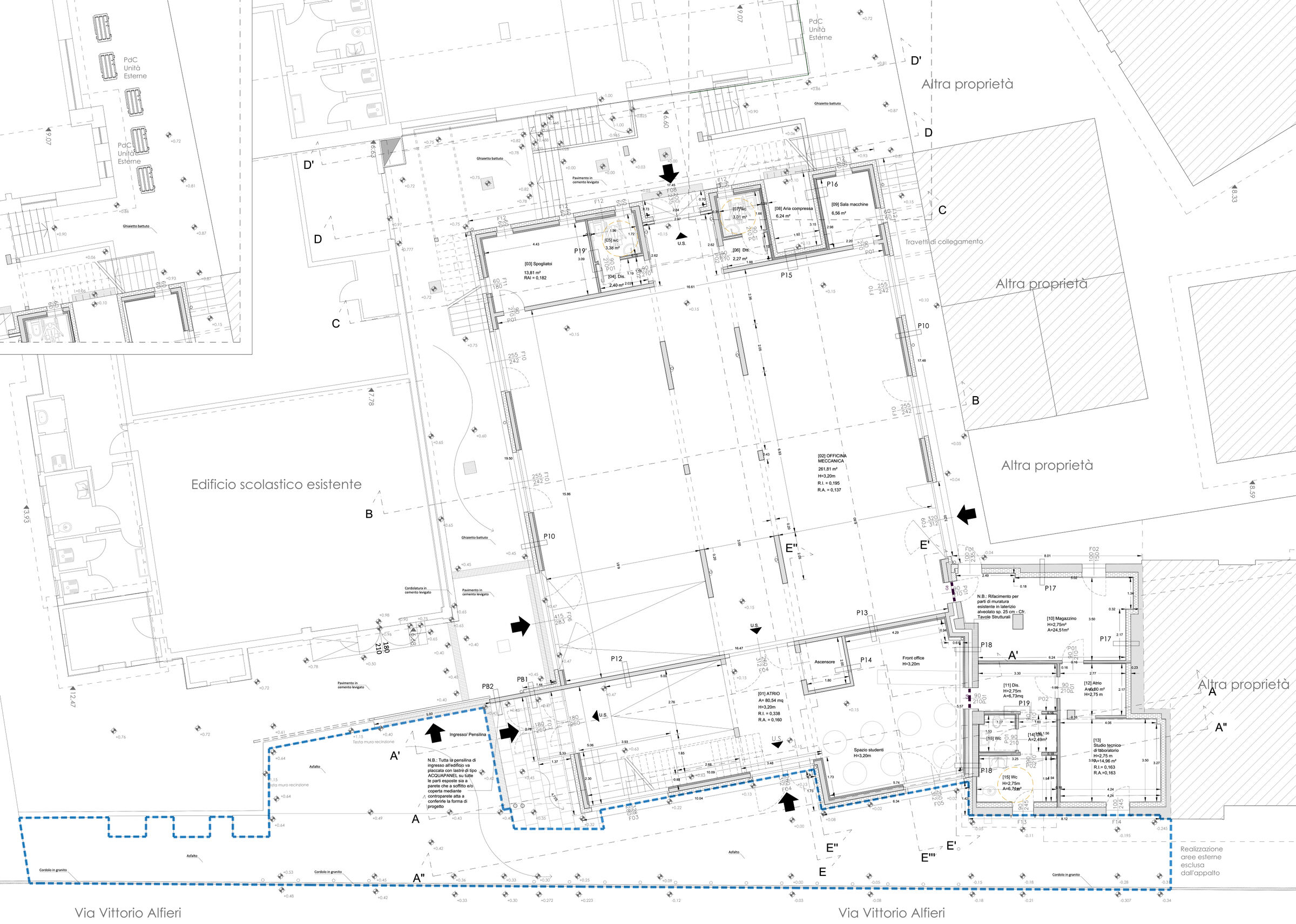
Outdoor spaces to the south of the new pavilion are designed as transitional areas between the street and the school—a space for gathering while waiting to enter or exit, offering safety and a sense of community. The school fence is set back to enlarge this area. The entrance features a portico and vestibule, offering protection from weather and marking the symbolic threshold from street to school.
Unlike the previous building, the new pavilion is “cut” in plan by lines perpendicular to its main axis, producing a “complex setback”: while the new building footprint never exceeds the old one, its facade is broken into staggered segments. This creates a public forecourt for students and a visually and physically protected space that is no longer “street” but not yet “school.”
This staggered cutting also reveals the structural rhythm of the school—vaults, corridor axes—clearly from the street, aligning with the principle of making construction visible and honest.
Atrium as a Symbolic and Social Space
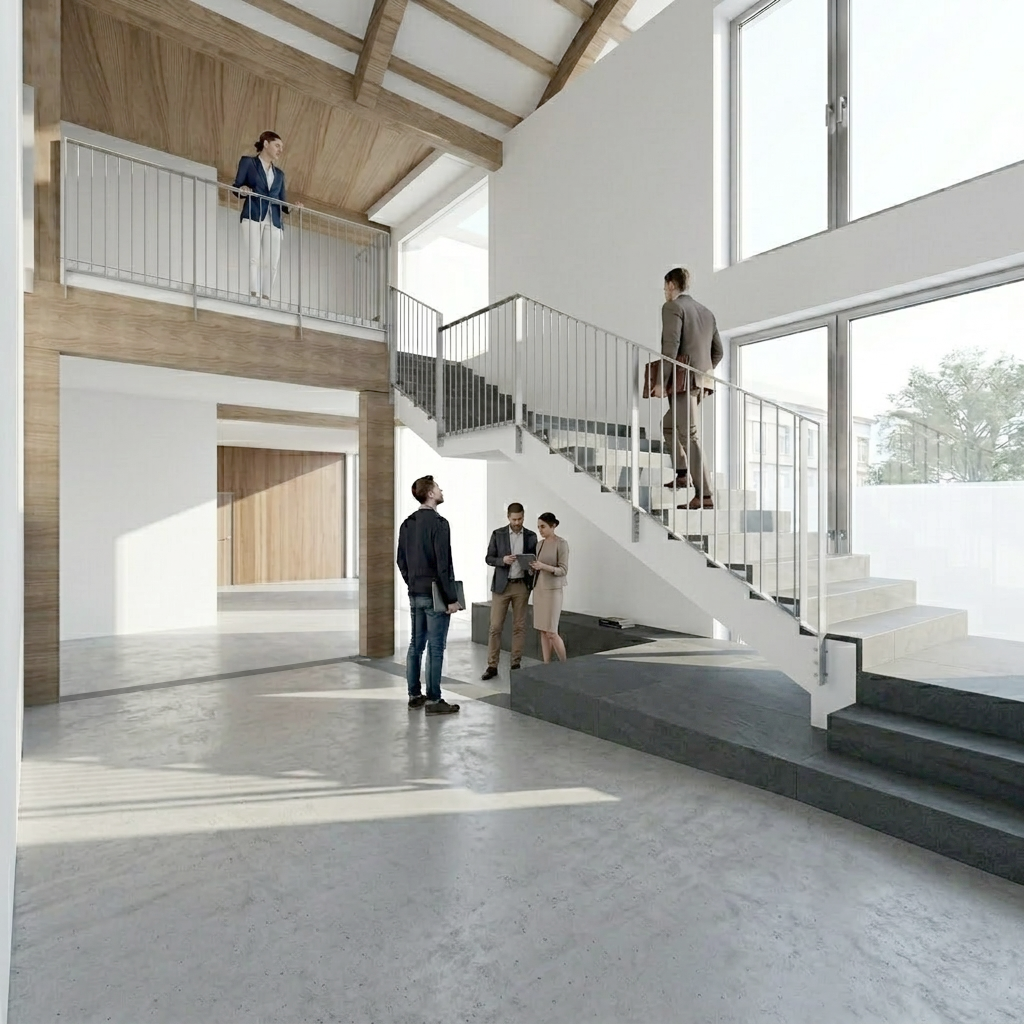
The atrium serves as a symbolic heart of the new pavilion. Required for circulation and supervision, every part is designed to allow students to take ownership, particularly during informal moments like breaks or before/after lunch.
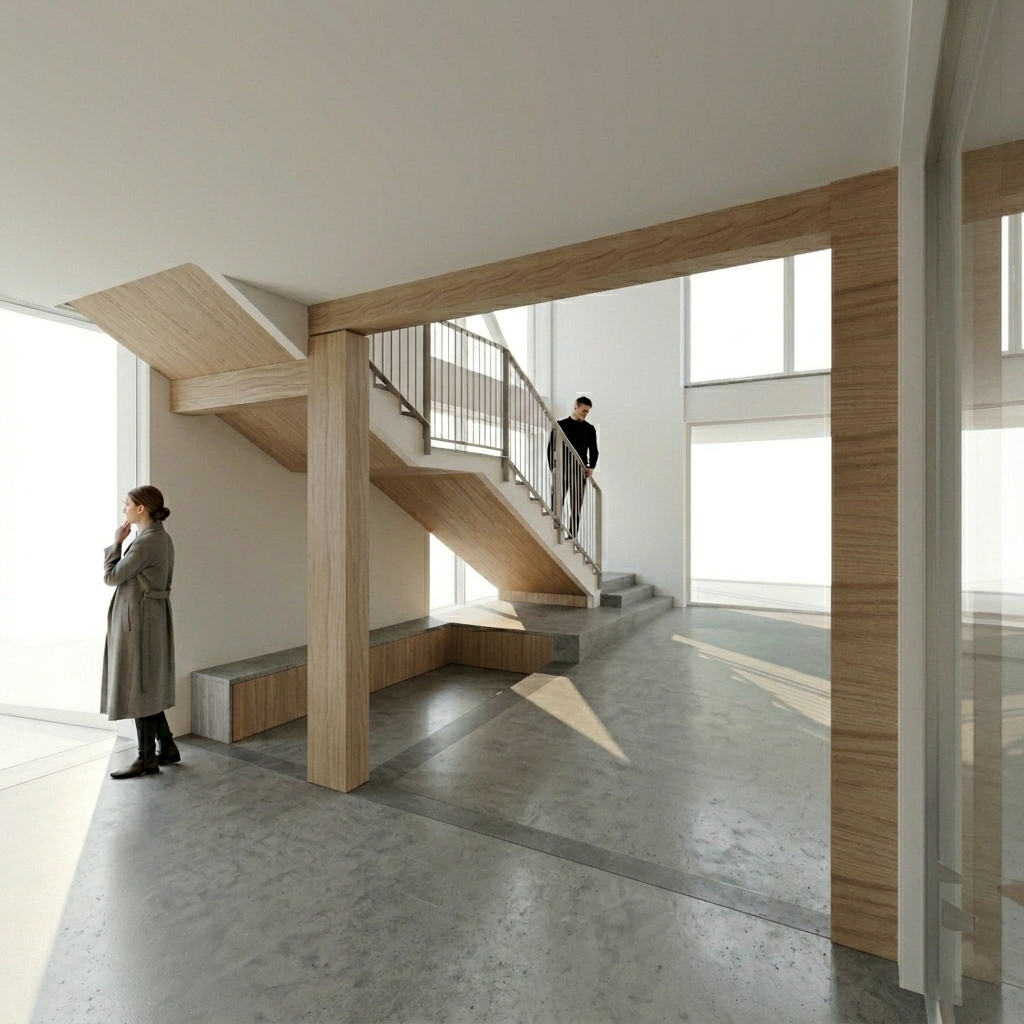
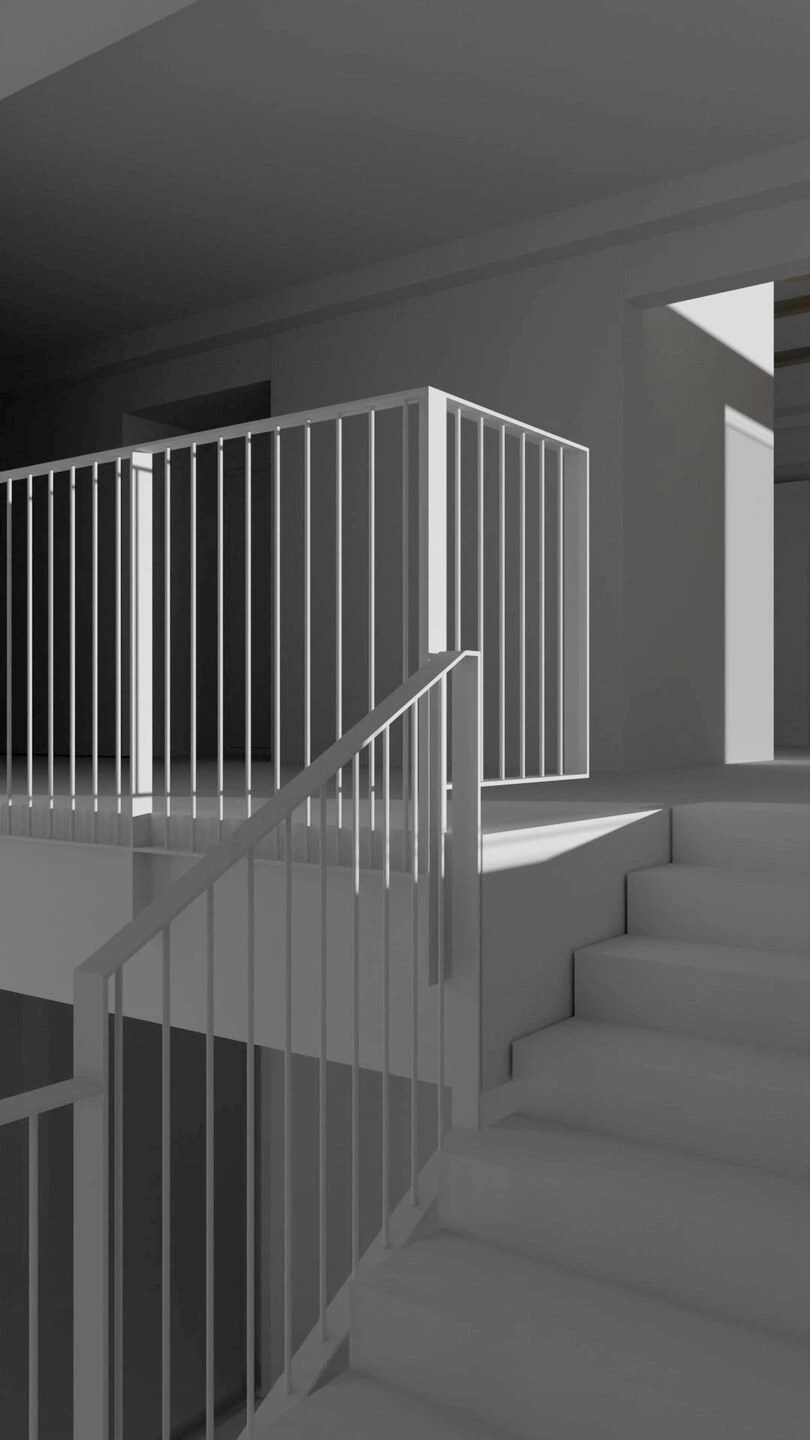
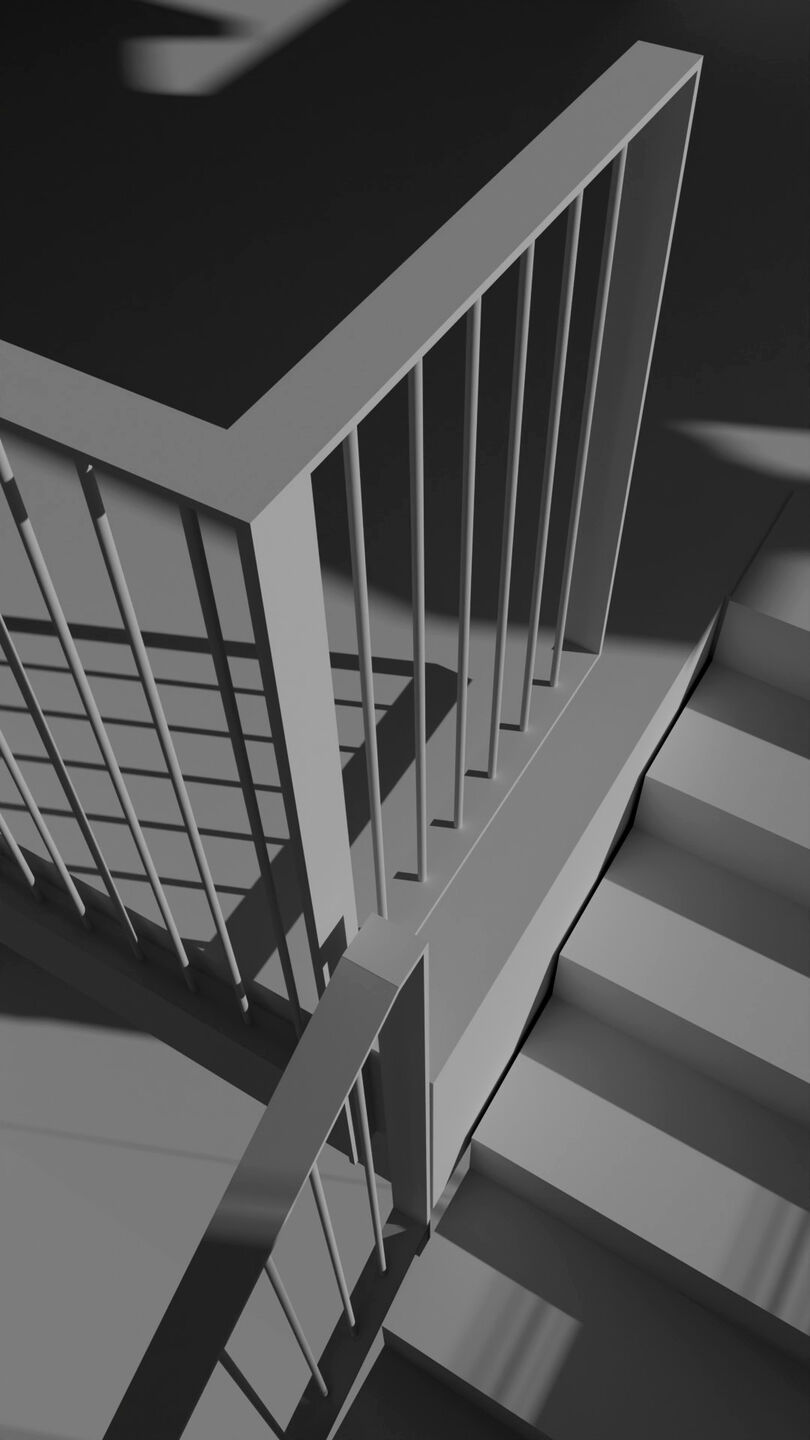
Entering from the portico, one ascends a staircase to the upper level or descends a slight ramp to the main space. The staircase, partially in visible wood and finished with pietra serena stone, includes a study/social seating platform with USB and electrical outlets. A similar bench is provided on the upper floor by the teachers’ lounge, offering a multipurpose space for teachers, visitors during events, or parents during meetings.
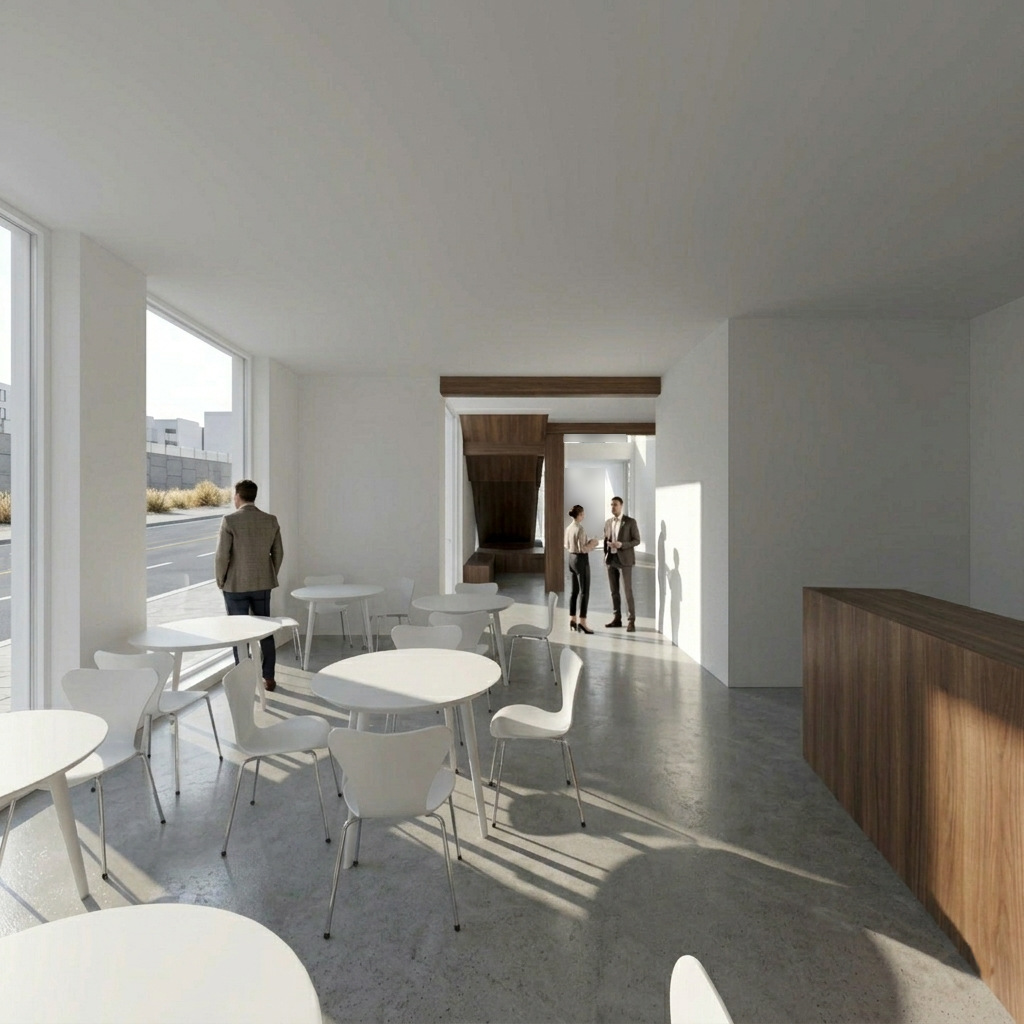
Another area of the atrium near the elevator hosts the front office and an informal study zone with tables—visible and loosely supervised, yet open and well-lit thanks to generous windows facing the street.
The staircase podium also doubles as a display platform for student work, while the atrium itself—spacious as it is—can serve as a temporary exhibition space, encouraging student confidence and pride.
Lighting, Transparency, and Spatial Quality
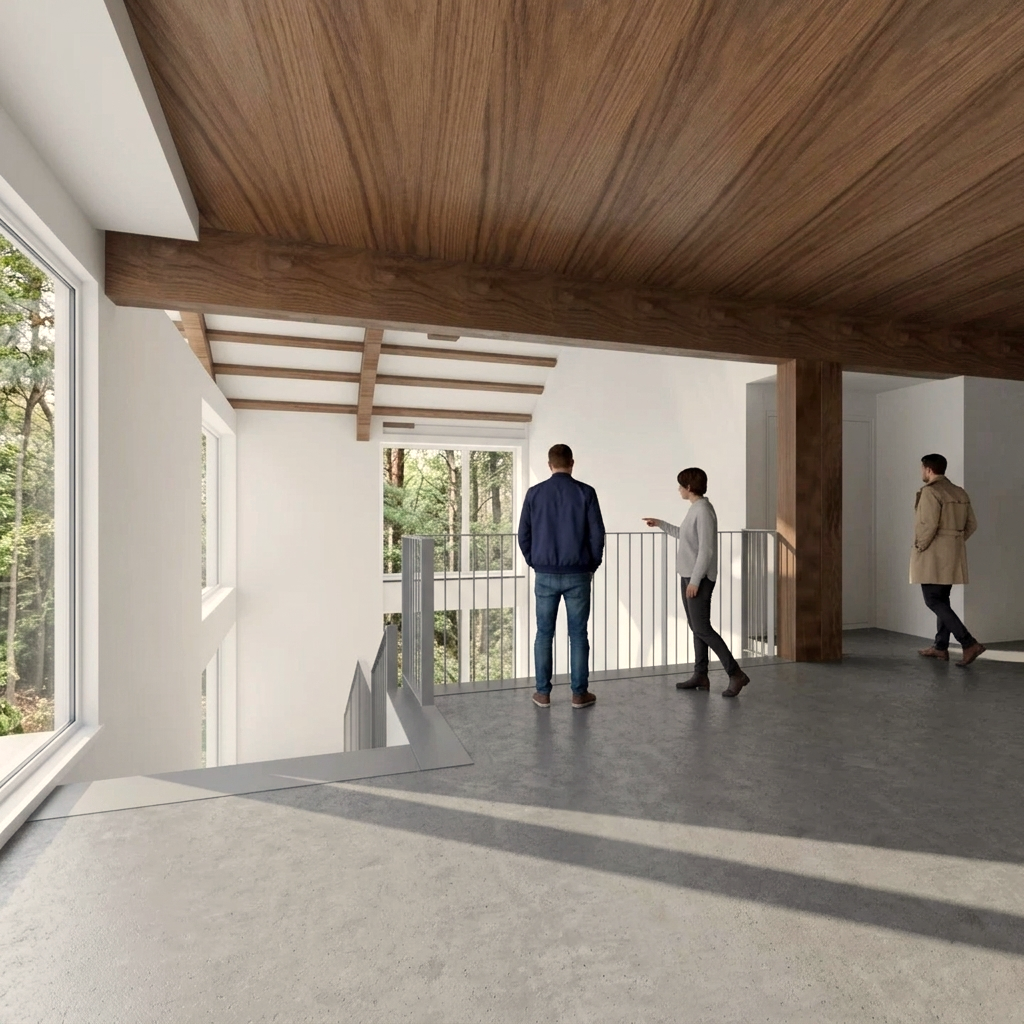
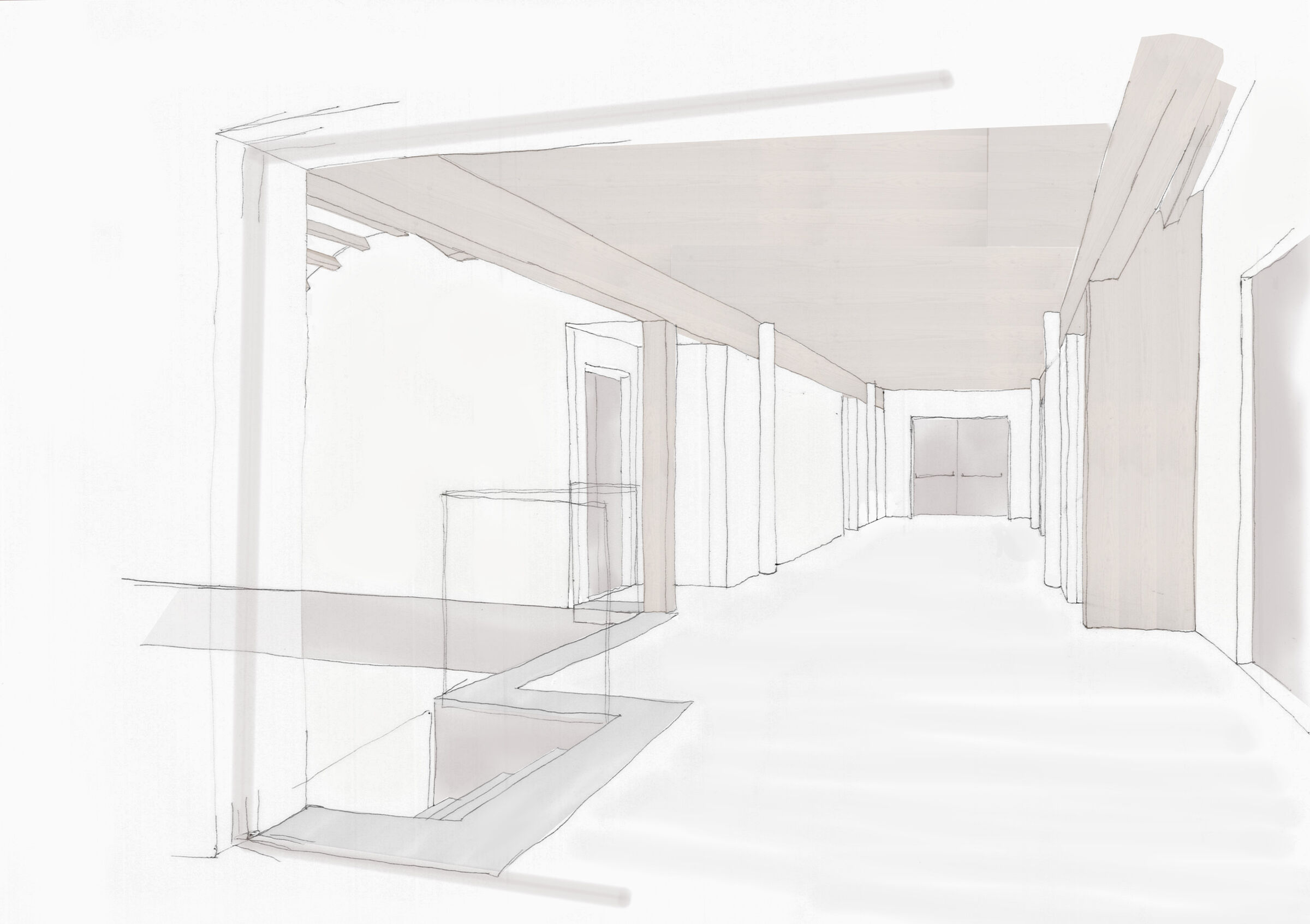
The first-floor corridor is 300 cm wide, offering easy circulation and perceptual comfort. It serves the two labs, each with four doors to facilitate movement and possible future subdivision.
The connection between the atrium and the mechanical workshop is marked by a glass wall aligned with the street-facing facade, forming a second entrance. This allows views from both atrium and street into the workshop—symbolizing the school’s technical mission and student work.
All rooms, especially the labs and workshop, feature large windows for ventilation and ample natural light, adding both functionality and aesthetic elegance.
Though only a few wooden structural elements remain visible due to regulations, their exposure—particularly in shared spaces and labs—helps clarify the construction and dignify the space with the intrinsic quality of wood, even in its high-tech XLAM form.
A few noble materials in sight (wood and pietra serena for stairs, benches, and balcony details) suffice to give the environment tone and, despite its overall simplicity, create that sense of “well-crafted” typical of good architecture—past and present.
Accessibility and inclusion
The pavilion is fully accessible, with level entrances, a main ramp with a slope of less than 7%, an internal elevator, and connections to the existing building via 5% ramps. All spaces are usable by people with disabilities, including the connection to the existing school building.
Blender:File:/home/bruno/Desktop/3D Sharif e varie da smistare/3d scuola/3D 11 su fbx5.blend Blender:Date:2025/02/26 21:56:55 Blender:Time:00:00:00:01 Blender:Frame:001 Blender:Camera:Camera Blender:Scene:Scene Blender:RenderTime:11:02.89 Blender:cycles.ViewLayer.samples:4096 Blender:cycles.ViewLayer.total_time:11:02.87 Blender:cycles.ViewLayer.render_time:11:02.79 Blender:cycles.ViewLayer.synchronization_time:00:00.07 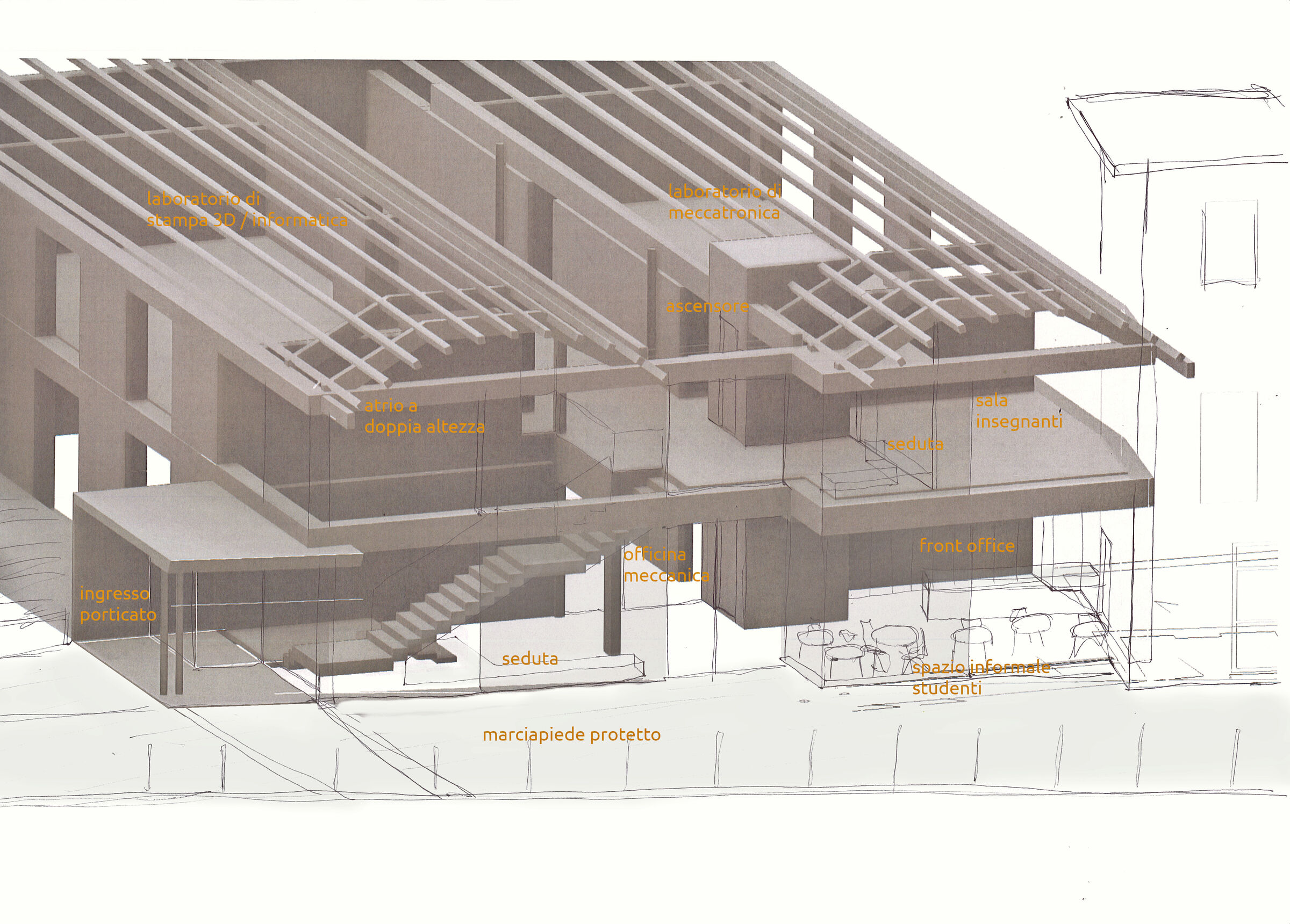
 STUDIOARTEC